Why They Keep Averaging Down Even After a 38% Drop: How Stock Trading Can Make the Mind Sick [World of Retail Investors]
- Input
- 2026-07-21 06:00:00
- Updated
- 2026-07-21 06:00:00
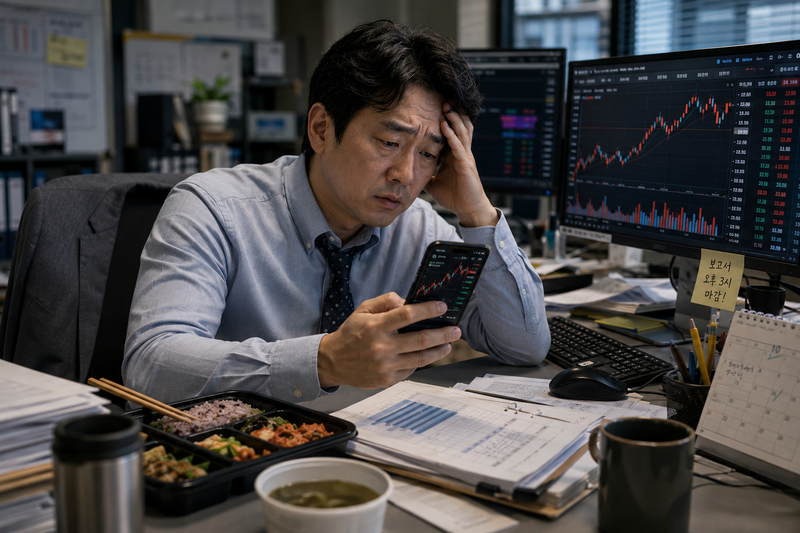
A said, "Even at work, I catch myself constantly searching stock prices," adding, "When the market was booming, I kept watching because it was fun to see stocks rise. But lately, as prices have fallen and I’ve been averaging down badly, I find myself checking even more often.It’s almost an addiction. " Depression Driven by FOMO A is not alone.As the market shifted from a hot streak that fueled fear of missing out (FOMO) to a sharp downturn, a psychiatrist’s recent remarks drew attention after he said more patients were coming in complaining of stock-related depression or showing signs of stock addiction due to investment losses./ Photo=ChatGPT [Financial News] # A 45-year-old office worker, identified as A, recently got an earful from friends during a gathering. They were annoyed that A kept clutching a smartphone and checking after-hours trading throughout dinner.
Park Jong-seok, a psychiatrist who appeared on tvN’s "You Quiz on the Block" last year and publicly shared his own failed stock investment experience, said on YTN Radio’s "Jo Tae-hyun’s Fresh Economy" on the 14th, "Since last Thursday, we have had many new patients coming in with stock-related problems such as stock addiction, stock losses, and stock depression.
/ Photo=ChatGPT [Financial News] # A 45-year-old office worker, identified as A, recently got an earful from friends during a gathering. They were annoyed that A kept clutching a smartphone and checking after-hours trading throughout dinner." Park drew attention last December on "You Quiz on the Block" when he revealed that he had struggled with stock addiction in 2017 and 2018 and had suffered investment losses of 320 million won.
Based on his own experience, he explained the symptoms of stock addiction and depression.
For investors who have suffered losses, even hearing that "someone else made hundreds of millions of won in profit" can feel like "pain as if the brain were stabbed with a knife or burned by fire," he said.
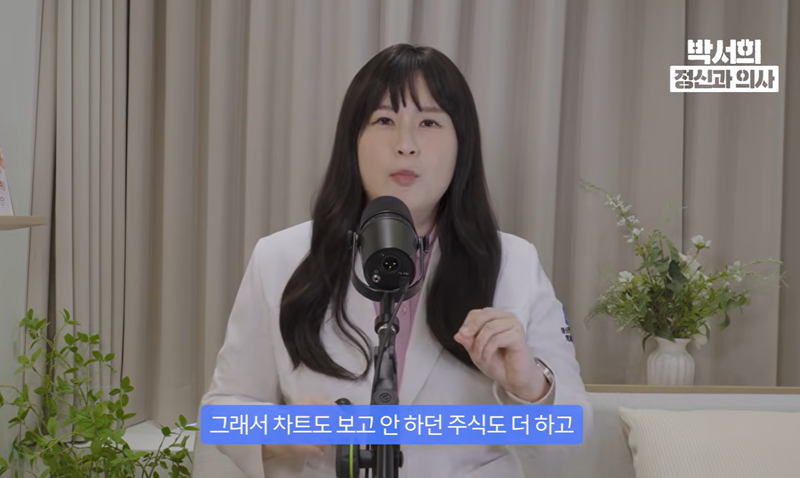
"Scientifically, it has been proven to be pain equivalent to a four-week injury," he added.He also said that excessively averaging down on losing stocks, piling into leveraged products, or heavily investing in derivatives such as margin trading and futures options can all be signs of possible stock addiction."Once You Start, It’s Hard to Get Out".Why Is That? Park Seo-hee, the chief doctor at Park Seo-hee Psychiatry Clinic, also explained stock addiction by saying, "The more stress people normally have, or the more unstable their lives are, the more they want a sense of control and stability, which makes them fall deeper into stocks." On her YouTube channel, "Park Seo-hee Psychiatrist," she recently shared a video titled "Why Stocks Are Dangerous" and pointed out, "When you invest in stocks, losses become stressful.
Then, when life gets tighter, you go back to stocks, and the vicious cycle continues.
/ Photo=ChatGPT [Financial News] # A 45-year-old office worker, identified as A, recently got an earful from friends during a gathering. They were annoyed that A kept clutching a smartphone and checking after-hours trading throughout dinner.
" /Photo=Screenshot from YouTube channel "Park Seo-hee Psychiatrist" She said there are four main reasons people find it hard to quit stocks: dopamine, the need for control, intermittent reinforcement, and loss aversion bias.
/ Photo=ChatGPT [Financial News] # A 45-year-old office worker, identified as A, recently got an earful from friends during a gathering. They were annoyed that A kept clutching a smartphone and checking after-hours trading throughout dinner.Dopamine, often called the "addiction hormone," is a neurotransmitter in the brain that responds not to happiness but to anticipation, creating motivation and pleasure.
"Whether prices go up or down, the tension of not knowing what will happen next gives the brain enormous stimulation," Park said.
/ Photo=ChatGPT [Financial News] # A 45-year-old office worker, identified as A, recently got an earful from friends during a gathering. They were annoyed that A kept clutching a smartphone and checking after-hours trading throughout dinner.
" As for FOMO, she explained, "The thoughts that you need to do something, that you must not fall behind, and that you want to take control of the situation make you trade more.That behavior itself becomes a tool to calm anxiety.People do it because the brain wants control.
" She added that intermittent reinforcement, where irregular rewards make behavior repeat more strongly, and loss aversion bias, where people feel losses more intensely than gains of the same size, are also reasons individual investors struggle to break away from stocks.
Am I Addicted to Stocks? Park said, "People’s patterns differ depending on how dopamine is released.
/ Photo=ChatGPT [Financial News] # A 45-year-old office worker, identified as A, recently got an earful from friends during a gathering. They were annoyed that A kept clutching a smartphone and checking after-hours trading throughout dinner.
" She explained that people who do not become overly excited even when stimulation is strong tend to stay calmer when they take losses, while those whose dopamine rises sharply get excited when they make profits, place bigger bets, and fail to cut losses when things go wrong, leading to larger emotional swings.
/ Photo=ChatGPT [Financial News] # A 45-year-old office worker, identified as A, recently got an earful from friends during a gathering. They were annoyed that A kept clutching a smartphone and checking after-hours trading throughout dinner.She added, "Among people who consistently make money in stocks, the first type is more common.
If you feel like stocks just do not suit you, that may come down to your dopamine response speed.
" Park also advised, "If you have trouble controlling your emotions when you take losses, if charts keep popping into your head while you are working, if you keep checking stock apps even while talking to others, or if you make reckless investments to recover lost money, those can be warning signs." "Some people say they cannot stop, just like gambling.Because this structure is hard to escape alone, getting help may be the fastest path to recovery," she said.
/ Photo=ChatGPT [Financial News] # A 45-year-old office worker, identified as A, recently got an earful from friends during a gathering. They were annoyed that A kept clutching a smartphone and checking after-hours trading throughout dinner.
I do not want to become someone who keeps saying, "I should have bought, I should have sold, I should have held." Yet somehow, everyone else seems to be doing well with stocks, real estate, and money management without me.The world of investing is hard no matter how much you study, so if you want to receive this column, [World of Retail Investors], comfortably, please subscribe to the reporter page.We also welcome tips from retail investors who have investment stories they would like to share.
/ Photo=ChatGPT [Financial News] # A 45-year-old office worker, identified as A, recently got an earful from friends during a gathering. They were annoyed that A kept clutching a smartphone and checking after-hours trading throughout dinner.[email protected] Kim Hee-sun Reporter