The New York Times: Proposal Emerges for Gulf Countries and Iran to Jointly Manage the Strait of Hormuz
- Input
- 2026-07-20 14:52:07
- Updated
- 2026-07-20 14:52:07
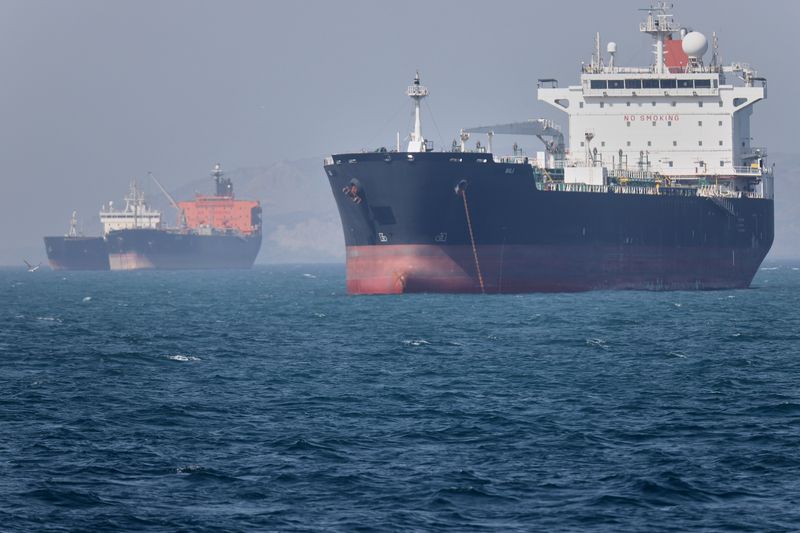
According to NYT on the 19th local time, the London think tank Bruce & Baza Foundation proposed in a report released this month that countries around the Persian Gulf region treat the waters as a kind of regional shared asset and charge fees only to tankers for maintenance and upkeep. The idea, it said, would align with international law, satisfy the Government of the Islamic Republic of Iran's demand to claim control over the Strait of Hormuz, and give all eight countries bordering the Persian Gulf region — six Gulf states, Iran, and Iraq — an incentive to preserve peace.
The proposal was modeled on the European Coal and Steel Community (ECSC), which governed joint steel and coal production in Europe after World War II. After two devastating world wars, France rejected the post-World War I approach of isolating Germany and instead worked with Germany to jointly produce coal and steel, key resources for military supplies. Italy, Belgium, Luxembourg, and the Netherlands later joined the effort, which became the foundation of the European Union (EU).
In this regard, Mara Karlin, a Johns Hopkins University security studies professor who previously served as an assistant secretary of defense in the Joe Biden administration, said that mine-clearing operations to reopen the strait are extremely slow and arduous, and that a ceasefire is a prerequisite because U.S. troops involved would inevitably face danger. Moreover, the Strait of Hormuz could be blocked again with just a single mine, and Iran is believed to have developed more agile capabilities to shut down the strait, including mobile missile launchers and armed speedboat operations. Neutralizing those capabilities would require deploying a large ground force along Iran's roughly 2,000-kilometer southern coastline.
Pointing to that reality, the Bruce & Baza Foundation argued that major ports in the Persian Gulf region, such as Jebel Ali Port in Dubai, UAE, already charge service fees to ships, so this would not be much different from granting similar authority to a supranational body and distributing the revenue. It then proposed the most practical step: charging fees on the Very Large Crude Carriers (VLCCs) that pass through the Strait of Hormuz each year, including the 600 VLCCs that frequently travel through the waterway. In practice, it said, these VLCCs cause marine pollution, while the fee would be negligible for tanker operators.
The key to making such a proposal a reality would be agreement from the United States and Iran. On the 10th, the Islamic Republic News Agency (IRNA) republished the report and ran an editorial saying that the Strait of Hormuz is not merely a route for cargo and energy transport, but an opportunity for regional cooperation, and that if properly managed, its economic benefits could be distributed more fairly among regional countries. By contrast, President Donald Trump has taken an inconsistent stance, at one point calling for the strait to be opened "for free" and then abruptly proposing and withdrawing a "20% fee on cargo value." NYT criticized this, saying analysts see one of the biggest obstacles as "the United States' policy goals, which are not clearly defined."
[email protected] Hong Chaewan Reporter