"DeepSeek shock? It surged sharply a year later"... Is 'Kimi K3' a blow to Samsung Electronics and SK hynix, or a boon?
- Input
- 2026-07-20 14:17:03
- Updated
- 2026-07-20 14:17:03
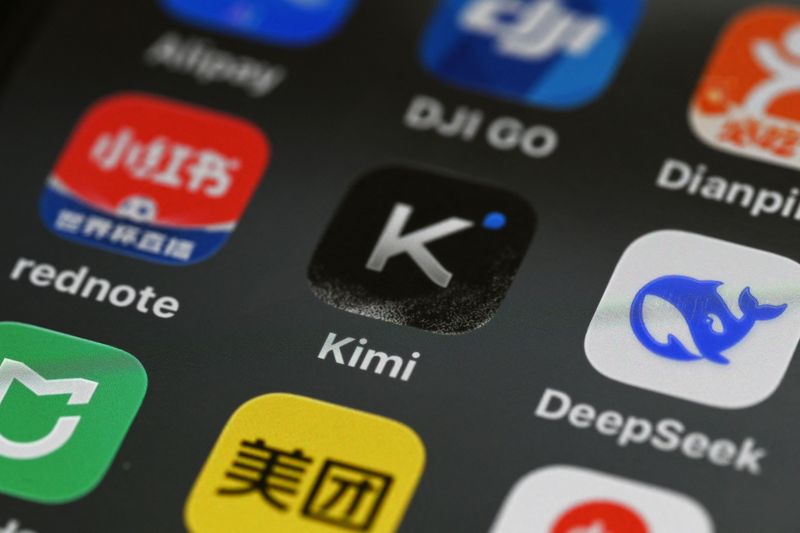
[Financial News] The artificial intelligence shock from China is shaking global stock markets again, 18 months later. The reason is that Kimi K3, an open-weight model released by Chinese AI startup Moonshot, has reignited questions about U.S. technological dominance. In the market, some say it recalls the DeepSeek shock seen in early 2025, while views are split over whether it will pose a crisis or create an opportunity for Samsung Electronics and SK hynix.
The return of the 'China AI shock' after 18 months
As of 1:16 p.m. on the 20th, the KOSPI (Korea Composite Stock Price Index) was trading at 6,496.62, down 323.68 points, or 4.75%, from the previous session. With the 6,500 level broken, Samsung Electronics was trading at 241,750 won, down 5.20%, while SK hynix briefly plunged to the 1.74 million won range in early trading before repeatedly rebounding and falling again. It was last trading at 1.76 million won, down 4.45%.
The fallout from Kimi K3, which shocked global markets on the 16th and 17th local time, appears to have affected the domestic market as well. While the Korean market was closed on the 17th for Constitution Day, the Philadelphia Semiconductor Index fell 4.3% on the 16th and 1.6% on the 17th. Japan's Nikkei 225 and Taiwan's TAIEX also dropped 4.0% and 6.5%, respectively, on the 17th.
The scene inevitably brings to mind the DeepSeek shock that hit the semiconductor market on January 27, 2025. At the time, NVIDIA plunged 16.97% in a single day after DeepSeek's low-cost AI model emerged, wiping out $589 billion in market value. After Kimi K3 was unveiled, AI semiconductor stocks such as NVIDIA, Broadcom Inc., and AMD also fell across the board, and the Philadelphia Semiconductor Index (SOX) dropped more than 20% from its peak, entering a technical bear market. However, some analysts say the SOX correction had already been building before Kimi K3 was released, meaning the model was not the sole cause but rather the trigger for already fragile investor sentiment.
Similar to DeepSeek, yet different... crisis or opportunity
If the shock caused by DeepSeek came from its low cost, Kimi K3 is drawing attention because it challenged the U.S. with performance itself. According to Artificial Analysis, an AI performance evaluation firm, Kimi K3 scored 57 on its intelligence index. That places it fourth among existing AI models, behind Anthropic's Claude Fable 5 at 60, OpenAI's GPT-5.6 Sol Max at 59, and GPT-5.6 Sol X-High at 58.
The market environment is also different from the time of the DeepSeek shock. Back then, the KOSPI was on the fringes of the AI rally, but now Samsung Electronics and SK hynix, which sit at the center of the AI Supercycle, account for half of the KOSPI's market capitalization. With amplifiers such as single-stock leveraged ETFs and credit financing at record highs in place, the market could react more sharply even to the same shock.
After Kimi K3 was unveiled, major AI and semiconductor-related stocks on Wall Street, including NVIDIA, fell broadly. That was driven by expectations that the free release of a high-performance model could lower AI development and service costs faster than expected. Still, some argue that the spread of open AI could ultimately become a catalyst that drives explosive demand for graphics processing units (GPUs) and High Bandwidth Memory.
Another argument is that even if Kimi K3 is made available for free, it still requires substantial computing resources to run in practice. The logic is that if open-weight models reduce the cost of AI use, overall AI consumption will surge, leading to long-term growth in demand for inference GPUs, High Bandwidth Memory, and general-purpose memory.
On the 18th, semiconductor research firm SemiAnalysis said, "Kimi K3's linear attention (KDA) may seem negative for NVIDIA, High Bandwidth Memory, DRAM, and networking, but the opposite is true." It added, "According to Jevons paradox, the more efficient AI becomes, the more widely it will spread, which ultimately means greater demand for GPUs, High Bandwidth Memory, DRAM, and networking resources."
Lee Eun-taek, a researcher at KB Securities, also said, "Chinese AI is threatening, but there is still much that needs to be proven," adding, "Whether Chinese AI can replace leading U.S. companies over the long term remains to be seen. Chinese AI will also ultimately need GPUs and memory for training and services."
[email protected] Kim Hee-sun Reporter