"Takaichi Lost Public Support While Trying to Protect the Imperial Household"; Approval Rating Hits Lowest Since Inauguration
- Input
- 2026-07-20 10:44:53
- Updated
- 2026-07-20 10:44:53
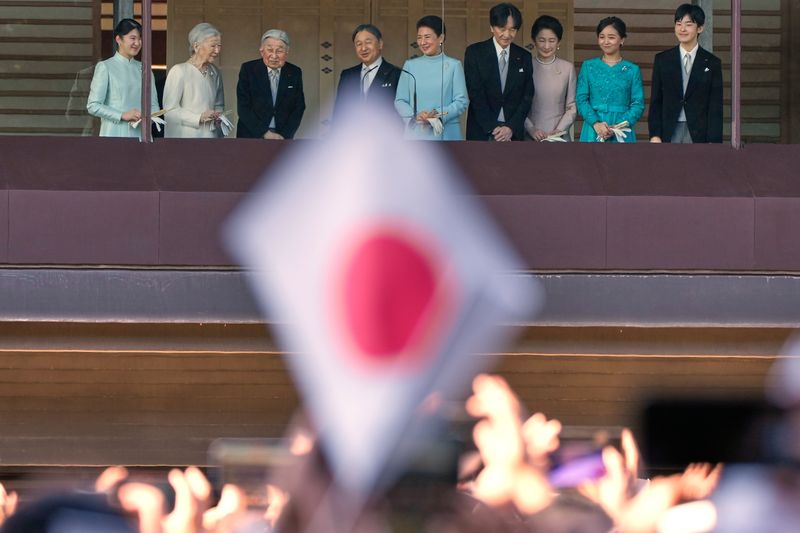
【Financial News, Tokyo = Reporter Seo Hye-jin】The Japanese government revised the Imperial Household Law in an effort to prevent a decline in the number of imperial family members, but the move has instead triggered a backlash and a loss of public support. While female imperial family members will be allowed to remain in the imperial household after marriage, women and descendants through the female line are still barred from succession to the throne. At the same time, male-line descendants of former imperial branches, separated 36 to 38 generations ago, have been given a path to succession.
In a public opinion poll conducted by The Asahi Shimbun on the 18th and 19th and released on the 20th, 60% of respondents said the revised Imperial Household Law had not won public understanding. Only 24% said it had. On the question of the current system that does not allow women to become emperor, 62% said they could not accept it.
In a separate poll by the Mainichi Shimbun conducted over the same period, the approval rating for the Sanae Takaichi Cabinet fell 10 percentage points from the previous month to 41%, the lowest since it took office. Its disapproval rating rose to 44%, surpassing approval for the first time. In the Asahi poll, the Cabinet’s approval rating also fell 7 points to 53%. Both surveys cited insufficient explanation of the Imperial Household Law revision and a failure to respond to rising prices as reasons for the decline.■Japan’s imperial family has, in effect, only one successorJapan’s imperial family has long faced a shortage of heirs.
Emperor Naruhito has an only daughter, Princess Aiko, but the current Imperial Household Law recognizes succession rights only for men. At present, the only people who can inherit the throne are the Emperor’s younger brother, Crown Prince Fumihito of Akishino, and his only son, Prince Hisahito. Prince Hisahito, now 20, is effectively the only young male heir.
The number of imperial family members has also fallen sharply. The household had 26 members in 1994, but that number has dropped to 16. The decline reflects both the rule that female imperial family members leave the imperial register when they marry and the deaths of elderly members. There are now five unmarried female imperial family members, including Princess Aiko and Princess Kako, and they handle a large share of official duties, ceremonies, and other imperial functions.■Women cannot succeed, but male-line descendants from 36 generations ago can?Against this backdrop, Japan’s parliament passed a revision to the Imperial Household Law on the 17th.
The revision allows female imperial family members to retain their status even after marrying private citizens. However, their husbands and children remain ordinary citizens, and women and their descendants still have no right of succession.
By contrast, male-line men from the 11 former imperial branches that left the imperial register in 1947 may be adopted into the imperial family. The adopted individual himself has no succession rights, but any son born to him would be eligible to inherit the throne.
In the end, Princess Aiko, the only daughter of the current Emperor, and her children cannot inherit the throne, while male-line descendants of former imperial branches that split off during the Muromachi period about 600 years ago could become eligible successors. The blood relationship between the current Emperor and those former branches is said to be roughly 36 to 38 generations removed.
That is why criticism in Japan has intensified, with many saying the revision was not about securing more imperial family members, but about institutionalizing male-line male succession.
The debate began with a special law that allowed Emperor Akihito’s abdication in 2017. At the time, the National Diet asked the government to come up with a stable plan for imperial succession.
But instead of discussing a female emperor or succession through the female line, the government focused on preserving the status of female imperial family members and introducing adoptees from former imperial branches. After the Liberal Democratic Party won a landslide in the general election in February this year, the Takaichi Cabinet and the Japan Restoration Party pushed the adoption plan first, and the legal revision gathered pace.
The revision bill passed the House of Representatives on the same day it was deliberated on the 10th and was finally approved on the 17th, just two days after deliberations began in the House of Councillors on the 15th. The Constitutional Democratic Party of Japan demanded that the provisions on adoptees be removed, but the request was rejected.■Experts say the change altered succession rules, not just imperial family numbers... the UN also offered indirect criticismExperts say the revision went beyond increasing the number of imperial family members and further entrenched a male-line succession system.
In an interview with Nikkei on the 17th, Keio University professor emeritus Hidehiko Kasahara said, "Giving succession rights to the son of an adoptee, even though the adoptee himself has no such rights, means the government has gone beyond securing imperial family numbers and interfered directly in the succession itself." He also raised concerns about the arbitrariness of the selection process and the possibility of constitutional challenges.
Emiko Ochiai, a professor at Kyoto Sangyo University, countered that "the claim that male-line male succession is a uniquely Japanese tradition is historically inaccurate." She noted that Japan has many examples of women being recognized as heirs when there were no direct male successors, and that the legitimacy of the throne has traditionally been based not only on paternal lineage but also on maternal lineage.
Nozomu Dominaga, a researcher at the Institute of Political Economy, said, "The system has not been sufficiently designed in terms of the rank of adoptees, their education, or the treatment of their biological parents." He added, "Under monogamy, it is also not realistic to keep male-line succession in place indefinitely."
The international community has also taken a negative view.
On the 17th, UN Secretary-General António Guterres said, "We promote inclusive policies that enable women to fully demonstrate their capabilities in all fields," indirectly criticizing Japan’s system. In 2024, the UN Committee on the Elimination of Discrimination against Women (CEDAW) also recommended reforms, saying Japan’s Imperial Household Law, which grants succession rights only to men, is inconsistent with the spirit of the Convention on the Elimination of All Forms of Discrimination against Women.
The Yomiuri Shimbun described the revision as "a change that undermined the bond between the public and the symbolic emperor," while The Asahi Shimbun criticized politicians for "turning away from the majority public opinion that supports a female emperor."
That is why a revision intended to increase the number of imperial family members is now being seen as the starting point of a new controversy that could shake the legitimacy of the symbolic emperor system and public consensus.
[email protected] Seo Hye-jin Reporter