Warsh Says It Is Too Early to Relax Despite Slower CPI, Declares a Long Fight Against Inflation
- Input
- 2026-07-15 02:32:17
- Updated
- 2026-07-15 02:32:17
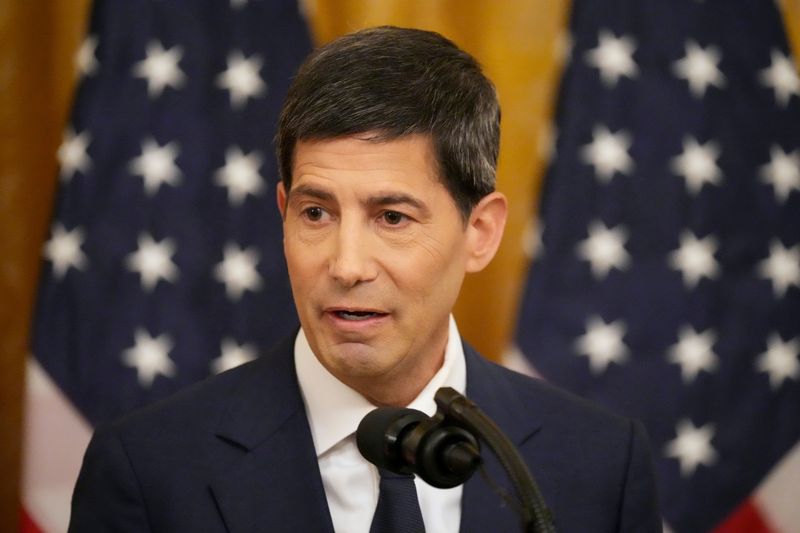
【Financial News New York = Lee Byung-chul】 Kevin Warsh, chairman of the U.S. Federal Reserve System (Fed), reiterated his commitment to price stability, saying he would "never tolerate persistently high inflation." Even as markets scaled back expectations for further rate hikes after June consumer prices cooled, he warned that it was "not time to relax based on a single data point," signaling a prolonged battle against inflation. He also identified expanded investment in artificial intelligence (AI) as a key growth engine for the U.S. economy, while saying he would continue to monitor AI's impact on inflation.
At a House Financial Services Committee hearing on the 14th local time, Warsh said, "Members of the Federal Open Market Committee (FOMC) will never tolerate persistently high inflation," adding, "If policy is managed properly, the inflation surge of the past five years will become a thing of the past."
His remarks came shortly after the U.S. Department of Labor released June Consumer Price Index (CPI) data showing a 0.4% decline from the previous month, while core CPI was flat. Markets had grown more hopeful that the cooling inflation would reduce the chances of additional tightening at the FOMC meeting later this month, but Warsh urged caution against premature optimism.
He said, "I do not look at today's figures and think, 'The mission is over and everything is fine,'" adding, "We should not place too much weight on a single economic indicator."
He stopped short of giving any specific guidance on the direction of interest rates. Warsh maintained the Fed's longstanding position that it should not pre-announce future policy moves to the market, and he did not spell out conditions for either rate hikes or cuts.
Warsh also acknowledged that many of the factors behind recent price increases, including overseas conflicts and surging energy prices, are beyond the Fed's control. He said, "We cannot directly control factors such as foreign conflicts, and we should not try to."
Still, he made clear that the Fed must take responsibility for the outcome.
He said, "Inflation is a matter of choice," and added, "Monetary policymakers should choose lower prices." He continued, "The Fed has enough policy tools to adjust interest rates and the size of its balance sheet, and this is not the time to shift blame elsewhere."
He also suggested that the Fed should change how it communicates with markets.
Warsh explained, "Because policymakers are human, offering forecasts in advance can lead to the error of accepting only information that fits existing beliefs," adding, "It is better to judge the data more carefully."
He offered a relatively optimistic view of the economy.
He described the U.S. labor market as "generally stable," saying layoffs remain limited and wage growth continues to hold up. He also said improving labor productivity is creating a foundation for growth without stoking inflation.
The area Warsh focused on most was AI investment.
He said, "Construction of data centers and investment in AI equipment and software are rising rapidly, and the pace is accelerating further," adding, "AI is creating new opportunities for the economy while also presenting new challenges for policymakers." He went on to say, "The Fed is closely watching how AI will affect inflation and the labor market."
[email protected] Lee Byung-chul Reporter