Psychiatrist Who Revealed a 320 Million Won Loss Says More Patients Are Seeking Help for Stock Addiction and Depression
- Input
- 2026-07-15 05:00:00
- Updated
- 2026-07-15 05:00:00
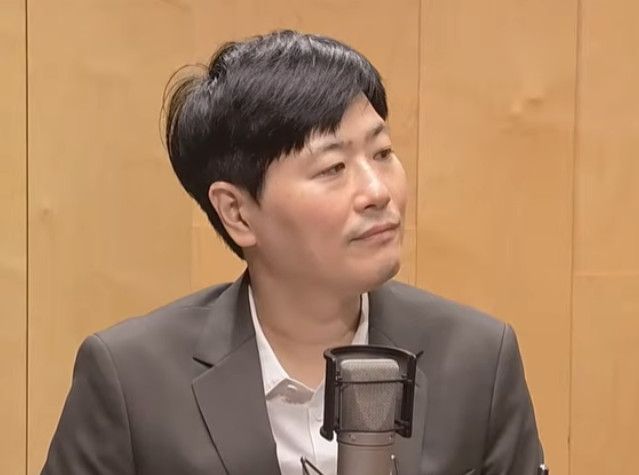
[Financial News] Psychiatrist Park Jong-seok, who once publicly shared his own failed stock investment experience, said that more new patients have recently been visiting his clinic to complain about investment losses after the sharp drop in the KOSPI.
On the 14th, Park said on YTN Radio's "Jo Tae-hyun's Real Economy" that "there have been many new patients coming in with stock-related problems since last Thursday." He added that "many people have come in talking about stock addiction, stock losses, and stock depression."
He said investors could become increasingly anxious during the KOSPI plunge. Park noted that "the sell-side circuit breaker was triggered several times and the KOSPI 7,000 level was broken, and in times like these, desire and anxiety can paralyze the brain." He added that even if reason tries to hold firm through the cerebral cortex and says, "Let's do this safely" or "Let's buy only one-tenth at a time," it is hard to stop the amygdala and rational thinking from being shaken.
Earlier, Park said on "You Quiz on the Block" in December last year that he had suffered from stock addiction in 2017 and 2018, and that his investment losses had reached 320 million won.
Instead of blue-chip stocks, he had chased various theme stocks and junk stocks through impulsive trading. In an attempt to recover his losses, he also traded futures and options, but ended up failing again.
After overcoming stock addiction, he began studying "stock depression." Park now treats patients who complain of stock addiction and depression, while developing self-diagnosis methods and treatment guidelines.
Park also said that the "Fear of Missing Out (FOMO)" felt by investors who see comments such as "Someone made 200 million won with SK hynix" is another factor that worsens stock depression.
Explaining the brain's response, Park said that the area that feels FOMO is the "dorsal anterior cingulate cortex (dACC)," which is the part that feels pain when others do well. He added that when people hear that "someone made hundreds of millions of won in profits," the brain feels pain as if it had been stabbed with a knife or burned by fire. "This has been scientifically proven to amount to four weeks of treatment," he said.
He also pointed out that social networking service use can trigger feelings of inferiority. He added that people become immersed in social networking service and feel inferior when they see others' "curated proof shots" of Gangnam apartments and wealth.
Park said that excessively averaging down on losing stocks can also be seen as stock addiction. He explained that "if you average down according to a plan, that's fine, but there are people who get swept up by desire and rush to take out loans to average down because they want to make a lot of money." He said this reflects an obsession with breaking even and is driven by excessive amygdala stimulation.
He also warned against aggressively piling into leveraged products. Park said, "I think up to 2x leverage is acceptable, but people who invest beyond that should be suspected of stock addiction." He stressed that overinvesting in derivatives such as margin trading and futures and options is also a form of stock addiction.
As ways to break free from stock addiction, he pointed to one's main job, exercise, and hobbies. Park advised people not to get trapped by dopamine hits such as "the stock I bought hit the upper limit," and to return to a mindset that can find happiness in everyday life. He also recommended deleting stock apps and staying away from smartphones.
[email protected] Han Seung-gon Reporter