Why Is the KOSPI (Korea Composite Stock Price Index) So Volatile? Goldman Sachs Says Mechanical Selling in Leveraged ETFs Is Fueling the Swings
- Input
- 2026-07-14 14:54:55
- Updated
- 2026-07-14 14:54:55
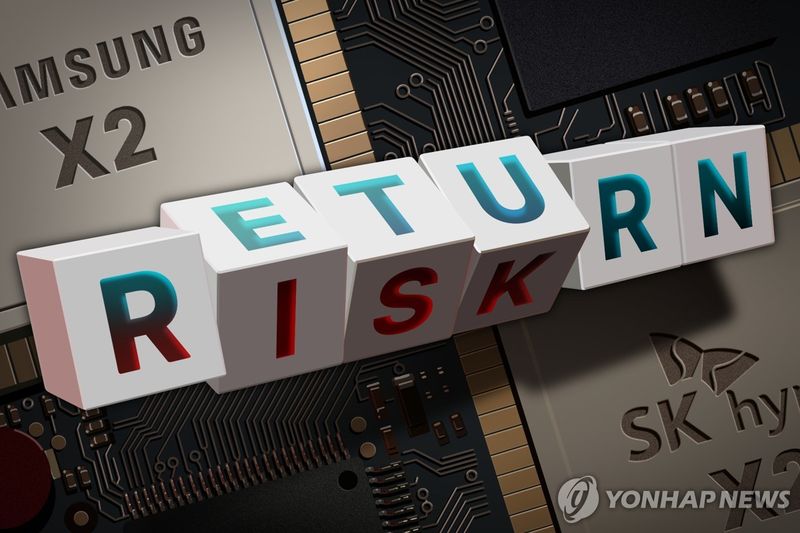
[Financial News] Mechanical selling in single-stock leveraged exchange-traded funds (ETFs) has been found to have increased volatility in the domestic stock market.
On the 14th, Goldman Sachs said in a report titled 'KOSPI Tests Key Technical Support Levels' that "one of the main factors behind the extreme intraday volatility was the sharp deleveraging, or forced selling, of single-stock leveraged ETFs."
Some leveraged ETFs based on Samsung Electronics and SK hynix plunged more than 30% in a single day. To restore their target leverage ratios, they sold additional underlying assets. As prices fell, that triggered another round of selling.
On the previous day, foreign investors and domestic institutions posted net sales of $1.13 billion and $1.5 billion, respectively, on the Korea Exchange Main Board. Goldman Sachs estimated that 62% of domestic institutions' net selling was due to forced sales related to leveraged ETFs.
Goldman Sachs identified the 6,800 level on the KOSPI as an important support line. If that level breaks, the next support could fall to 6,500. If 6,500 is also breached, the index could slide to the 6,000-6,100 range.
In the short term, the firm said mechanical selling by foreign investors, portfolio rebalancing by the National Pension Service (NPS), and high swap financing costs are likely to weigh on the market.
It also noted that, despite the recent correction, earnings forecasts for memory semiconductor companies such as Samsung Electronics and SK hynix have not been downgraded. The decline in share prices appears to reflect liquidity-driven position unwinding rather than weakness in the semiconductor cycle.
Goldman Sachs said, "Optimists expect the semiconductor industry’s capacity expansion to continue through the second half of 2028, driven by supply shortages," adding, "On the other hand, some are raising concerns about a decline in average selling prices (ASP) in the fourth quarter of this year and the possibility that the HBM4 cycle may have already peaked."
It added, "Investors should use the extreme volatility to selectively buy memory semiconductors and technology stocks with strong growth potential at lower prices."
[email protected] Seo Min-ji Reporter