"We Can't Take It Anymore"... Investors Take Direct Action as Stock Market Policies Spark Public Petitions [Why the Stock Market?]
- Input
- 2026-07-14 13:15:08
- Updated
- 2026-07-14 13:15:08
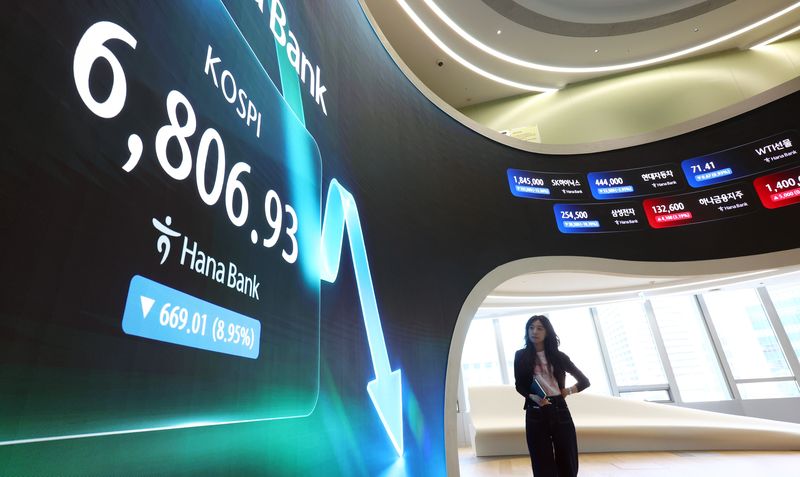
[Financial News]"Please stop distorting the market." "Please save the KOSDAQ ecosystem." "Please keep the delisting schedule you promised."Those are the common messages behind the stock market-related petitions recently posted on the National Assembly public petition board. As disputes intensify over stock market policies, including the introduction of leveraged ETFs for individual stocks, concerns over KOSDAQ liquidity, and tighter delisting requirements based on market capitalization, retail investors are taking direct action through the National Assembly's official channel.
Just a few years ago, most investor complaints ended in stock discussion boards or online securities communities. But recently, petitions calling for institutional reform have been posted one after another, and tens of thousands of people have joined them, changing the way investors respond.■"Please stop market distortion"... Leveraged ETF petition surpasses 30,000 supportersAccording to the financial investment industry on the 14th, more than 30,000 people had signed the National Assembly public petition titled "A petition on deepening KOSPI-KOSDAQ polarization and improving market distortion caused by leveraged products tied to specific individual stocks" ahead of its Aug. 1 deadline.
The petitioner argued that after the introduction of single-stock leveraged ETFs for Samsung Electronics and SK hynix, retail funds became concentrated in a few large-cap stocks, weakening liquidity in KOSDAQ and small- and mid-cap stocks. The petitioner said the market divide has widened as trading in smaller stocks slowed and companies' fundraising conditions deteriorated.
The petition also called for institutional reform and tighter regulation, saying repeated ETF rebalancing trades can affect supply and demand for the underlying assets, increase volatility, and distort price formation.
Similar petitions have followed. As of the same day, about 4,600 people had signed a petition calling for the abolition and regulation of single-stock leveraged products, while 1,173 people had joined another petition urging the normalization of the capital market through the creation of a value-investing environment and tighter regulation of single-stock leveraged products.■"KOSDAQ is the only one being sacrificed"... Deteriorating investment conditions under scrutinyComplaints have also spread to the KOSDAQ market. More than 850 people have joined a petition on revitalizing the KOSDAQ market and protecting investors, while more than 130 people have signed another petition calling for the restoration of the KOSDAQ ecosystem and a complete overhaul of policy.
Petitioners argue that shrinking liquidity in the KOSDAQ market has sharply worsened the investment environment for small- and mid-cap stocks. They say policies aimed at revitalizing KOSDAQ should be reviewed more broadly as funds continue to flow into large-cap stocks.
Questions over fairness have also continued to surface regarding recent restrictions on new margin loans and extensions of maturity for KOSDAQ stocks. Some investors argue that these rules have weakened sentiment toward KOSDAQ and deepened the shift toward large-cap stocks.■"Keep your promises first"... Delisting standards also face petitionsNearly 3,000 people had signed, ahead of the Aug. 20 deadline, a National Assembly public petition opposing the early implementation of stricter delisting requirements based on market capitalization.
The petitioner argued that the Korea Exchange damaged market trust by changing, after just six weeks, the three-year phased implementation plan it announced last year and moving up the schedule for stricter market-cap-based standards.
The petitioner also said that even companies with healthy sales, operating performance, and assets could be placed under watchlist status or face delisting risk based solely on market capitalization. The petition called for the early rollout to be halted and the original plan restored.■"You said it was good when the market was heading to 9,000"... Online opinion is splitOnline opinion over stock market policies is also divided. Investors opposed to the policies are saying, "They emphasized results during the KOSPI rally, but only started revising the rules after the market turned down," "Only retail investors are being made the scapegoat," and "They pushed ahead with the policies without enough review."
On the other hand, many also say, "Leveraged ETFs are inherently high-risk products" and "Cleaning up zombie companies and tightening delisting rules will help improve the market's fundamentals over the long term."
In recent investor communities, the debate has continued, with some arguing, "They were applauding when the market was heading to 9,000, but now they are blaming policy," while others counter that concerns over leveraged ETFs, KOSDAQ credit regulations, and stricter delisting rules have been raised consistently even during the bull market.
An official from the securities industry said, "Recent reforms to capital market rules are directly tied to investors' returns, so interest in policy has become much higher than before." The official added, "Debates that used to end on online message boards are now leading to National Assembly public petitions, showing a clear trend of investors voicing their opinions directly in the policy-making process."
[email protected] Choi Du-seon Reporter