Ruling Party to Introduce Preferential Voting System... Youth Supreme Council Seat Ultimately Rejected
- Input
- 2026-07-14 12:33:17
- Updated
- 2026-07-14 12:33:17
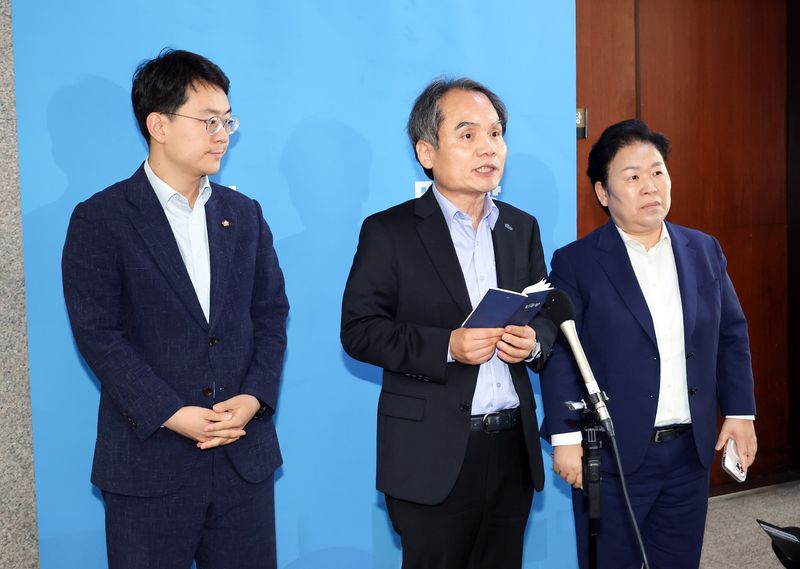
A separate election for a youth Supreme Council member, which was also discussed, was ultimately rejected after opposition from the pro-Jung camp. The DPK held a closed Supreme Council meeting that day and approved a revision to party rules proposed by the Party Convention Preparatory Committee to introduce the preferential voting system.
The proposal to separately elect a youth Supreme Council member was rejected after disagreement within the leadership. Kang Jun-hyun, the party's chief spokesperson, told reporters after the closed meeting that the party wanted to revise its rules to minimize disputes over regulations.
He said the main change was to clearly state that both preferential voting and runoff voting could be used as methods for holding a runoff election, and that the measure was approved. Kang also said the separate election of a youth Supreme Council member was rejected in a vote and should be sent back to the preparatory committee for further discussion.
He added that introducing the separate seat would not affect the timeline at all, and that the matter would likely be discussed again, though the outcome remained uncertain. Lee Sung-yoon, who is aligned with the pro-Jung camp, protested the voting procedure and walked out of the meeting room without taking part in the vote, saying he would resign from the Supreme Council.
He argued that he could not agree to pushing ahead with preferential voting and a separate youth Supreme Council seat, which he said violated the party constitution and rules. The remaining pro-Jung Supreme Council members, including Moon Jeong-bok, Park Ji-won and Park Gyu-hwan, explained why they had dropped their opposition to introducing the preferential voting system.
They said they had no choice but to make a decision because the ruling party could not be stopped and a collapse had to be prevented. They added that they were setting aside their own convictions for the sake of the party, and that under the principle of putting the party first and the individual second, they chose to give up the rights of the majority and accept the will of the minority.
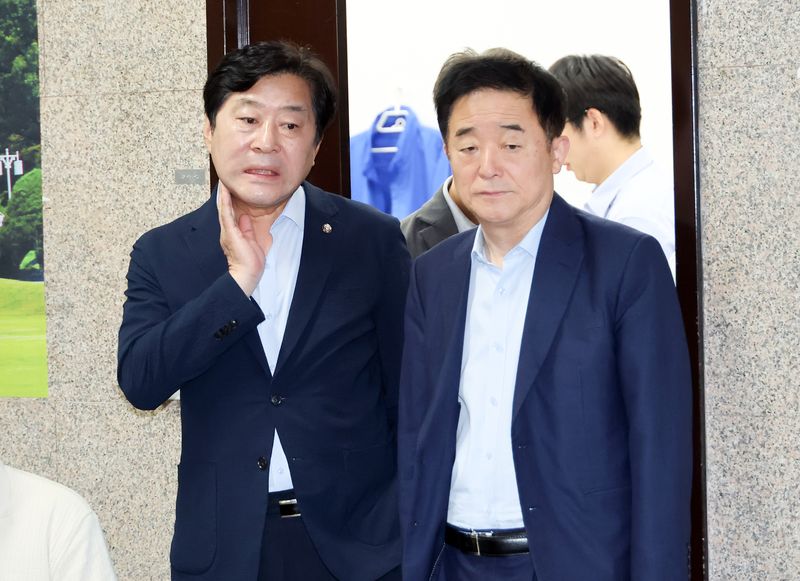
Jung Chung-rae, the former party leader, said on social networking service that he would respect and accept the party's decision, but he did not hide his discomfort, adding that he had a lot to say but would not say it. Hwang Myeong-seon and Kang Deuk-goo, who are classified as pro-Lee, leave after a closed Supreme Council meeting at the National Assembly on the 14th.
I am furious.
" He added, "Young people and party members are calling for it, so why can't we do this by revising the party constitution and rules? Doesn't that mean the people who rejected it today do not want to do it? Do these Supreme Council members have the qualifications to lead?" After about a week of factional tug-of-war, the introduction of the preferential voting system appears to have cleared a major hurdle in the DPK's party convention rules.
However, deep divisions within the leadership remain over the separate election of a youth Supreme Council member, making it difficult to rule out the possibility that internal conflict will surface again.
[email protected] Kim Hyeong-gu Reporter