Trump Says a Deal with Iran Is "Possible"... Fears Grow of a Prolonged War
- Input
- 2026-07-14 11:12:22
- Updated
- 2026-07-14 11:12:22
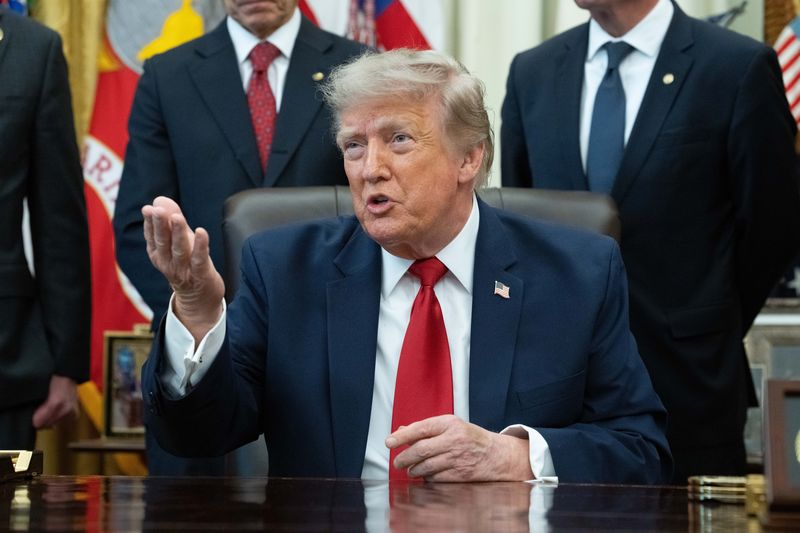
[Financial News] U.S. President Donald Trump, who has formally resumed hostilities with Iran, said a ceasefire agreement with Iran is still possible. On the ground, however, concerns are mounting that the war could drag on.
According to The Guardian, Trump met reporters at The White House in Washington, D.C., on the 13th (local time) and was asked whether talks with Iran could resume. "Yes. I think a deal is possible. Of course," he said.
He claimed, "We reached an agreement with them two days ago, but they said, 'That agreement won't work. We need additional negotiations.'" Trump did not disclose the terms of the deal. In his remarks that day, he also warned of a blockade of an Iranian port near the Strait of Hormuz and additional airstrikes.
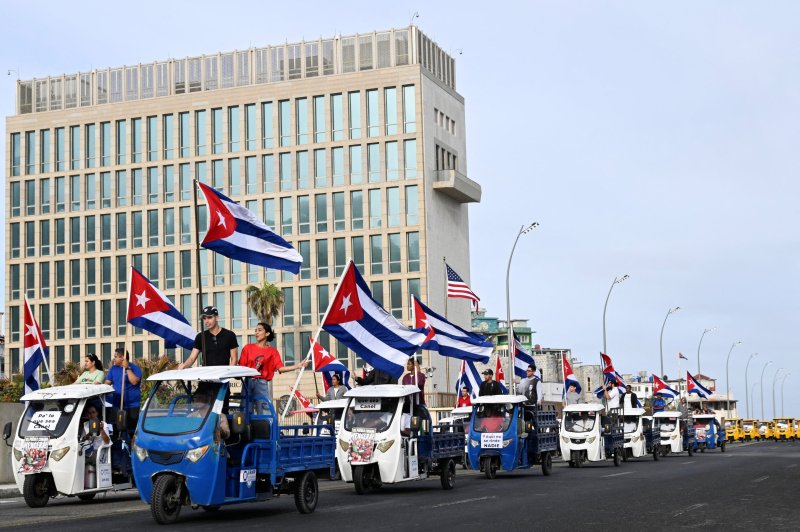
Trump also brought Cuba into the discussion. Asked about the possibility that Iran had deployed drones in Cuba, he said, "If they have something like that, and the chances are very high that they do, we will deal with it." He added, "We are not going to let that happen. They may also be keeping some of them, and we are investigating now."
Earlier, the U.S. political outlet Axios reported on May 17 that Cuba had obtained about 300 drones from Russia and Iran since 2023 and was considering attacks on U.S. military bases.
On the same day as that report, Carlos Fernández de Cossío Domínguez, Cuba's deputy foreign minister, wrote on X that "an anti-Cuba campaign seeking to justify a military attack on Cuba without any pretext is escalating by the hour, with increasingly absurd accusations." He said the United States was "the aggressor" and stressed that "Cuba is the side under attack and is acting in accordance with the principle of self-defense."
During the Q&A on the 13th, Trump was asked whether the war with Iran could become prolonged. He replied, "No," and said, "The Vietnam War lasted 19 years, but the war with Iran has only been going on for four months." On the same day, CBS reported that Trump had sent Congress a document dated June 10 notifying it of the resumption of the war with Iran.
Under the 1973 War Powers Resolution, if the U.S. government starts a war without congressional approval, it must either end military operations or obtain authorization to continue fighting within 60 days of first notifying Congress of the use of force. To extend the deadline, the president must demonstrate an "inevitable military necessity" to Congress, in which case an additional 30 days is allowed.
Trump launched a large-scale military operation against Iran on February 28 without congressional authorization. The Trump administration notified Congress of the operation on March 2, and the legal period during which it could wage war without approval from Congress expired on May 1.
However, in an April 7 announcement, Trump said the United States would observe a two-week ceasefire with Iran. He later declared an indefinite extension of the ceasefire on April 21 and agreed to a 60-day truce with Iran in a memorandum of understanding signed on the 17th of last month. At a Senate Armed Services Committee hearing on April 30, U.S. Defense Secretary Pete Hegseth said, "We are currently in a ceasefire. We understand that while we are in a ceasefire, the 60-day deadline under the War Powers Resolution is paused or stopped."
Meanwhile, the U.S. public is worried about a prolonged war, unlike Trump. According to a poll released on the 13th by French polling firm Ipsos in cooperation with a British media outlet, 79% of 1,019 U.S. adults said that "U.S. military involvement in Iran will last a long time."
[email protected] Park Jong-won Reporter