"SK hynix's U.S. stock also plunges 9%"...Will another 'Black Tuesday' come? A fear-filled commute [Office Worker Joys and Sorrows]
- Input
- 2026-07-14 07:16:05
- Updated
- 2026-07-14 07:16:05
[Financial News] "I bought it yesterday because it looked cheap, but if it falls again today, I don't think I can take it."
After the market closed on the 13th, a salaried worker in his 30s, identified as A, checked the closing prices of Samsung Electronics and SK hynix again. He had bought some shares during the session, seeing the sharp drop as a bargain opportunity, but said he felt more anxious than relieved after the market ended. A said, "I thought the big semiconductor stocks would eventually rise, but if they fall this much in a single day, I think I'll keep worrying about it even at work."
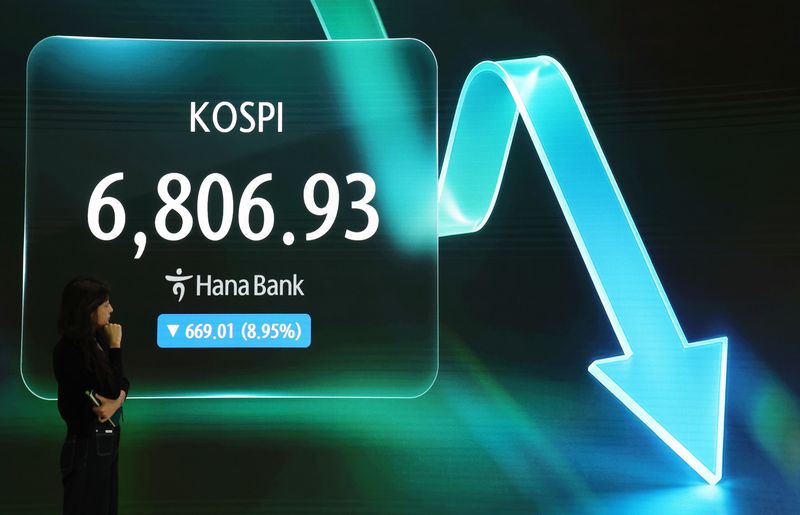
As Samsung Electronics and SK hynix plunged together, individual investors are watching the market on the 14th closely. On the 13th, KOSPI fell by nearly 9%, giving up the 7,000 level, and sell sidecars and circuit breaker mechanism were triggered one after another on the Korea Exchange Main Board. Retail investors bought net nearly 4 trillion won, but they could not offset the selling pressure from foreigners and institutions.
In addition, SK hynix's American Depositary Receipt (ADR) fell more than 9% on the 13th local time, further heightening investor anxiety. The drop appears to reflect weakness in the domestic stock and growing caution over the Artificial Intelligence (AI) investment boom spreading to the U.S. market.
SK hynix ADR (NAS) closed at $152.35 on the New York stock market, down 9.32% from the previous session. It made a flashy debut on its first day of trading on the 10th, surging 12.8%, but gave back most of those gains with the latest decline. The closing price fell to just slightly above the offering price of $149.
Semiconductor slump sends KOSPI to close below 6,800
According to the Korea Exchange on the 13th, KOSPI closed at 6,806.93, down 669.01 points from the previous session. The decline amounted to 8.95%.
The index opened lower at 7,412.03. It briefly turned positive early in the session, but selling intensified and the losses widened. The intraday low was 6,783.43.
As the situation worsened, market stabilization measures were also activated. A sell sidecar was triggered on the Korea Exchange Main Board at 10:34 a.m. At 1:28 p.m., the circuit breaker mechanism was triggered, suspending trading on the main board for 20 minutes.
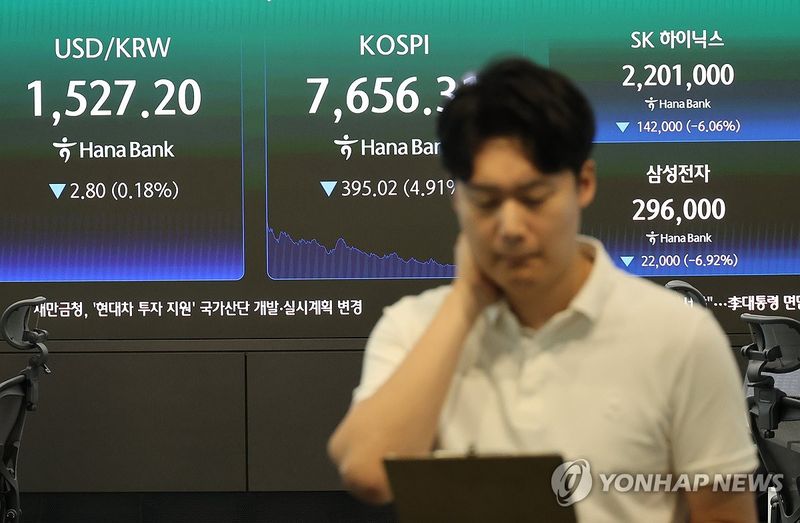
The losses were especially steep for major semiconductor stocks. Samsung Electronics closed at 254,500 won, down 10.70% from the previous session. SK hynix ended trading at 1,845,000 won, down 15.37%. SK hynix fell below the 2 million won mark.
Retail investors buy, foreigners and institutions sell
On the Korea Exchange Main Board, retail investors bought net 388.22 billion won. By contrast, foreigners sold net 170.47 billion won, while institutions sold net 221.93 billion won.
Retail buying was especially noticeable amid the sharp drop in semiconductor heavyweights. Samsung Electronics and SK hynix are familiar names to domestic investors. Some investors saw the decline as a buying opportunity, citing continued expectations for AI semiconductors and High Bandwidth Memory.
A salaried worker in his 40s, identified as B, said, "When Samsung Electronics and Hynix fall this much, I feel like I have to buy at least once." He added, "But on days when foreigners and institutions keep selling, I worry that the shares retail investors absorb could turn into a burden."
In a sharp selloff, additional buying to lower the average purchase price also tends to increase. However, if stock prices fall further, losses grow along with the larger number of shares held. It is a zone where the line between bargain hunting and averaging down becomes blurred.
Losses deepen for 2x product investors
Meanwhile, investors in single-stock leveraged products based on Samsung Electronics and SK hynix faced even greater volatility. These products are designed to move two times the daily price change of the underlying stock. When the underlying shares plunge, losses on the related products expand as well.
During the semiconductor rally, 2x products drew attention as a way to seek quick gains. But in a falling market, the same structure magnifies losses. For salaried workers, it can be difficult to monitor the market throughout the day, which may delay their response.
A salaried worker in his 30s, identified as C, said, "I looked at the 2x product because SK hynix itself felt too expensive, but after seeing a market like today, it doesn't seem like something you can easily jump into." He added, "It looks attractive when you only think about gains, but it feels very different when prices fall."
Earlier, the financial authorities had explained that single-stock leveraged products concentrate investment in a specific stock and amplify gains and losses. They said such products are not suitable for investors with low loss tolerance or limited understanding of investment risk.
Meanwhile, investors' attention is shifting to supply and demand in the early session on the 14th. After the sharp drop on the 13th, the key question is whether foreign selling will continue and whether retail bargain hunting will spark a rebound. The U.S. stock market, semiconductor shares, and the won–dollar exchange rate could also affect investor sentiment.
A salaried worker A said, "I think we'll have to watch today's market to know whether yesterday's purchase was a chance." He added, "I realized that just because Samsung Electronics and SK hynix are familiar names doesn't mean the losses are any smaller."
[email protected] Han Seung-gon Reporter