[Editorial] Establish a Future Fund with Extra Tax Revenue, and Improve Fiscal Health
- Input
- 2026-07-13 18:13:12
- Updated
- 2026-07-13 18:13:12
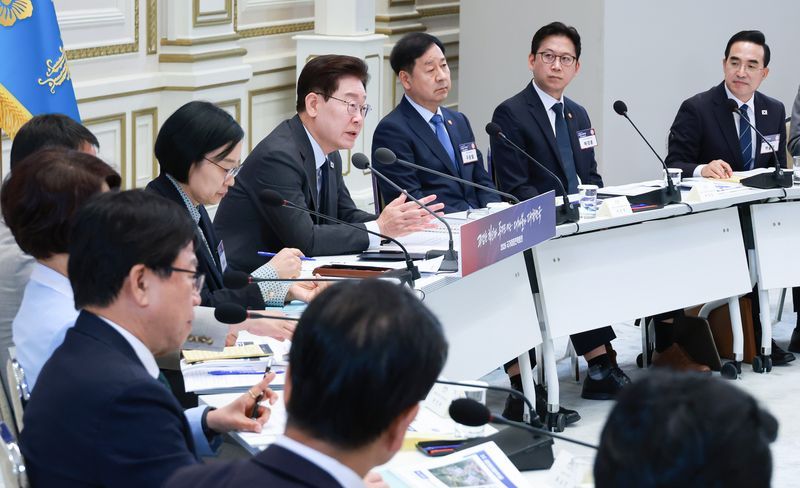
Only a few years ago, the government was struggling to manage its finances and issuing bonds to cover tax shortfalls. Against that backdrop, the current outlook feels like a dramatic change. That day, Park Hong-keun, minister of the Ministry of Planning and Budget, also projected that next year's national tax revenue would far exceed the originally forecast 412 trillion won and reach more than 500 trillion won for the first time. It is a reminder that taxes ultimately come from corporate competitiveness. Corporate growth, tax revenue, and national development do not move separately. The starting point for sustainable public finance is to strengthen industrial competitiveness so that growth and tax revenue can reinforce each other.
The direction of using extra tax revenue as strategic investment for the future is sound. Infrastructure such as power grids, water supply, and advanced industrial complexes is a national responsibility that the private sector cannot replace. In particular, the government's three major mega-projects are closely linked to massive private investment plans. If companies take responsibility for factories and technology, the government should preemptively improve infrastructure such as electricity, water, transportation and logistics networks, and living conditions. Retraining needed during industrial transition is also an area that fiscal policy should support first, since it is an investment in future generations.
However, for such investment to go beyond a one-time announcement, it must be backed by stable funding and strict fiscal principles. The Future Response Fund began with the use of extra tax revenue from the semiconductor boom. As global demand in the AI industry surges, semiconductor companies are posting better-than-expected profits, but the industry cycle can change at any time. The message is clear: companies and the state should invest boldly with an eye on the future, while always preparing for the end of the boom.
Above all, the rules for using the fund must be clearly defined. Investments that strengthen the country's future competitiveness should be strictly separated from routine spending that is difficult to reverse once started. Regional pork-barrel projects driven by political calculations, populist giveaways, and cash handouts are the very things that must be avoided. The fund must not become a structure in which any project can receive support simply by attaching the words future or regional development to its name.
An overhaul of the existing fiscal structure is also urgently needed. The government's plan to cut 50 trillion won in spending next year and review every program from scratch is worth recognizing. The principle of reducing allocations for low-performing programs and cutting the budgets of abolished programs to zero must also be carried out without exception.
Management of Government Debt cannot be neglected either. The government said it was confident that the fiscal balance and Government Debt would improve starting next year, but fiscal soundness will not be restored by optimistic tax forecasts alone. Some of the extra tax revenue should be used to reduce Government Debt and expand fiscal room. During boom times, the treasury should be filled so that the government can spend boldly when a downturn or national crisis hits. Reducing debt in advance is a responsible stance toward future generations.
President Lee said, "The direction of fiscal policy we are discussing now will determine South Korea for the next 20 or 30 years." We fully agree. The government must lay the foundation for a national leap forward through principled investment and strict fiscal discipline.