After the Iran War, a Super El Niño Hit — Global Food Prices Face a Major Shock
- Input
- 2026-07-13 16:04:21
- Updated
- 2026-07-13 16:04:21
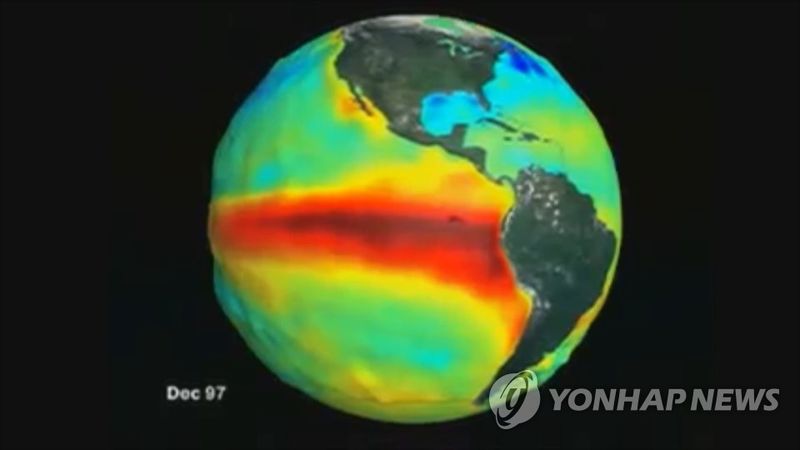
On the 12th local time, the British daily The Guardian reported that "economists warned that this year's Super El Niño could deal a severe blow to global food prices, and the phenomenon could last until 2028."
UniCredit, an Italian bank, estimated that "global agricultural output could fall by 14.3% due to the Super El Niño event, causing $342 billion in production losses." UniCredit added that "prices across key raw materials could rise by nearly 10% to 50%," and explained that "rice, palm oil, sugar, and coffee in particular could see price spikes of 50% to more than 100%."
Goldman Sachs also forecast that "global food prices could jump 15.8% this year because of the Super El Niño." Because planting, cultivation, and harvest periods differ by crop, the food price increases are expected to continue until the second half of 2028.
According to Goldman Sachs, India, the world's largest rice producer, is already being affected by El Niño. The monsoon season has begun in India, but some regions are receiving only 25% of their usual rainfall, while parts of central India are seeing just about 50% of normal precipitation. This could affect supplies of rice, wheat, and sugarcane produced in India, with ripple effects likely to be felt around the world.
The Guardian cited the situation in India from 1876 to 1878 as an example of how El Niño damaged crop harvests and food supply chains, noting that the combination of rising energy prices and crop production disruptions caused by the Super El Niño is expected to deepen hardship. In the late 1870s, El Niño brought devastating droughts to India, China, South Africa, Brazil, and Egypt. In India, where colonial rule had already worsened conditions, more than 6 million people reportedly died from famine caused by the drought.
[email protected] Hong Chaewan Reporter