Heat Domes, Blocking, and Extreme Heat Alerts: The World Economy Faces a 'New Kind of Heat'
- Input
- 2026-07-14 07:00:00
- Updated
- 2026-07-14 07:00:00
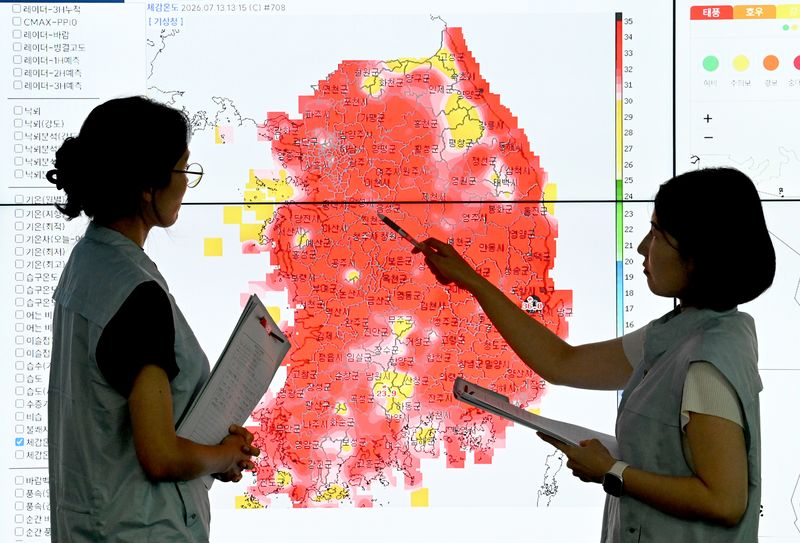
[Financial News] Heat is emerging as a new risk that goes beyond seasonal discomfort and is shaking the global economy.
In Europe, an "Omega Heat Dome"; in the United States, "Atmospheric Blocking"; and in South Korea, "extreme heat emergency alerts" are driving a wave of severe heat unlike anything seen in the past. The impact is spreading across the economy, from consumption to production.
Jeong Seeun, a professor of economics at Chungnam National University (CNU), told Financial News in a phone interview on the 13th, "The economic damage caused by climate is no longer a temporary variable but a structural problem." She added, "As the intensity and frequency of abnormal weather continue to worsen, we need to speed up our response."
Extreme heat is battering Europe’s economy and even reducing GDP.

Extreme heat is threatening the growth rates of major European economies.
Citing a report from Allianz Trade, a global trade credit insurer and economic and industrial risk analysis firm, Euronews reported that France, Spain, and Italy are among the countries expected to suffer the largest economic losses from the heat wave.
Allianz Trade reached that conclusion based on an analysis of the five hottest years in each country from 2014 to 2024. It estimated that cumulative GDP losses in those countries could reach 5% to 7% by 2030, driven by lower labor productivity and higher cooling demand.
Over the next five years, France is expected to suffer the largest losses at $240 billion, followed by Italy at $147 billion, Germany at $131 billion, and Spain at $120 billion.
Concerns are also mounting in France’s business community.
Patrick Martin, president of MEDEF, France’s largest business federation, said on a local broadcast last month, "The French economy is moving at half speed." He added, "Measures to protect employees are unavoidable, but production disruptions and lower workloads cannot be avoided either."
Emmanuel Moulin, the new governor of Banque de France, also assessed that "the short-term impact of the heat wave is uncertain, but in the medium to long term it will clearly hurt economic growth."
Stores are closing, and nuclear plants have stopped.
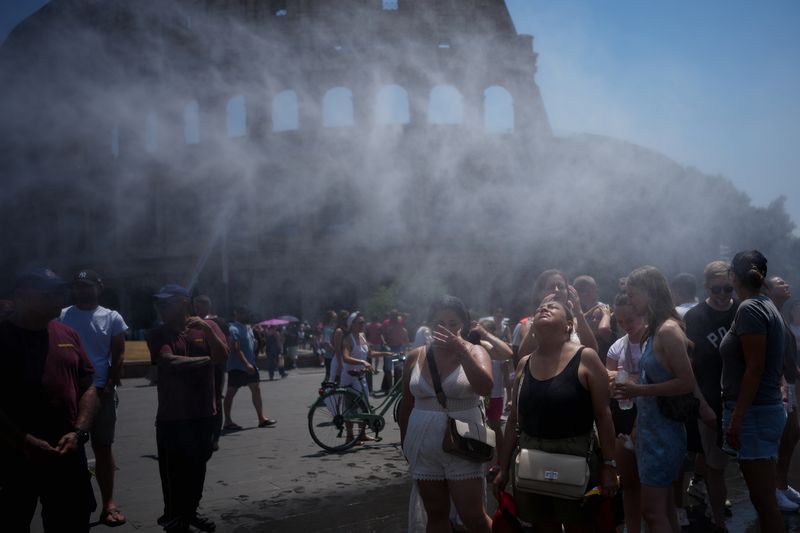
Companies are already feeling the full force of the heat.
According to the Financial Times (FT), Fast Retailing, the operator of Uniqlo, recently suspended operations at some stores or closed them early because of the heat wave in Europe.
Chief Financial Officer Takeshi Okazaki explained, "Cooling systems in European cities were not designed with heat waves like the recent ones in mind." He added, "Some stores had to suspend operations because indoor temperatures rose to dangerous levels."
Rival H&M also said it would adjust its product mix and marketing schedule, while British bakery chain Greggs closed some stores for two days because of the heat.
The energy industry has also been hit.
According to AFP, France’s Golfech Nuclear Power Plant temporarily shut down one reactor because rising river temperatures made it difficult to secure cooling water.
As energy supply instability has continued since the Russo-Ukrainian War, the added strain of extreme heat has made stable power supply a new challenge for Europe’s economy.
Construction and manufacturing are no exception. Across Europe, work at construction sites and outdoor job sites is restricted or working hours are adjusted once temperatures exceed certain levels, and companies are responding by changing factory operating hours.
The heat is also changing the flow of Europe’s tourism industry.
In southern Europe, including France, Italy, Spain, and Greece, where tourists from South Korea, Japan, and China usually flock in summer, record-breaking heat has led to a series of itinerary changes. France has also adjusted operating hours at major attractions such as the Eiffel Tower and the Louvre Museum.
The European Travel Commission has recently said that climate change is making the so-called "Coolcation" trend more pronounced, with summer travel demand shifting toward Northern Europe and the off-season.
South Korea is no exception: semiconductors and prices are also affected.
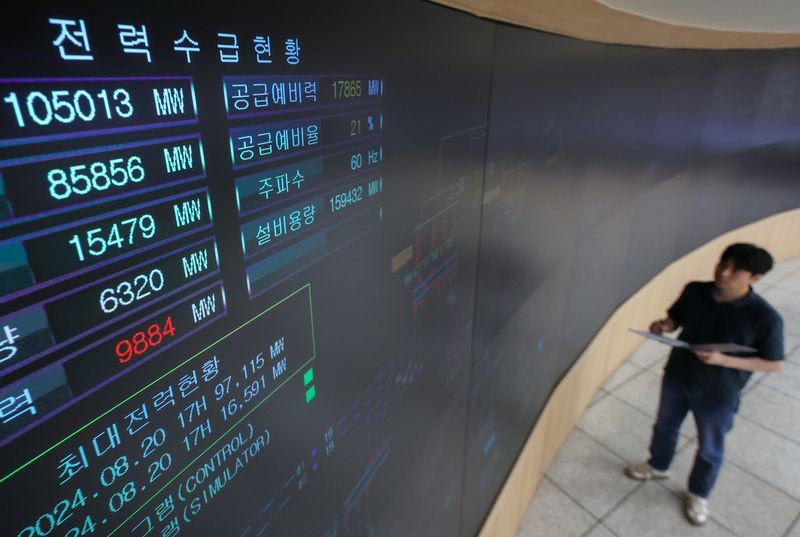
The heat wave is expected to have both direct and indirect effects on the South Korean economy.
For now, rising cooling demand is making stable power supply a key variable for industrial competitiveness. Semiconductor fabs and AI data centers, which require round-the-clock cooling, are especially sensitive to higher electricity use.
Samsung Electronics suffered damage in 2021, when a major power outage caused by a cold wave in Texas, United States, halted operations at its Austin plant for about 71 hours. Although the cause at the time was a cold wave, the industry views it as a case that showed how serious a risk abnormal weather can pose to semiconductor production. There are concerns that extreme heat could create the same danger if power supply instability occurs.
Prices of agricultural and livestock products are another variable. If the heat wave drags on, poor crop yields and lower livestock productivity could push up food inflation.
Professor Jeong said, "A month or two of extreme heat will not shake the entire economy dramatically, but the problem is that this keeps happening every year and the intensity keeps rising." She added, "Climate change is not a temporary shock but a structural economic risk."
She went on to say, "Just as energy security became important after the Russo-Ukrainian War, climate adaptation capacity itself — including power grids, industrial facilities, working conditions, and agriculture — will become a factor that determines national competitiveness."
[email protected] Seo Yoon-kyung Reporter