Samsung Electronics completes preparations for mass production of Tesla's next-generation AI5 chip, gears up to operate U.S. foundry fab
- Input
- 2026-07-13 14:44:38
- Updated
- 2026-07-13 14:44:38
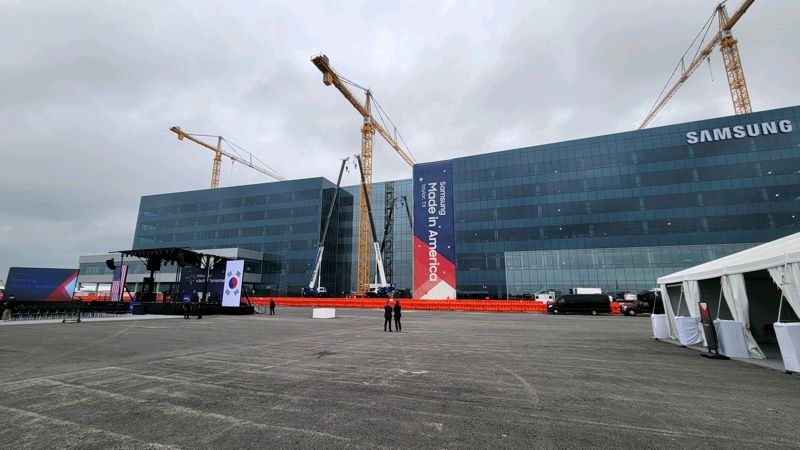
[Financial News] Samsung Electronics has completed preparations to mass-produce Tesla's next-generation artificial intelligence (AI) semiconductor, the AI5 chip. The AI5 chip is set to be manufactured at Samsung Electronics' Taylor Plant in the United States using an advanced 2-nanometer process. Attention is also focused on whether the foundry business will see a rebound in earnings.
According to industry sources on the 13th, an insider at Samsung Electronics' Foundry Business recently posted on social media that "the Tesla-Samsung AI5 chip has completed tape-out," adding that "the AI5 chip will be produced at Samsung's Taylor Plant in Texas using the company's 2-nanometer process and will soon be installed in Tesla's latest products."
Tape-out is the stage in which a fabless chip designer hands over a final design to a foundry to prepare for mass production. In other words, it is the last step before large-scale manufacturing. As a result, the Taylor Plant is expected to move into full-scale operation. The plant is expected to begin initial operations by the end of this year and start mass-producing products for major customers, including Tesla, from next year.
Earlier in April, Tesla CEO Elon Musk announced the AI5 tape-out on his X account, formerly Twitter, and said, "Thank you to Samsung Electronics and TSMC for helping make this chip possible." The tape-out Musk referred to at the time was reportedly for the volume production handled by TSMC.
Samsung Electronics plans to produce Tesla chips, including the AI5 and AI6 chips, at the Taylor fab using cutting-edge 2- to 3-nanometer processes. To that end, the company plans to dispatch a second team by September to handle yield verification, mass production and quality response, following the advance team sent from Korea last year to help set up the initial process.
Samsung Electronics is investing $37 billion, or about 56 trillion won, to develop the Taylor Plant into a key production base for sub-2-nanometer ultra-fine processes. Until last year, the company faced difficulties, including a lack of orders, which forced it to delay the plant's start-up and withdraw some staff. But the situation changed sharply after Samsung signed a 23 trillion won foundry contract with Tesla.
The latest tape-out is expected to accelerate improvements in Samsung Electronics' foundry business performance. Samsung's preliminary operating profit for the second quarter, released earlier this month, came in at 8.94 trillion won. Memory accounted for 94%, or about 8.4 trillion won, while the non-memory segment, including foundry, is estimated to have posted an operating loss of around 600 billion won. The company is expected to narrow losses in the second half of this year and turn profitable from next year, when Tesla shipments begin.
Samsung Electronics Chairman Lee Jae-yong also appears to have attended the Sun Valley Conference, where major tech leaders gather, together with Han Jin-man, the head of the Foundry Business. There, they reportedly discussed ways to expand cooperation with key clients in AI semiconductors and foundry services.
[email protected] Lim Su-bin Reporter