The ceasefire agreement collapsed after 25 days: the United States and Iran clash again on a full scale
- Input
- 2026-07-13 12:06:06
- Updated
- 2026-07-13 12:06:06
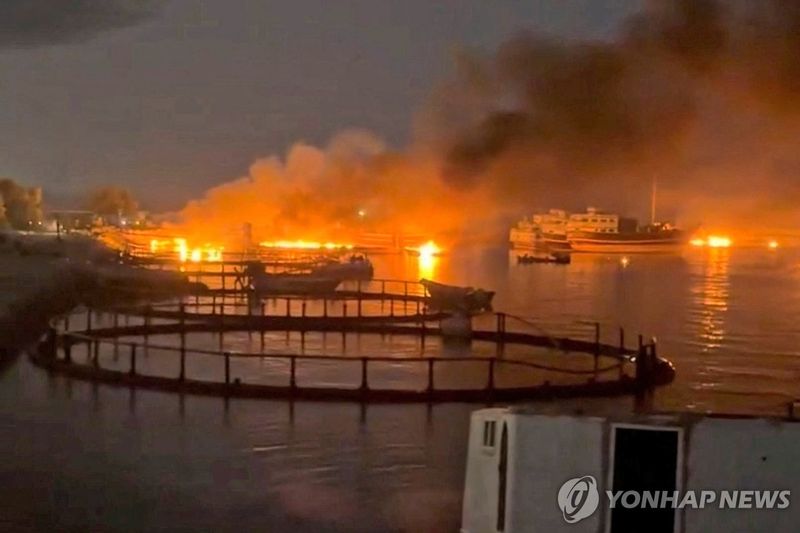
[Financial News] The United States carried out additional airstrikes targeting Iran, which it says has been threatening civilian vessels in the Strait of Hormuz. Iran responded with missile and drone attacks on U.S. bases in the Gulf region. Even after last month’s signing of an armistice agreement, the two countries’ conflict has again escalated into military clashes over control of the Strait of Hormuz.
U.S. strikes 140 sites in southern Iran as explosions erupt across the Strait of Hormuz
CENTCOM said on X on the 12th local time that it had launched additional airstrikes at 5 p.m. Eastern Time to further weaken Iran’s ability to attack civilian mariners and commercial vessels freely transiting the Strait of Hormuz.
It added that the commander in chief had ordered the strikes to hold Iranian forces accountable, confirming that the operation was carried out under the direction of U.S. President Donald Trump. The strikes began around 6 a.m. on the 13th in Korea and around midnight on the 13th in Iran. Trump also told NBC in an interview, "We bombed them completely last night."
Shortly after the strikes, Iranian state TV reported multiple loud explosions in areas including the western outskirts of Bandar Abbas, the gateway to the Strait of Hormuz, as well as Qeshm Island and Jask. Russia’s RIA Novosti also cited Mehr News Agency as saying that explosions were reported in the western outskirts of Khondab as well.
The U.S. military said this was the fourth strike in the past week and the second day in a row of air raids. After the operation ended, CENTCOM said it had hit about 140 Iranian military targets using fighter jets, drones, and precision-guided weapons. The U.S. military stressed that the operation was intended to weaken Iran’s maritime attack capabilities and ensure the free navigation of international shipping. Washington has recently accused Iran of repeatedly attacking or threatening civilian commercial vessels in the Strait of Hormuz, undermining the safety of international sea lanes.
The latest airstrikes were a response to the previous day’s attack by the IRGC on a Cyprus-flagged container ship passing through the Strait of Hormuz. The IRGC then declared a full blockade of the strait, further heightening tensions.
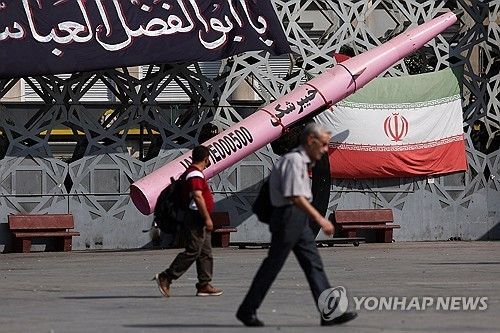
Iran retaliates: "All diplomatic efforts have been rendered futile"
Iran launched missile and drone attacks on U.S. bases in the region shortly after the American airstrikes. Iran’s state-run Nour News reported that the Iranian military and the IRGC had "launched a large-scale operation targeting enemy bases in the region." In Bahrain, missile warning sirens sounded, and authorities there, where the headquarters of the United States Fifth Fleet is located, are confirming whether there was any damage.
Iran’s Foreign Ministry issued a statement saying that only 25 days had passed since the ceasefire agreement for ending the war was signed, yet the United States had effectively violated nearly every part of the deal by attacking transportation infrastructure, commercial vessels, cargo ships, and aviation facilities. It condemned the strikes as a war crime that blatantly violated the UN Charter and said they had rendered all diplomatic efforts over the past several months futile. The ministry also warned of further retaliation, saying that all launch points used to attack Iran would become legitimate targets.
Esmaeil Baghaei, spokesperson for Iran’s Foreign Ministry, also said on X that "this is not a military conflict, but the continuation of aggression by the United States and the Zionist regime." He added that "Iran has not attacked anywhere first, and the strikes targeting U.S. bases along the Persian Gulf coast are an exercise of the right to self-defense guaranteed under international law."
The United States and Iran signed an MOU on Ending the War last month and agreed to hold nuclear talks and follow-up peace negotiations for 60 days. But as clashes over control of the Strait of Hormuz and vessel passage continue, the agreement has reached a critical turning point.
The United States says the Strait of Hormuz remains open and that U.S. forces are ensuring the safe passage of international shipping. Iran, however, maintains that vessels deviating from routes designated by Tehran could become targets of military action. As a result, analysts say the confrontation over control of the strait is unlikely to be resolved easily.
The Strait of Hormuz is a vital maritime route through which about one-fifth of the world’s crude oil and liquefied natural gas (LNG) shipments pass. UN Secretary-General António Guterres urged both sides to exercise restraint, warning that a return to full-scale hostilities could have catastrophic consequences.
[email protected] Kim Kyung-min Reporter