Israel Sets October General Election, Netanyahu Eyes Eighth Term as Prime Minister
- Input
- 2026-07-13 11:04:44
- Updated
- 2026-07-13 11:04:44
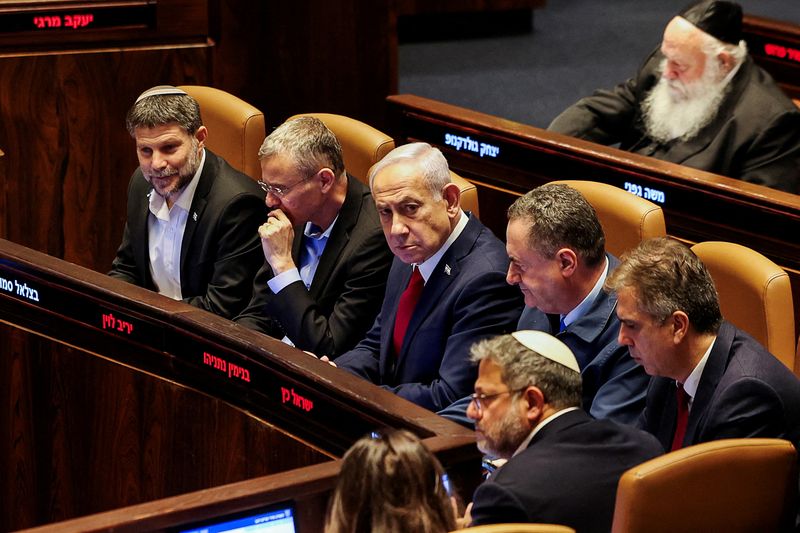
[Financial News] Israel's parliament is set to hold a general election at the end of its four-year term on a fixed date for the first time since 1988. The political future of Prime Minister Benjamin Netanyahu, who has ruled for 20 years, will be decided on October 27.
According to The Times of Israel (ToI), Sagit Apik, legal adviser to the Knesset, said in an announcement on the 12th that the parliament would be dissolved on July 17. He added that the election would be held on October 27, the latest date allowed by law.
Apik explained that "the current Knesset will complete its full term and will not be dissolved early," and that "the election date will remain the one set by law."
ToI reported that this will be the first general election held on a scheduled date since 1988. It is extremely rare for a single party to win a majority in the Knesset. Because Israel uses a parliamentary system, successive governments have been formed through coalitions of multiple small parties, and clashes among them have often led to coalition collapses and early dissolutions of parliament.
The 37th government, a coalition led by Netanyahu's Likud party, was launched on December 29, 2022. Netanyahu's government completed its four-year term after forming a wartime cabinet following the outbreak of the war in the Gaza Strip on October 7, 2023. ToI noted that this is the first Israeli government since 1973 to serve out its full term.
Netanyahu, who first won a general election in 1996 and has served as prime minister seven times over the past 20 years, is expected to challenge for an eighth term. In a statement on the 10th of last month, the ruling Likud party emphasized that "Netanyahu will run in the upcoming election and, with God's help, will win." Netanyahu himself posted on social media on the 28th of last month, signaling that he would form a new government with both ruling and opposition parties. He said, "Israel needs a broad-based national unity government, and I will form such a cabinet."
Public opinion at home, however, is unfavorable to Netanyahu. According to a poll released by Hebrew University of Jerusalem on the 21st of last month, 92% of respondents said Iran won the recent Middle East war. Netanyahu's approval rating also fell sharply, from 40.5% in early March to 29.4% in June.
There is also a growing perception in Israel that the ceasefire memorandum the United States signed with Iran last month was unfavorable to Israel. In addition, Netanyahu is burdened by a range of political troubles, including responsibility for the Gaza Strip war, a corruption trial, disputes over military conscription for ultra-Orthodox Jews, and judicial reform.
Recently, centrist politician Gadi Eisenkot, a former chief of staff of the Israel Defense Forces (IDF), has emerged as Netanyahu's strongest rival. Eisenkot has edged out Netanyahu within the margin of error in polls on the next prime minister, and his centrist party Yashar has also been shown to be polling at a level similar to Likud.
[email protected] Park Jong-won Reporter