[Exclusive] Mirae Asset Seeks the Next SpaceX, Bets on Next-Generation Space Solar Cells [fn Market Watch]
- Input
- 2026-07-13 09:05:51
- Updated
- 2026-07-13 09:05:51
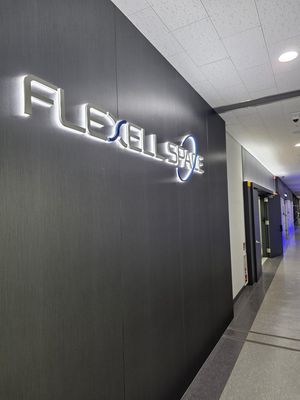
[Financial News] Mirae Asset Financial Group has invested in a startup developing next-generation space solar cells, expanding the country's "new space" investment landscape. After moving early into the global space industry through its initial investment in SpaceX, Mirae Asset is now broadening its space portfolio by backing domestic space energy technology.
According to the investment banking industry on the 13th, FLEXELL SPACE, a company developing next-generation space solar cells, has completed a Series A funding round worth about 25 billion won. The company is being credited with earning recognition for both its technology and business potential from major domestic institutional investors about two years after spinning off from Hanwha Systems Co., Ltd.'s in-house venture program.
The key point of this round is Mirae Asset Financial Group's participation. Mirae Asset Venture Investment and Mirae Asset Capital joined as new investors. Mirae Asset has long viewed the space industry as a future growth engine, with early investments in Elon Musk's SpaceX and the launch of a U.S. space tech ETF. This deal is seen as significant because it expands the firm's investment scope beyond global space companies to domestic core technologies.
Other new investors included Industrial Bank of Korea, NH Venture Investment, IBK Investment & Securities, Seoul ZV, Korea Investment & Securities Co., Ltd., and Korea Credit Guarantee Fund (KODIT). Existing investors InterVest, L&S Venture Capital, and Quad Ventures also made follow-on investments, underscoring their confidence in the company's growth potential.
FLEXELL SPACE became independent in September 2024 after starting as an in-house venture at Hanwha Systems Co., Ltd. In its pre-Series A round, it raised about 5 billion won from Hanwha Systems Co., Ltd., LK Chem, InterVest, L&S Venture Capital, and Quad Ventures. Including this Series A round, cumulative funding has reached about 30 billion won in just two years since its founding. Despite its short history, the company has drawn large follow-on investments from existing backers and simultaneous participation from new institutions, which is being interpreted as validation of its technology.
The company is developing high-efficiency, ultra-light, and flexible solar cells based on perovskite and CIGS, or copper, indium, gallium, and selenium. Compared with conventional space solar cells, its products are lighter and can be produced in larger formats. Its core advantage is a "rollable" structure that can be folded for launch and then deployed in space. The technology is expected to be applicable across next-generation space infrastructure, including small and large satellites, high-altitude platform stations (HAPS), space stations, space data centers, and lunar and Martian exploration missions.
FLEXELL SPACE plans to conduct its first in-space demonstration by mounting its solar cells on the fourth Nuri (KSLV-II) launch in November. It also aims to carry out an ISS demonstration next year to secure product reliability in real space conditions, including radiation, thermal vacuum, thermal cycling, and photostability. The company is already working on technology and business cooperation with global satellite manufacturers such as Airbus SE, Terran Orbital, and Thales Alenia Space. The funds raised will be used to introduce key equipment for commercializing space solar cells, upgrade pilot production lines, internalize core processes, design mass production, and verify performance in space environments. It also plans to accelerate sample supply, joint evaluation with global customers, and overseas business development.
Lee Geosan, chief financial officer of FLEXELL SPACE, who spent 17 years handling finance and strategy at Hanwha Group, said, "This Series A is more than just a fundraising round. It is the market's assessment that our technology and business viability have entered the commercialization stage." He added, "We have earned the trust of major domestic investment institutions in just two years since founding, and we will speed up the establishment of a mass-production system." He also said, "As low-Earth-orbit satellite networks expand and new space infrastructure such as space stations and space data centers emerge rapidly, a next-generation power source that is lighter, cheaper, and capable of large-area deployment is becoming essential." He emphasized, "We will complete the internalization of core processes and verification in space environments, and take a leap forward as a global space energy company."
Meanwhile, FLEXELL SPACE plans to establish a full-scale mass-production system after 2028, expand supply of solar cells and modules for space use, and accelerate joint development with global customers and its push into the future space infrastructure market. The company aims to position itself not just as an R&D-driven technology firm, but as a comprehensive space energy solutions company that can be applied to actual space missions.

[email protected] Kim Kyung-a, Kang Gu-gwi Reporter