Is Samsung Electronics and SK Hynix Shaking?..."Expectations Got Ahead of Themselves" [fn Insight]
- Input
- 2026-07-13 15:47:51
- Updated
- 2026-07-13 15:47:51
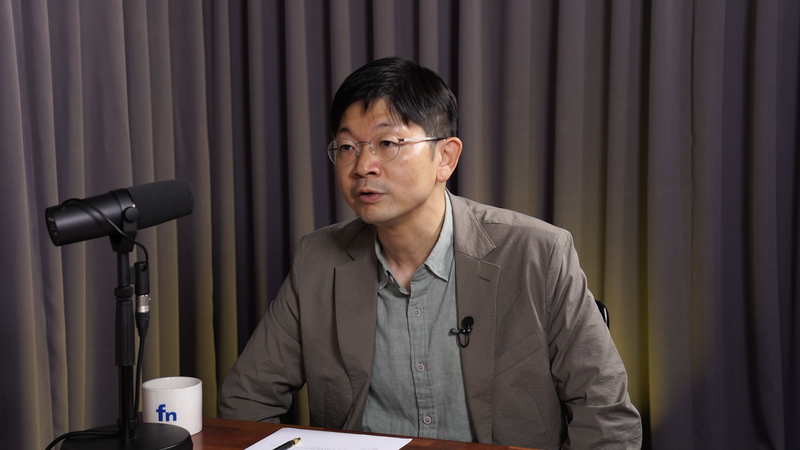
When Financial News met Oh Geon-young on the 13th, the head of Shinhan Bank's Premier Pathfinder Division said that "the entire financial market is undergoing enormous change." He pointed to the trends running through the market, from the AI investment boom to the rate-hike cycle and the entrenched high exchange rate. His repeated advice was clear: "Beware of crowding into one side, and keep the center of your portfolio steady over the long term."
"AI Expectations Got Ahead of Themselves"
Oh was asked about the recent volatility in semiconductor stocks. He expressed strong optimism about AI as an innovation. However, he said the problem was that expectations had moved too far ahead.
He said, "I agree that AI is a major innovation unlike anything in the past, but the problem is that everyone agrees on that too." He added, "What should have risen gradually was bought up in advance, and that creates a problem where the curve jumps." He went on to explain, "This is the current picture: financial markets keep running ahead of the real economy, then correcting, and that repeated pattern is increasing volatility."
He said the recent semiconductor rally reminded him of the 2006 commodity supercycle. While stressing that "I am not saying it will turn out the same," he noted, "In May 2006, strong growth in China became a major theme and pulled in commodities. Thanks to strong demand, suppliers were able to sell goods at high prices. International oil prices more than doubled from two or three years earlier, and in 2008 Exxon Mobil Corporation was the world's most valuable company by market capitalization."
He continued, "Commodity companies' margins improved, but the companies buying those commodities faced higher costs, and inflationary pressure grew, which became a factor pushing up interest rates." He recalled, "Eventually, rising prices and rates led to demand destruction, and then the Bernanke Shock overlapped as Ben Bernanke took over as Federal Reserve chair, causing the financial markets to swing sharply."
Oh advised that "if a company like Micron is taking 80% of operating profit, that is good for semiconductor companies, but it becomes a burden for the other side." He added, "Rather than assuming semiconductor prices can keep rising forever, it is worth watching for the possibility of a backlash against prices rising too much."
He added, "After Bernanke raised the benchmark rate to 5.25% in June 2006 and then stopped hiking, the stock market gradually recovered." He said, "Then, from the second half of the year, the Chinese economy grew even faster, commodity prices shook once and then rallied more strongly."
"Our Nominal Growth Rate Is 17%"
Oh said the Bank of Korea's base-rate hike seemed to be "almost a foregone conclusion."
What drew his attention in particular was Bank of Korea Governor Shin Hyun-song's remarks on "nominal growth rate." Oh said, "I was personally surprised." He explained, "Real growth this year is around 3%, and when you add inflation, nominal growth comes close to 7%. If you also factor in export prices, which jumped 13% from a year earlier, nominal growth rises above 17%, the highest level in 50 years since the 1970s."
Oh said, "Looking at nominal growth means Korea's growth is stronger than expected, and that could mean the economy can withstand not just one rate hike, but several." He added, "That has come as a surprise in the bond market, pushing the 10-year Treasury yield up to 4.2%, where it has struggled to come down."
He also pointed to the link with the exchange rate. He said, "It is unusual that the Current Account Balance is posting a record surplus while the exchange rate is not falling." He added, "Since the interest-rate gap of 3.5% in the United States and 2.5% here is one reason the exchange rate has been pushed up, it seems there is some determination at the Bank of Korea to rein it in even if that means raising rates."
He summed up the market consensus as "two hikes this year and one or two next year," and predicted that "the base rate, now at 2.5%, could rise to 3.5%." However, he added, "If the United States raises rates more than expected and the gap widens again, the story changes." He said, "It is a complicated equation that requires looking at our monetary policy and the other country's policy together."
On the stronger exchange rate, he noted that the market could be changing its idea of an "appropriate exchange rate." He explained, "If a high exchange rate persists for a long time, people's sense of what is appropriate rises, and eventually the floor of the exchange rate moves up, locking in a high exchange rate."
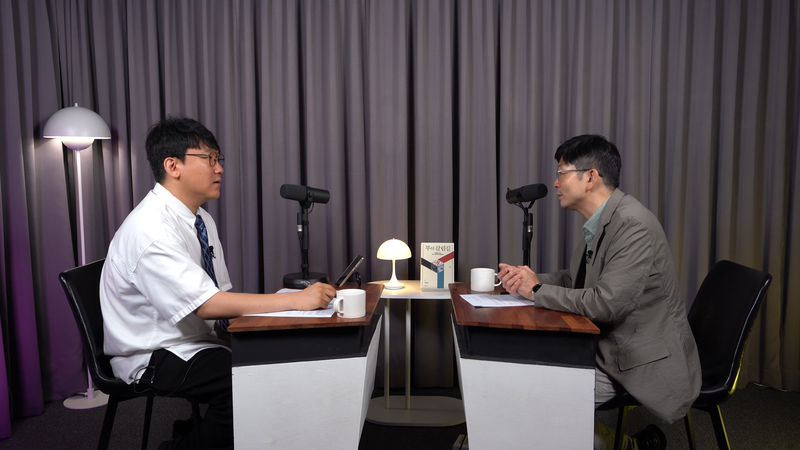
"When You Feel Motion Sickness, Look Far Ahead"
Oh summed up his advice for investors in the New Normal era with a childhood memory. He said, "When I was young, I got motion sickness a lot, and people used to say that if you look far ahead, you feel the car's shaking less and the motion sickness eases." He added, "If you only look right in front of you, sensitive people feel the shaking much more strongly."
He emphasized, "This is a period when stock prices, exchange rates and interest rates are all showing record volatility, and correlations that were never seen before are appearing." He added, "At times like this, it is important not to react too sensitively to each individual move, but to keep your portfolio balanced over a slightly longer horizon."
In closing, Oh warned against crowding into one side of the market. He said, "These days, I often feel that investors are increasingly leaning in one direction." He advised, "It is positive to raise one side's weight a little, but that cannot last forever. Since rough patches can appear along the way, wisdom is needed to keep things balanced."

[email protected] Han Young-joon Reporter