[Editorial] Intensifying semiconductor competition calls for completing factories as early as possible
- Input
- 2026-07-12 18:50:47
- Updated
- 2026-07-12 18:50:47
The World Semiconductor Trade Statistics (WSTS) expects the global semiconductor market to reach $1.5112 trillion this year, or about 2,279 trillion won. That would be 90% higher than last year. The memory chip market is projected to grow 250% year on year to $803.9 billion. Although debate continues over whether the AI boom is a bubble, the view that the technology will keep advancing for now is gaining ground. As a result, forecasts that chip shortages will continue next year are also strengthening. By contrast, claims that the semiconductor market has already peaked are fading.
Micron, a global memory chip maker alongside Samsung Electronics and SK hynix, reportedly plans to raise its U.S. investment to $250 billion by 2035 and produce 40% of its DRAM in the United States. Taiwan's TSMC has also expanded its planned U.S. investment to $165 billion. Chinese companies such as ChangXin Memory Technologies (CXMT), backed by strong government support, are threatening established players with massive investments of their own.
For semiconductor companies that have all pledged astronomical investments, the outcome now depends on speed. In any industry, the companies that align supply with demand at the right time ultimately win. The strategy is to invest during downturns to prepare for upturns, and during booms to prepare for downturns. Because the semiconductor industry is highly cyclical, timing matters even more. If factory construction is delayed and completion comes as the market enters a slump, the result will be overinvestment.
Korean companies have already announced plans for a Gwangju industrial complex after the Yongin national industrial complex. The AI-driven chip boom may last for several years, but what comes after that is uncertain. If the market does peak in a few years, companies must finish building their factories and start supplying products before then to secure an early lead. In that sense, the Gwangju complex should also move quickly to prepare the necessary conditions, while the completion schedule for the Yongin complex should be brought forward. It was only natural, and the right decision, for Samsung Electronics to advance the completion date of the first fab at the Yongin complex by two years, from 2031 to 2029.
Industrial complex construction requires three things to align: government support, corporate drive and funding. The government's role is especially important. Infrastructure such as electricity and water cannot be supplied quickly without firm government commitment. That is the main reason construction of the Yongin complex has been slow so far. Going forward, not only the central government but also local governments must actively support the project.
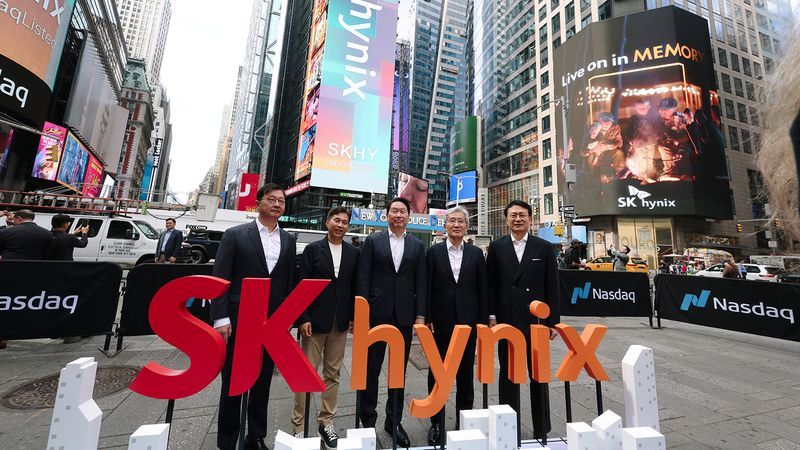
Funding investments worth hundreds of trillions or even thousands of trillions of won cannot be secured by companies alone. In that respect, SK hynix's successful listing on the New York Stock Exchange is fortunate. The funds raised through the listing amount to about 40 trillion won. Compared with the total required capital, that is only a fraction. Companies must maximize revenue when they can, because that is how they secure investment funds. Only when investment and sales reinforce each other can a company continue to grow.
The pressure from the United States to push for local investment cannot simply be dismissed as bad. Companies should make their own decisions after carefully weighing the pros and cons of domestic and overseas investment. If the pressure is unfair, the government should step in aggressively and use its diplomatic leverage to protect corporate interests and block the offensive.