The semiconductor mega-project is moving fast, but the Ultrapure Water Platform Center is being reconsidered from scratch
- Input
- 2026-07-12 18:19:11
- Updated
- 2026-07-12 18:19:11
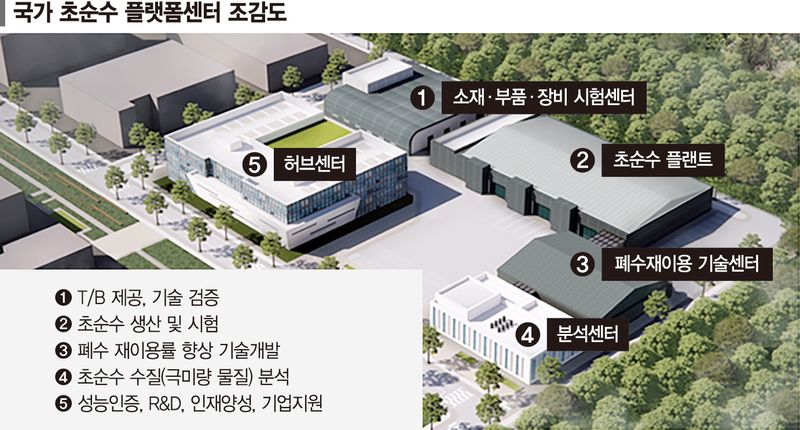
According to the Ministry of Climate, Energy and Environment on the 12th, the National Ultrapure Water Platform Center project, which had been accepting site applications before being suspended, is now being reexamined from the ground up, including its scale, funding method, and even the overall approach to implementation.
Ultrapure water is used in cleaning during semiconductor manufacturing and is a critical factor that affects quality and yield. Earlier, the Ministry of Environment, now the Ministry of Climate, Energy and Environment, announced a plan to build the National Ultrapure Water Platform Center in order to localize ultrapure water production technology, which has relied heavily on overseas sources, and to support demonstration and commercialization. The plan called for a complex research facility that would integrate ultrapure water technology development, water quality analysis, demonstration and verification, training for specialists, and support for companies by 2030.
However, the project has run into delays during the implementation process.
As this newspaper reported on April 1 last year, the budget was cut from the original 350 billion won to around 250 billion won. The project, which was initially to be led mainly by central government funding, also began considering a local-government matching scheme, and the site competition was suspended. As a result, the original goal of completing the facility by 2030 has effectively become difficult to achieve. At the time, the project was expected to resume after the basic plan was revised, but it has since remained stalled. It is now being reviewed not only in terms of budget and funding, but also in terms of whether building a platform center is the most effective approach.
A ministry official said, "Because the project requires substantial construction and operating costs, we are continuing to consider which approach would be the most effective and efficient."
The government is reviewing whether to continue technology development through existing national R&D alone or to establish a separate platform that would provide a permanent base for demonstration and verification.
Still, the ministry acknowledges the need for the platform center itself. An official explained, "In national R&D, demonstration ends once the technology is developed and transferred to companies, but a platform center is a facility that can continuously carry out analysis and demonstration." The official added, "It could serve as a foundation that allows companies to verify and use domestic technologies more easily."
If the project resumes in the future, linking it with the Yongin Semiconductor Cluster or the government's planned second semiconductor production base in the southwest region could also be considered. In fact, Yongin-si previously sought to attract the platform center by highlighting its connection to the semiconductor cluster as a strength.
Professor Jang Am of Sungkyunkwan University’s Graduate School of Water Resources emphasized, "The platform center could become a key infrastructure that supports the semiconductor industry’s competitiveness, as a base for ongoing research and development and talent training."
[email protected] Park Ji-young Reporter