Lim Gwang-hyun: "A tax-revenue-skewed portfolio... the Future Response Fund is a necessary policy"
- Input
- 2026-07-12 11:48:00
- Updated
- 2026-07-12 11:48:00
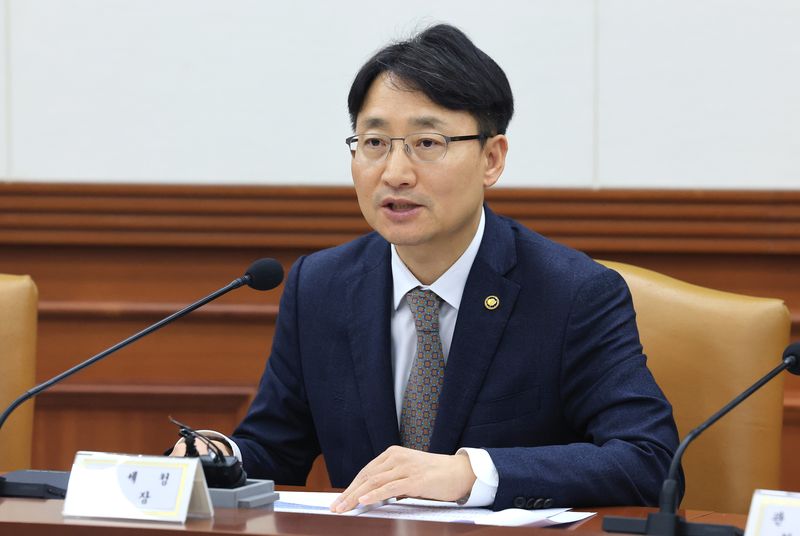
[Financial News] Lim Gwang-hyun, Commissioner of the National Tax Service, said on the 12th that "the plan to create a Future Response Fund, which would use the additional tax revenue generated by the semiconductor boom to support the three major mega projects and strengthen the country's long-term competitiveness, is a necessary policy."
On the same day, Lim said on social networking service that "from the perspective of a revenue agency, I expect it will help secure both fiscal sustainability and tomorrow's competitiveness at the same time, as we prepare for rising welfare demand driven by low birth rates and an aging population."
Lim noted that "if we look at our tax revenue from a portfolio perspective, Korea's revenue structure is highly dependent on a specific industry and a small number of companies," adding that "seeing this skewed portfolio always worries me as the person responsible for the nation's revenue."
He also explained that "if we examine Korea's tax revenue and economic conditions over the past 20 years, this pattern becomes very clear," and that "when the semiconductor industry was booming, tax revenue rose rapidly, led by corporate tax, but when the semiconductor cycle slowed, weaker corporate earnings caused tax revenue to fall as well, repeating difficulties in fiscal management."
Lim said that "this year as well, corporate tax is increasing amid the semiconductor supercycle, and Securities Transaction Tax and other revenues are rising sharply thanks to a revitalized stock market," adding that "sustainable public finance depends not only on how much tax revenue we secure, but also on how stable that revenue structure is."
In particular, Lim emphasized that "to diversify the tax-revenue portfolio, we must continue to foster semiconductors, our core competitive strength, as a super-gap industry to solidify our technological edge, while actively investing in and nurturing new strategic industries that will become future growth engines," adding that "this will not only secure future growth momentum, but also diversify the industrial structure and, in the long run, create a virtuous cycle that builds a more balanced and stable tax base."
[email protected] Seo Young-joon Reporter