Musk Calls Altman a "Scammer," Altman Fires Back With "Pop-Up Shop" Remark in Another War of Words
- Input
- 2026-07-12 09:07:47
- Updated
- 2026-07-12 09:07:47
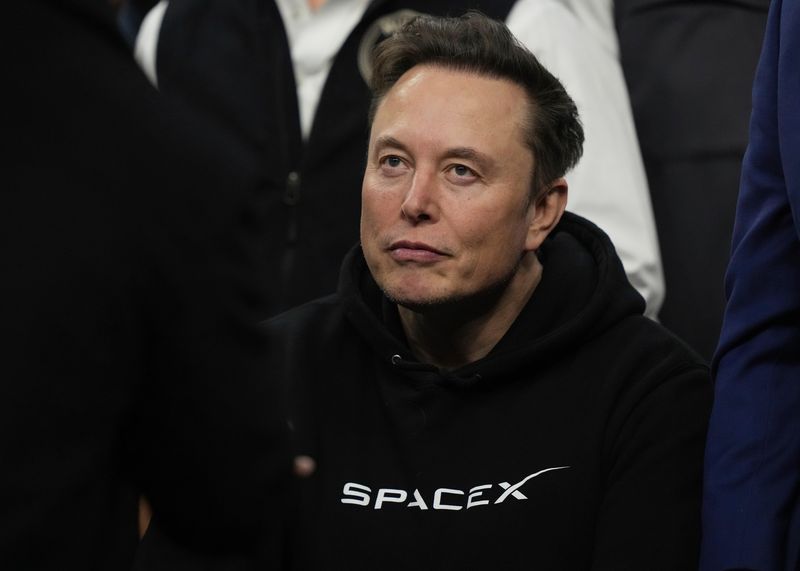
[Financial News] Apple Inc. has sued OpenAI over allegations of trade secret theft, and Elon Musk, CEO of SpaceX, and Sam Altman, CEO of OpenAI, have engaged in a public war of words. The feud between the two OpenAI co-founders has escalated into a barrage of insults, mixing personal attacks with criticism of each other's business ideas.
According to foreign media reports and posts by the two men on X on the 12th, Musk mocked a report on Apple's lawsuit against OpenAI and two former Apple employees the previous day, saying, "They really put a lot of effort into committing this crime." Apple alleged that OpenAI systematically obtained undisclosed hardware technology and manufacturing-related secrets by using former Apple employees, hiring processes, and supply-chain contacts.
Musk attached the word "scam" to Altman's name and called him "Scam Altman." He directly targeted Altman, saying, "He has taken scams to a whole new level."
Musk also posted a photo of Altman saying, "I do this because I love it," and wrote, "What he means by 'this' is scamming." He then mocked him, adding, "He probably loves scamming more than anyone else in the world."
The remark came from Altman's answer at a 2023 hearing before the United States Senate, where he explained why he serves as CEO of OpenAI without holding equity or receiving a salary. Musk used the old quote in connection with Apple's lawsuit to attack Altman's morality.
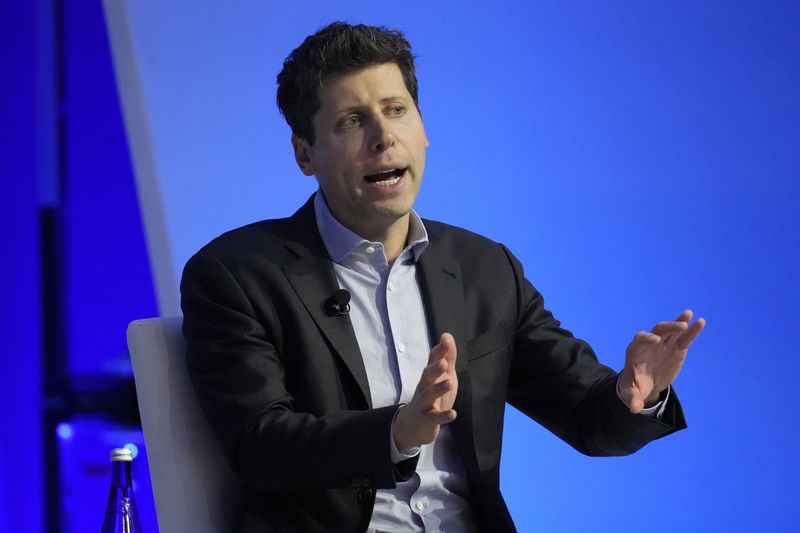
Altman did not back down. After calling Musk by the slang term "homeboy," a casual word for a friendly man, he shot back, "You're the one selling a short-term space data center business to public market investors."
Altman's comment was aimed at Musk's space data center plan, which is being pursued through SpaceX. Musk has proposed building solar-powered AI computing facilities in satellite orbit to solve the power and cooling problems of terrestrial data centers.
Altman had previously said that large-scale space data centers would be difficult to commercialize in the near future, citing launch costs, space radiation, cooling systems, and the challenge of repairing failed semiconductors. He argued that such facilities may be possible in the long term, but not at a meaningful scale before 2030.
In a complaint filed with the United States District Court for the Northern District of California, Apple named OpenAI, its hardware subsidiary io Products, and former Apple employees Tang Tan and Chang Liu as defendants. Apple claimed that Tan, who moved to OpenAI as its chief hardware officer, sent Apple supplier information and internal industry materials to his personal email, while Liu continued to access Apple's internal systems after leaving the company and downloaded dozens of hardware-related confidential files.
Apple also raised suspicions that OpenAI asked job candidates to bring in Apple components or tried to obtain undisclosed manufacturing processes by approaching supply-chain vendors. OpenAI said it has no interest in other companies' trade secrets and is focused on developing its own technology.
Musk and Altman both took part in founding OpenAI in 2015, but later split over the company's direction and control. Musk sued Altman and the company, accusing them of abandoning the original mission of operating OpenAI as a nonprofit and expanding into for-profit business.
A U.S. jury ruled in May that Musk had missed the deadline to file the lawsuit, siding with OpenAI and Altman. A separate trade secret infringement lawsuit filed by Musk's AI company xAI against OpenAI was also dismissed by a federal court last month.
[email protected] Jung Ji-woo Reporter