Last year, 30% of comprehensive real estate tax came from the three Gangnam districts; highest share in five years
- Input
- 2026-07-12 09:06:37
- Updated
- 2026-07-12 09:06:37
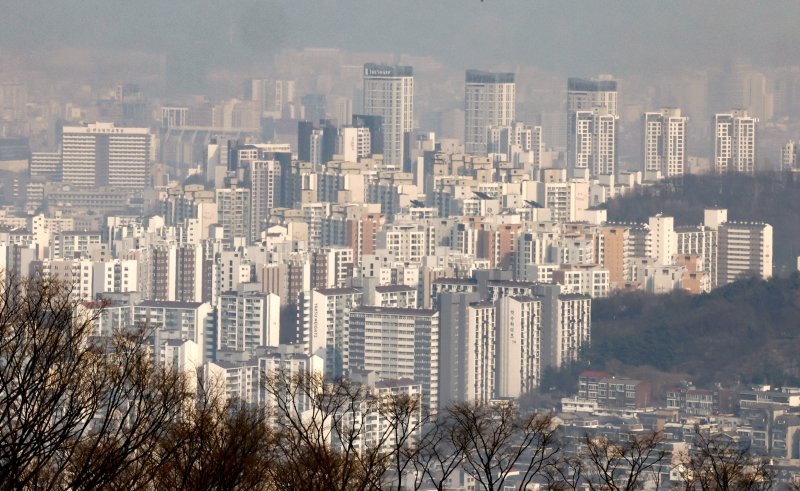
[Financial News] Last year, taxpayers with addresses in the three Gangnam districts (Gangnam, Seocho and Songpa) paid one-third of the national comprehensive real estate tax on homes, according to data compiled nationwide. The concentration in the three Gangnam districts widened, pushing their share to the highest level in five years. According to the National Tax Service National Tax Statistics Portal's data on assessed comprehensive real estate tax by city and district released on the 12th, the national assessed tax on homes came to 1.3089 trillion won last year. Of that, 430 billion won was paid in the three Gangnam districts, accounting for 32.9% of the national total.
The share of the three Gangnam districts fell from 39.5% in 2020 to 27.8% in 2021 and 25.6% in 2022. It then rose for three straight years, reaching 27.6% in 2023, 29.2% in 2024 and 32.9% last year. That put it back above 30% for the first time in five years, since 2020.
The increase is seen as reflecting stronger home price gains centered on high-end properties and a rise in the number of people actually living in the three Gangnam districts of Seoul. The comprehensive real estate tax is levied on an individual basis and paid according to the taxpayer's address.
The tax on homes in the three Gangnam districts rose 35.2% from 318.1 billion won in 2024 to 430 billion won last year. That far outpaced the 20.4% increase in the national total for home-based comprehensive real estate tax over the same period. Seoul's total also rose 30.1%, from 569.8 billion won to 741.1 billion won.
By district in Seoul, Gangnam District had the largest amount last year at 233.6 billion won. It was followed by Seocho District with 142.9 billion won, Yongsan District with 75 billion won and Songpa District with 53.4 billion won.
Seongdong District also posted a sharp increase. Its home-based comprehensive real estate tax rose 40.9% year on year to 26.4 billion won last year from 18.7 billion won. As a result, Seongdong District overtook Yeongdeungpo-gu, where Yeouido is located, to rank sixth among Seoul's districts.
In 2024, Yeongdeungpo-gu ranked sixth with 20.8 billion won, while Seongdong District was seventh with 18.7 billion won among Seoul's districts.
Gangdong District also saw its home-based comprehensive real estate tax surge 126.3% to 16.8 billion won last year from 7.4 billion won a year earlier. That was the highest growth rate among Seoul's districts.
Nationwide last year, home-based comprehensive real estate tax was highest in Seoul's Gangnam, Seocho, Yongsan and Songpa districts, followed by Seongnam-si in Gyeonggi Province with 42 billion won and Yongin-si with 39.1 billion won. Next came Jung-gu, Seongdong District and Yeongdeungpo-gu in Seoul, followed by Cheongju City with 24.3 billion won. It has been suggested that residents in areas with a concentration of major semiconductor companies may have bought ultra-high-end homes in Seoul or purchased additional homes.
[email protected] Yeon Ji-an Reporter