"Can’t Even Get It After Paying?"...Chaos Over Managed-Benefit Coverage for Manual Therapy
- Input
- 2026-07-12 09:01:38
- Updated
- 2026-07-12 09:01:38
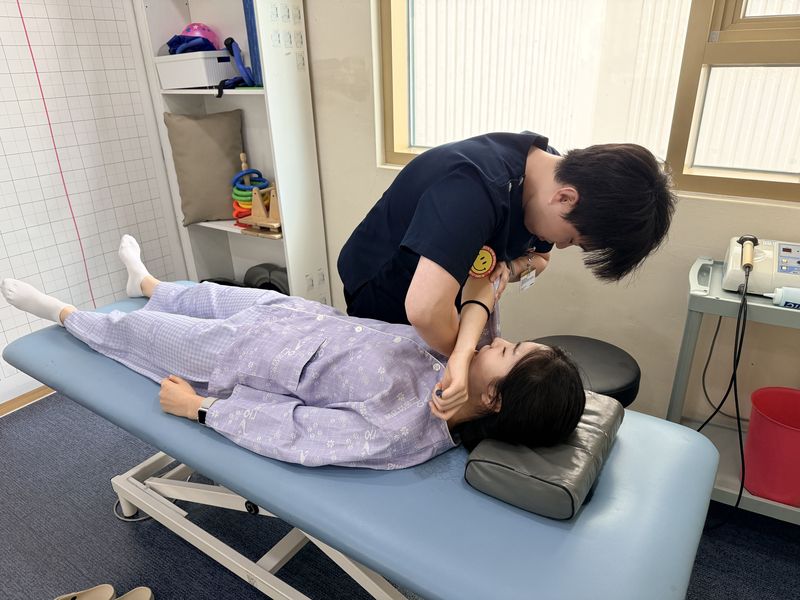
[Financial News] "I was admitted so I could undergo intensive rehabilitation with manual therapy every day, but now I’m told I can only get it twice a week. At this point, I’d rather be discharged." (Patient A, hospitalized for aftereffects of a traffic accident)
"I’m willing to pay more out of pocket and get treatment comfortably as a non-covered service, but how does it make sense that even that isn’t allowed because of government standards?" (Patient B, receiving outpatient treatment for a spinal condition)
After the government introduced the managed-benefit coverage system for manual therapy, aiming to curb the worsening finances of Indemnity Health Insurance and prevent excessive treatment, dissatisfaction among patients and frustration among medical staff have reached a peak in clinical settings.
Critics say that uniform regulations that fail to consider a patient’s condition are instead infringing on treatment rights and delaying recovery.
The biggest source of confusion is the mandatory prior-treatment requirement that must be met before manual therapy can be prescribed.
According to government notices released on the 12th, patients must first continue basic physical therapy or simple rehabilitation, such as massage or basic exercise therapy, for at least two weeks and complete at least four sessions before receiving manual therapy. Only after it is medically documented that there has been no improvement in symptoms can manual therapy begin.
As a result, even hospitalized patients who need intensive early treatment are seeing their care delayed by about two weeks while they try to meet the prior conditions.
A representative of a long-term care hospital said, "Even if a patient volunteers to pay the full cost themselves, treatment must still follow the managed-benefit standards." The representative added, "A system meant to protect public health has instead become a barrier that causes patients to miss the golden time for treatment."
Resistance to the treatment-frequency limits is also growing. Under the previous non-covered system, patients could receive intensive treatment every day or more than three times a week, depending on their symptoms, to promote faster recovery.
Now, however, a uniform cap of twice a week, or 15 times a year and up to 24 times in exceptional cases, has been imposed. As a result, patients say the pace of recovery they feel has dropped sharply.
Given the situation, some patients are complaining, half in jest, that they have to "save" their treatment sessions. Others are giving up treatment midway and choosing early discharge because they believe adequate care is no longer possible.
In addition, even if essential rehabilitation treatments such as combined exercise therapy or CPM knee-motion devices are provided on the same day as manual therapy, the rule prohibiting simultaneous billing is cited as a major factor worsening inconvenience for patients who must travel for treatment.
Not only patients, but also medical staff and hospital administrative departments, are under heavy strain.
Each time a doctor prescribes manual therapy, staff must enter detailed information about the treatment area and techniques into the computer system, significantly increasing administrative work. Even when patients want treatment, registration and consultation can only proceed after each prior condition is checked, which lengthens waiting times and triggers a flood of complaints from outpatients.
In long-term care hospitals, inquiries and complaints are pouring in because the actual out-of-pocket burden patients feel after the introduction of managed-benefit coverage is too high at 95%, especially compared with the previous non-covered price of around 30,000 to 40,000 won per session.
The medical community says it understands the government’s goal of curbing excessive treatment, but it is strongly demanding that the prior conditions be eased immediately to reflect the realities on the ground.
Medical experts are above all calling for flexibility in the mandatory rule requiring two weeks and four sessions of prior physical therapy. They argue that in cases where immediate manual therapy has been clinically proven effective, such as acute musculoskeletal patients, exceptions should be greatly expanded so that treatment can begin immediately under a doctor’s diagnosis without waiting two weeks.
An official from the Korea General Hospital Association said, "The justification for curbing excessive treatment should not end up tying the hands of patients who urgently need real care." The official added, "To reduce patients’ pain and maximize rehabilitation outcomes, it is urgent to make field-oriented improvements to the system, including △ exempting or easing prior-condition requirements for acute and hospitalized patients △ making the uniform session cap more flexible depending on the patient’s condition △ and lifting the rule that prevents simultaneous billing with other rehabilitation treatments."
[email protected] Byun Ok-hwan Reporter