"The 'Coupang discrimination' issue cannot be reflected in the NDAA," says U.S. House Rules Committee
- Input
- 2026-07-12 03:28:04
- Updated
- 2026-07-12 03:28:04
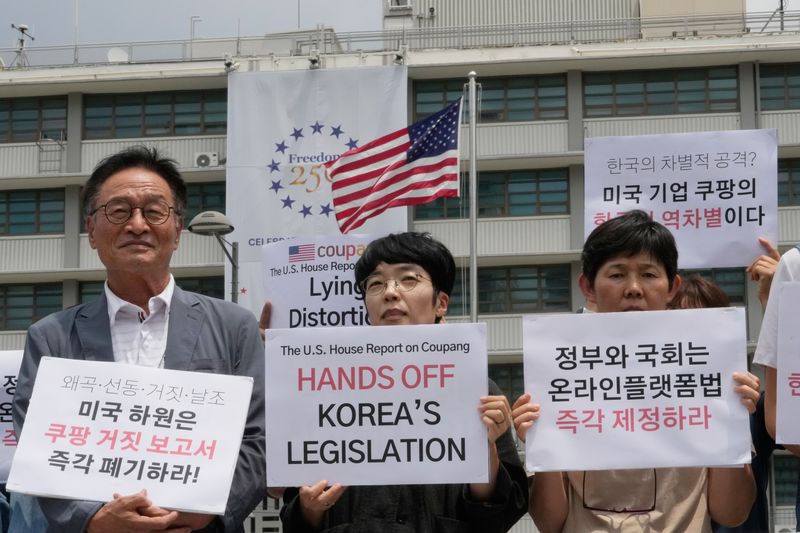
The U.S. House has blocked an attempt to let the controversy over discrimination against U.S. companies in Korea, sparked by Coupang, spill into the National Defense Authorization Act (NDAA).
Some House members tried to include a provision requiring an assessment of how discrimination against U.S. companies in Korea affects national security and to report the findings to Congress, but the proposal was rejected during the review stage.
Because it was filtered out by the Rules Committee, the measure was not included among the items to be considered on the House floor.
According to the Rules Committee on the 11th local time, Rep. Carol Miller, a Republican from West Virginia, and Rep. Vicente Gonzalez, a Democrat from Texas, submitted an NDAA amendment. The amendment would require the administration to report to Congress on "the impact of Korea's technology protectionism on national security."
The amendment was drafted on the assumption that discriminatory measures targeting U.S. technology companies in Korea could work to the advantage of Chinese tech firms. It would also require the Secretary of Commerce to brief the relevant standing committees, including the House and Senate Armed Services Committees, on the resulting national security implications.
First, it called for a report on whether laws and regulations currently pending in the National Assembly of the Republic of Korea, including the Online Platform Fairness Act, that target or discriminate against U.S. tech companies could affect U.S. national security.
It also sought a report on whether raids on U.S. companies' offices and threats of prosecution could create unnecessary friction with the United States and help fuel the growth of Chinese tech firms.
Coupang's apparent effort to frame the South Korean government's response to a massive personal data leak as discrimination against U.S. tech companies appears to have led to the submission of the NDAA amendment.
The South Korean government says it does not discriminate against companies based on nationality, but concerns of that kind have not been dispelled among some in the U.S. administration and Congress.
Rep. Miller, a member of the House Ways and Means Committee, also claimed in January that South Korea was undermining free trade in the digital sector and pushing legislation aimed at U.S. companies.
Meanwhile, the NDAA is the law that authorizes the Department of Defense's budget and policy, and it must pass Congress every year.
Before floor consideration, hundreds to thousands of amendments are typically submitted during the Rules Committee review stage. This year, more than 1,300 amendments were filed, and the committee allowed only about 300 of them to move forward for floor debate.
[email protected] Song Kyung-jae Reporter