Female seniors receive 240,000 won in National Pension benefits, one-sixth of men
- Input
- 2026-07-11 09:01:38
- Updated
- 2026-07-11 09:01:38
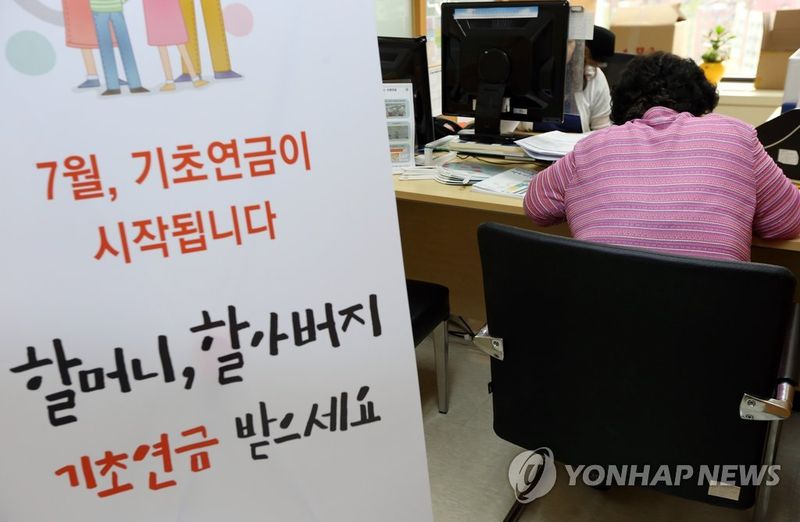
[Financial News] The public pension receipt rate and income growth rate of women aged 66 and older in South Korea have far outpaced those of men over the past 10 years, but this turned out to be little more than a statistical illusion caused by the fact that the figures were extremely low to begin with.
The actual income level remains far too low to sustain a livelihood in old age, underscoring the urgent need for institutional improvements.
According to a report released on the 11th by the National Pension Research Institute, titled "A Study on Changes in Income Composition and Consumption Levels of Elderly Women Following Public Pension Receipt," total income for women aged 66 and older surged 94.9% over the 10 years from 2013 to 2023, outpacing the 72.2% increase among elderly men.
But the reality behind the impressive growth rate is grim. As of 2023, the average monthly National Pension benefit for elderly women was just 243,000 won. That is only one-sixth of the 1.545 million won received on average by elderly men.
Even as the public pension system has matured, the absolute income gap between men and women remains severe.
In fact, as of December 2024, there were 976,000 male recipients of the Full Old-age Pension, which requires at least 20 years of contributions, compared with only 185,000 women, a gap of roughly five to one.
Economic vulnerability also varied sharply depending on the type of public pension received. Among elderly women who received only the National Pension, increases in pension benefits had a positive effect, leading to a real expansion in consumption. By contrast, the situation was different for most elderly women, whose dependence on the Basic Pension accounted for 22.2% of their total income sources.
The group that received only the Basic Pension had an average annual total income below 9 million won, making it the poorest among all groups. Even when their Basic Pension benefits increased somewhat, it had no statistically significant effect on raising spending on essentials such as food and housing.
This shows that the current level of Basic Pension payments is not enough to provide meaningful stability in daily life.
By household type, single-person households living alone were identified as the most vulnerable group, regardless of gender. Female single-person households showed an unusually high dependence on the Basic Pension and financial support from children.
Based on these findings, the researchers proposed a range of measures to secure old-age income for low-income elderly women.
In the short term, they called for abolishing the spouse reduction system, under which Basic Pension benefits are cut by 20% each when both spouses receive them, but only for vulnerable groups. As a long-term alternative, they suggested providing additional Basic Pension payments to seniors in the bottom 25% of the income distribution and excluding the Basic Pension from income calculations when determining eligibility for the National Basic Livelihood Security system.
However, the researchers also stressed that "because this would require a huge amount of public funding, the macro-level role of the Basic Pension should be redefined and fiscal sustainability carefully reviewed before any policy is implemented."
[email protected] Jeon Sang-il Reporter