MOEL Announces Legislative Notice for Shift in EI Eligibility Standard from "15 Hours a Week" to "KRW 800,000 a Month"
- Input
- 2026-07-10 12:39:36
- Updated
- 2026-07-10 12:39:36
The ministry said on the 10th that it will issue a 40-day legislative notice for partial revisions to subordinate regulations under the Employment Insurance Act and the Act on the Collection of Insurance Premiums for Employment Insurance and Industrial Accident Compensation Insurance.
The core of the revision is to replace the EI eligibility standard based on working hours with one based on income. The government said this would help close blind spots in EI coverage by allowing workers under the Labor Standards Act to be subject to the same standard as platform workers.
Under the current law, EI applies to workers who work at least 15 hours a week or 60 hours a month. The government plans to convert and unify that standard to monthly wages of at least KRW 800,000. It will also introduce a wage aggregation system for workers under the Labor Standards Act. Workers who hold multiple jobs will be able to enroll in EI, like platform workers, if their combined monthly wages reach at least KRW 800,000, subject to their own application.
In addition, the government will abolish the annual reporting of total wages by employers and introduce a monthly wage reporting system. It plans to replace the current method, which calculates average monthly wages based on the previous year's total wages and then assesses premiums, with monthly wage or income reporting.
Since March, COMWEL has formed a dedicated task force and has been coordinating with other social insurance agencies, including the National Tax Service, the National Health Insurance Service (NHIS), and the National Pension Service (NPS), to prepare for the on-the-ground rollout of income-based EI.
The agency plans to design a new work system that links about 25.1 million tax income records from the National Tax Service and the EI database containing information on about 15.5 million people, based on last year's figures. Through this system, it will assess and settle Employment and Industrial Accident Insurance premiums based on each worker's income. It also plans to push ahead with a revamp of the Employment and Industrial Accident Insurance total service, upgrades to the mobile application, and expanded use of the One-Click Wage Service.
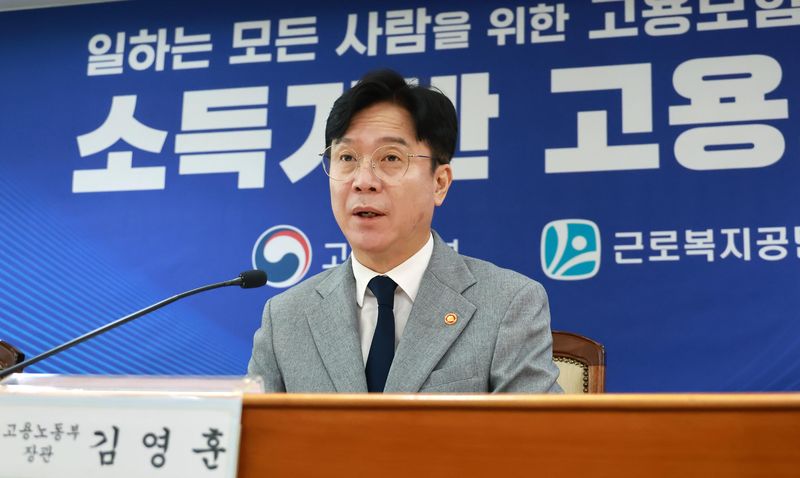
Kim said, "We are now building a new social safety net based on income, not the hours people work." He added, "By implementing income-based EI, we will close coverage gaps for low-income and part-time workers, and we will continue expanding the scope of EI coverage, including by broadening coverage for platform workers centered on personal service business income earners."
[email protected] Kim Jun-hyeok Reporter