The United States Refutes Iran's Claim of a Third Strike, as Ceasefire Talks Continue
- Input
- 2026-07-10 11:01:17
- Updated
- 2026-07-10 11:01:17

[Financial News] Despite the clashes on July 7-8 (local time), diplomatic working-level officials from the United States and Iran, along with Middle Eastern countries, are scrambling to keep ceasefire negotiations alive. The two sides are rescheduling talks after the funeral of Iran's former supreme leader.
A U.S. government official who spoke to CNN on the 9th said that technical negotiations with Iran over denuclearization are still continuing. The two sides signed a ceasefire memorandum on June 17 and agreed to halt hostilities while discussing an end to the war and denuclearization for 60 days. However, after attacks on merchant ships in the Strait of Hormuz on June 6-7, the United States and Iran each carried out two rounds of retaliatory airstrikes against the other side on July 7-8. U.S. President Donald Trump said on the 8th about the memorandum, "From my perspective, I think it has expired." He added, however, that he did not think "war is starting again" and said the two countries' working-level officials could continue talking.
The U.S. official told CNN, "The United States is still working to find a solution, and technical talks are continuing. Iran can never possess nuclear weapons." He described the ceasefire memorandum as "performance-based." He criticized Iran for refusing to fully reopen the Strait of Hormuz and for carrying out ship attacks during the NATO summit, calling it "an unacceptable level of underperformance." He also claimed that "Iran's attacks on these innocent ships are acts of terrorism."
CNN reported on the 9th, citing several other government officials, that the United States could carry out additional airstrikes that day if necessary. On the same day, Ehnan Jahanian, the deputy governor of Bushehr Province, where a nuclear power plant is located, said a military facility near the provincial capital of Bushehr had come under projectile attacks by the United States and Israel. At the same time, IRIB reported that a naval facility in the port city of Konarak was "attacked twice by enemy fighter jets."
Officials from the U.S. Department of Defense and CENTCOM said through Al Jazeera and other media outlets shortly after Iran's claim of being struck that "no military strikes have been carried out inside Iran over the past few hours."
Another official who spoke to CNN on the 9th said preparations for a third airstrike had been completed, but that diplomatic efforts were now under way to ease tensions.
Middle Eastern countries that had previously mediated the ceasefire talks are also working to restart dialogue between the United States and Iran. Axios reported on the 9th, citing two mediator-country officials and two U.S. officials, that officials from Qatar, Pakistan, Turkey, Egypt and Saudi Arabia held multiple calls with U.S. and Iranian officials the previous day. The Middle Eastern officials sought de-escalation and additional technical-level talks. One regional official said the immediate focus is on reducing tensions between the two sides first, then setting a date for working-level consultations.
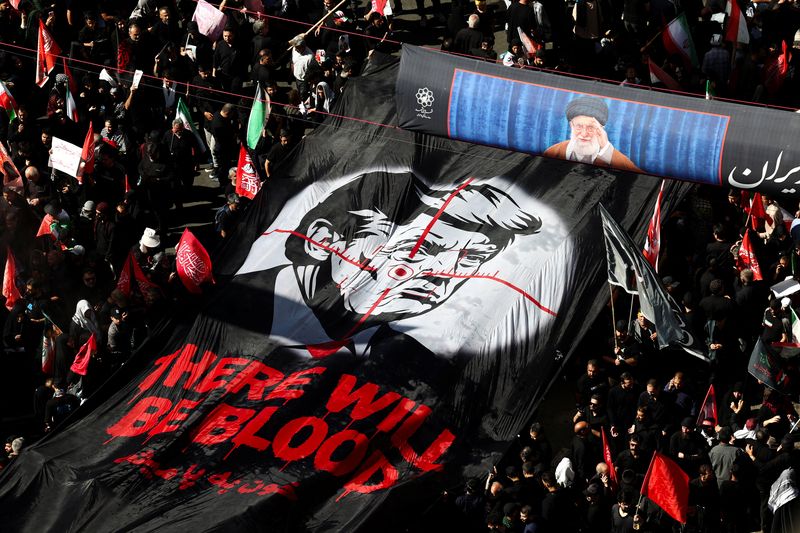
After signing the memorandum, the two sides held working-level ceasefire talks on June 21 last month. The two sides, which had been disputing over transit rights in the Strait of Hormuz, held indirect talks in Qatar on July 1. On July 4, the Saudi Arabian media outlet Al Arabiya estimated that the two sides would hold a second round of ceasefire working-level talks in Pakistan on the 11th. That schedule was believed to have been arranged to avoid the funeral period for Iran's former supreme leader, Ayatollah Seyyed Ali Khamenei, from July 4 to 9.
[email protected] Park Jong-won Reporter