"Samsung Electronics and SK hynix Have Already Fallen—Why Lower Target Prices Now?"...Brokerages Are Also Cutting Targets
- Input
- 2026-07-10 09:02:23
- Updated
- 2026-07-10 09:02:23
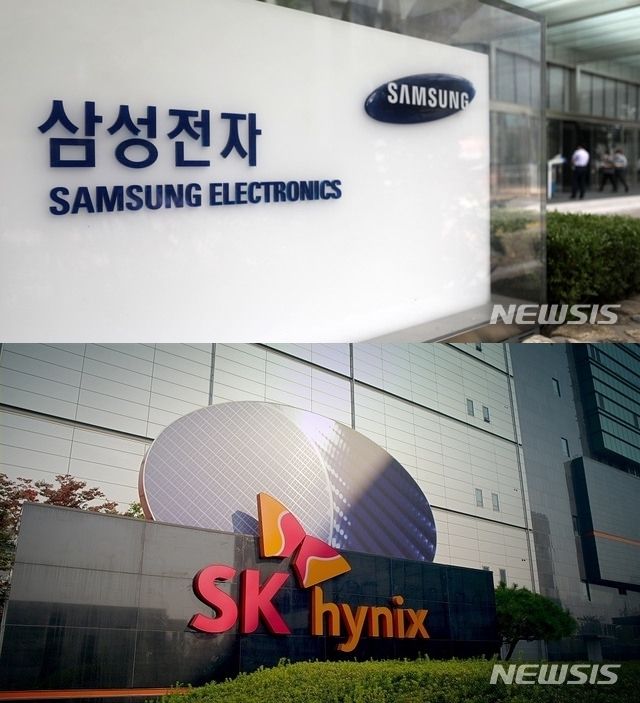
[Financial News] Samsung Electronics and SK hynix are showing signs of a rebound, but sentiment in the brokerage industry is different. Some firms are already setting target prices below current share prices or lowering existing targets.
According to the securities industry on the 10th, BNK Investment & Securities set a target price of 1.85 million won for SK hynix. Given that the stock was trading at 2.076 million won at the time the report was written and closed at 2.186 million won on the 9th, some interpreted the view as effectively close to a sell recommendation. SK hynix closed that day at 2.186 million won, up 5.30% from the previous session.
Lee Min-hwi, a researcher at BNK Investment & Securities, said that while DDR memory for AI servers and enterprise solid-state drives (eSSD) are still in short supply, the aggressive infrastructure spending by hyperscalers is no longer as effective as before. He said this suggests that the momentum behind AI infrastructure investment is slowing.
Lee noted, "Given expectations for rising memory and CPU prices next year, as well as higher specifications for new agent AI models, capital expenditure may need to expand by at least 30% to 40% next year." However, he added that the pace of future investment could slow, creating a gap with current earnings forecasts for semiconductor companies.
He also interpreted SK hynix's recent sharp stock decline as a move reflecting weakening demand. "Earnings momentum will also weaken after year-end," he said. "Its valuation will not be cheap next year and beyond." On American Depositary Receipts (ADRs), he added, "They will improve convenience for overseas trading, but they will not change the valuation of the local shares."
On the 8th, Kiwoom Securities lowered Samsung Electronics' target price from 430,000 won to 390,000 won. The firm said the revision reflected a slowdown in memory price gains in the second half of the year and the possibility of weaker earnings growth.
Park Yoo-ak, a researcher at Kiwoom Securities, said, "As the pace of memory price increases gradually slows and additional memory purchases by PC and smartphone makers remain limited, earnings per share (EPS) growth is likely to slow from the second half of the year." He viewed stronger competitiveness in HBM4 and enterprise SSDs (eSSD) positively, but also took into account competition from Chinese memory makers and the possibility of changes in industry conditions.
In the financial investment industry, there is broad agreement on Samsung Electronics' near-term earnings, but views differ on how long the memory supercycle driven by expanded AI investment will last. The explanation is that valuations are being shaped less by short-term results than by expectations for the medium- to long-term memory market.
An official in the financial investment industry said, "At present, the key variable determining target prices is not earnings themselves, but how long the AI memory cycle will continue." The official added, "Brokerages that expect AI investment expansion to last longer have raised their target prices, while those concerned about slowing growth have taken a more cautious approach."
[email protected] Han Young-joon Reporter