U.S.-Iran retaliatory airstrikes fuel a vicious cycle... traffic through the Strait of Hormuz plunges
- Input
- 2026-07-10 07:35:55
- Updated
- 2026-07-10 07:35:55
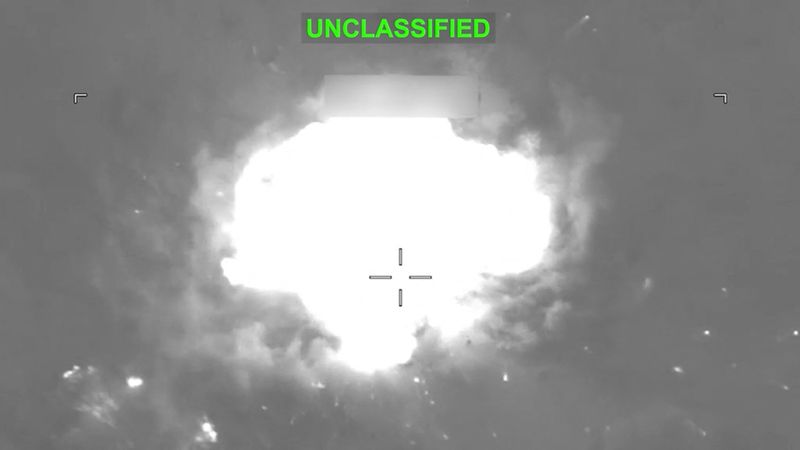
[Financial News] The United States and Iran exchanged retaliatory airstrikes again on the 9th local time, pushing military tensions to a peak. As the two countries' armed clash deepens, the number of ships passing through the Strait of Hormuz, a key global oil shipping route, has dropped sharply, raising fears of a global logistics crisis.
According to BBC, CENTCOM said the strikes were intended to neutralize Iran's ability to attack merchant vessels and innocent civilian mariners in key waterways. The U.S. military said it carried out precision strikes on a total of 90 military targets, including air defense systems and military logistics infrastructure deployed along Iran's coastline.
Iranian authorities, meanwhile, said 14 people were killed and 78 were injured in U.S. airstrikes over the past two days. Iranian state media reported that areas near the Bushehr nuclear power plant were also hit, but the U.S. side declined to immediately comment on whether additional strikes had recently been carried out.
In response to the U.S. strikes, Iran has moved toward all-out war, first retaliating against U.S. assets in Kuwait, Bahrain and Qatar, and then striking major bases in Kuwait, the Hashemite Kingdom of Jordan and Iraq again on the afternoon of the same day.
Mohammad Baqer Qalibaf, Speaker of the Parliament of Iran, wrote on social media platform X, "The United States still has not learned that threats and broken promises no longer go unpunished," adding, "The Strait of Hormuz will open only under Iran's control, not under U.S. threats."
As the armed conflict between the two countries intensifies, the Strait of Hormuz, the artery of the global economy, has effectively been paralyzed.
Phil Belcher, maritime director at the International Association of Independent Tanker Owners, said the number of ships passing through the Strait of Hormuz via the southern route near the coast of Oman has now fallen to single digits.
Before the war broke out in late February, normal traffic averaged about 130 vessels a day. After plunging because of the war, it recovered to about 70 vessels a day last week.
BBC reported that current traffic averages about 30 vessels a day, and that the southern route has dropped to single digits.
In an interview with BBC Radio, Belcher said, "The memorandum of understanding signed between the U.S. and Iran last month had raised optimism in the regional shipping industry, but that has been completely reversed." He added, "This vicious cycle of violence and uncertainty is having a huge negative impact not only on the shipping business but also on the safety of seafarers."
[email protected] Yoon Jae-joon Reporter