Commerce Secretary Lutnick Says He Wants Micron Rival Samsung and SK hynix to Build Chip Plants in the U.S.
- Input
- 2026-07-10 06:45:16
- Updated
- 2026-07-10 06:45:16
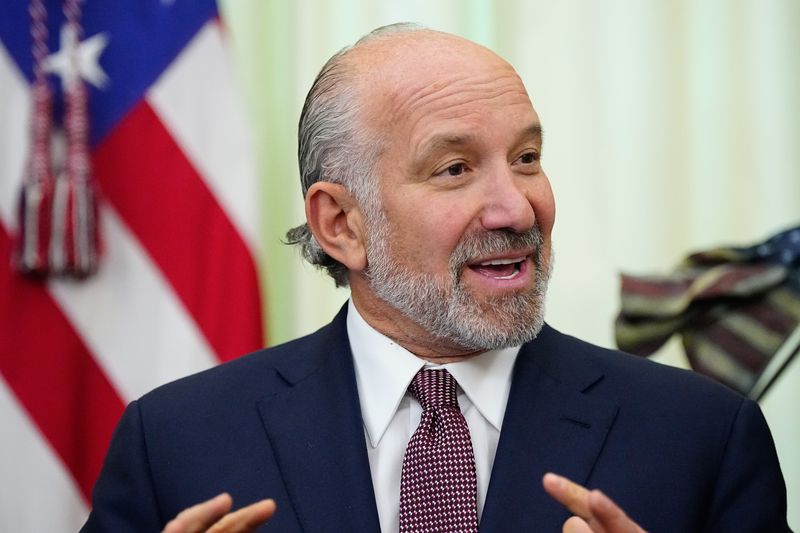
[Financial News] The United States government has begun stepping up pressure on South Korean chipmakers as it moves to address a shortage of memory semiconductors, a critical component for the development of the artificial intelligence industry.
At an event hosted by Micron Technology, Inc. in Syracuse, New York State, on the 9th local time, Howard Lutnick, U.S. Secretary of Commerce, said he was in talks with South Korean memory chip makers about expanding investment in the United States. "Sanjay Mehrotra, the CEO of Micron, may not want this, but I want to bring competitors Samsung Electronics and SK hynix to the United States and have them build chip plants here," he said.
His remarks were widely interpreted as a call for leading South Korean companies to sharply increase production inside the United States in order to ease the global shortage of semiconductor components and build a more stable domestic supply chain.
Samsung Electronics and SK hynix are currently planning massive new factory investments totaling $880 billion over the next several years to secure an edge in the AI infrastructure market. In particular, SK hynix is expected to raise as much as $27 billion through an American Depositary Receipt (ADR) listing on the U.S. stock market as early as the 10th. Market investors believe the funds raised through the offering will directly translate into expanded next-generation chip production capacity.
Lutnick made clear that he wants to bring a significant share of that enormous investment capital to the U.S. mainland and build a semiconductor ecosystem centered on the country. At the event, he said, "Micron is blazing the trail, and other rival companies will envy it and eventually follow," adding, "We want to fully protect great American companies and firms that are investing heavily in intellectual property rights and IP."
Earlier in the day, Micron announced a sweeping long-term investment plan to spend a total of $250 billion through 2035 to expand its production facilities in the United States. Shares of Micron surged as much as 9.1% intraday on the New York Stock Exchange, drawing an explosive market response after the company confirmed strong backing from the U.S. government.
By contrast, the United States government is drawing a firm line against attempts by its Big Tech companies to use Chinese memory semiconductors in their products.
Major Chinese memory makers such as ChangXin Memory Technologies (CXMT) and Yangtze Memory Technologies Co., Ltd. are on the U.S. Department of Defense sanctions list, meaning American companies must obtain special government approval to incorporate their products into global supply chains. Apple CEO Tim Cook is reportedly lobbying the Trump administration to allow the use of Chinese memory chips in an effort to offset rising component costs. However, the United States government and the domestic industry, including Micron, are strongly blocking such approval.
Semiconductor experts say that if Chinese companies enter the U.S. market with support from major American Big Tech firms such as Apple, lower profitability could derail large-scale semiconductor investment plans in the United States.
As a result, analysts say the Trump administration is likely to intensify pressure on South Korean companies with proven technological leadership in order to achieve two key goals at once: protecting domestic industry and countering China.
[email protected] Yoon Jae-jun Reporter