"Current account surplus is building up, so the exchange rate is expected to fall... foreign stock selling will also ease"
- Input
- 2026-07-09 18:27:09
- Updated
- 2026-07-09 18:27:09
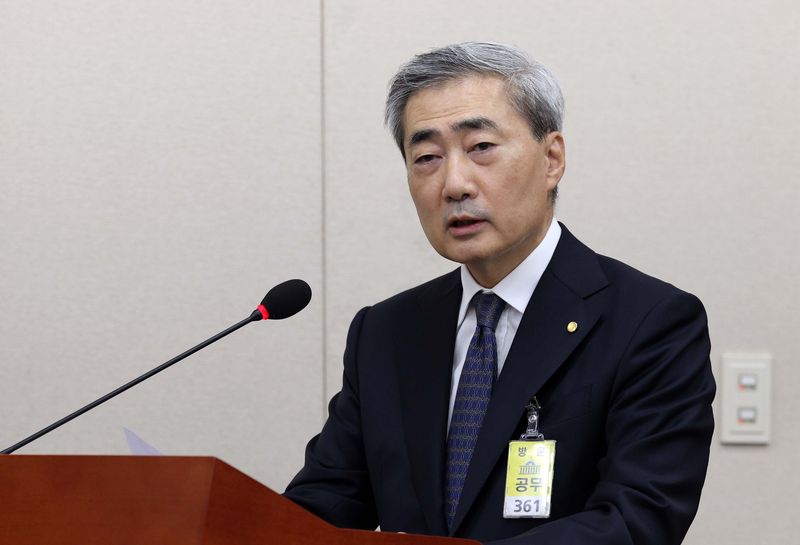
At the National Assembly's Finance, Economy and Planning Committee on the 9th, Shin replied to a question from Moon Jin-seok of the Democratic Party of Korea about the exchange rate, saying, "Current account surpluses are accumulating significantly, and from the perspective of the basic economic framework, there is considerable room for the won to strengthen."
The won–dollar exchange rate had continued to close in the 1,500-won range, based on weekly trading, since May 15. It then ended at 1,498.5 won on the 8th, after the foreign exchange market's round-the-clock trading system began on the 6th this month. It was the first close in the 1,400-won range in 37 trading days. Shin said the recent rise in the won–dollar exchange rate has been driven by global factors such as the possibility of changes in U.S. monetary policy, as well as Korea-specific factors like portfolio rebalancing.
Shin also expressed optimism about the possibility of revising up the Bank of Korea's earlier forecast for this year's economic growth rate of 2.6%. When the central bank released its economic outlook in May, it said semiconductor optimism could add another 0.5 percentage point if big tech investment in artificial intelligence data centers accelerated and the Physical AI market expanded.
Meanwhile, Shin repeated the need to raise the base rate in his remarks. He said, "Given inflation running above the target level, improving growth, and rising financial stability risks, I believe the base rate needs to be raised at an appropriate time."
Shin assessed the likelihood of a structural decline in the domestic stock market as low. He said, "Although concerns over AI and the monetary policy stance of major economies will keep volatility high," the chances of a trend reversal into a prolonged decline in Korean stocks are limited, given upward earnings revisions for semiconductor companies and the government's efforts to improve capital market rules. On net foreign selling of domestic stocks, he said, "As Korean stock prices have risen significantly, foreign investors have been selling as they reduce their exposure," adding, "I think the selling pressure will ease in the second half of this year."
Kim Tae-il, Financial News