Even in the Jang Yoon-gi case... DPK submits bill to abolish supplementary investigation authority
- Input
- 2026-07-09 18:14:30
- Updated
- 2026-07-09 18:14:30
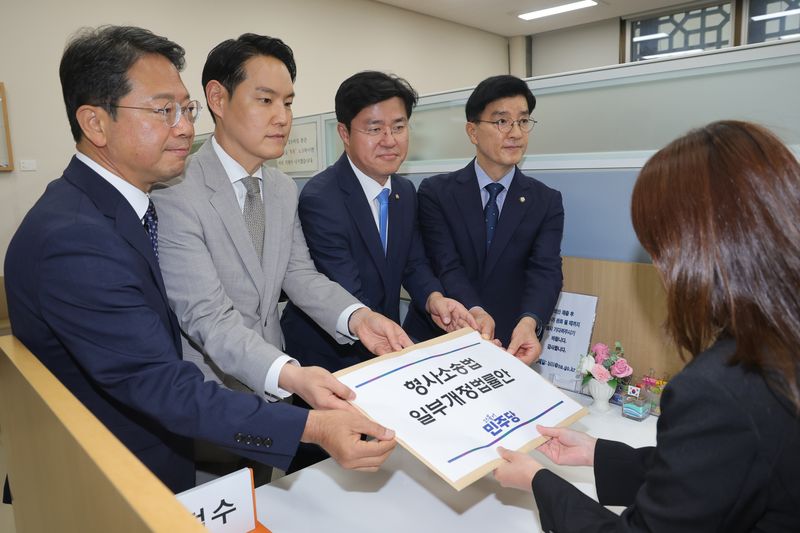
The DPK's Criminal Procedure Act revision task force introduced the bill to abolish supplementary investigation authority at the National Assembly on the day. The main point is to separate investigation from prosecution by deleting all provisions, including Article 196 of the Criminal Procedure Act, that define prosecutors as investigative authorities. While prosecutors' investigative authority under the law would be removed, the bill would make the right to request supplementary investigations, reinvestigations and corrective measures more effective as a check on investigative agencies. It appears to reflect concerns about the side effects of police monopolization of investigative power, following the Jang Yoon-gi case.
The key supplementary investigation request power would require judicial police officers to complete the additional investigation within one month. If a prosecutor determines that the matter is urgent, such as because of the statute of limitations, the prosecutor could require the supplementary investigation to be completed in less than one month. In addition, if necessary, the head of the Public Prosecution Office could replace the officer in charge or assign the case to the Serious Crime Investigation Agency instead of the police. The aim is to prevent concealment attempts like those seen in the Jang Yoon-gi case in advance.
The right to request reinvestigation and the right to order corrective measures can be exercised by prosecutors after receiving all investigation documents, records and materials related to a case. Even before a case is transferred, if an investigation is suspected to be improper, it can be moved to another investigative agency, and a reinvestigation can be requested for cases that were not transferred for prosecution. To strengthen protection for complainants and victims, not only suspects but also complainants, victims and legal guardians may report suspected improper investigations to prosecutors. Prosecutors can then demand corrective measures and the transfer of the case to another investigative agency.
While maintaining the push to abolish supplementary investigation authority, which has gained momentum amid the DPK's leadership race, the bill also strengthens checks on the police in light of the Jang Yoon-gi case. In line with the purpose of the amendment, the party also plans to pursue legislation that would impose heavier penalties for crimes such as evidence destruction by police and strengthen the Police Investigation Review Committee. A party-government consultation on the matter is scheduled for the 15th.