[Editorial] New Nuclear Power Plants Should Be Built Quickly for the Honam Semiconductor Complex
- Input
- 2026-07-08 18:34:19
- Updated
- 2026-07-08 18:34:19
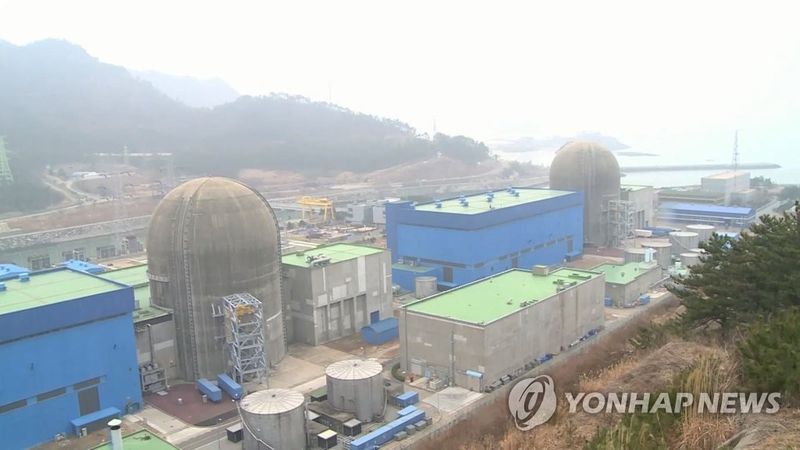
The semiconductor industry and data centers require enormous amounts of electricity, as well as water. Unless both conditions are secured, fabs cannot operate even if construction is completed. In the Southwest region, five units at Hanbit Nuclear Power Plant are currently in operation, and while renewable energy sources such as wind and solar are abundant, they alone cannot meet demand.
In semiconductor manufacturing and data centers, even a brief interruption in power supply can cause fatal damage to products such as wafers. Unstable renewable energy is not a suitable power source. The conclusion is nuclear power. The society estimated that an additional 24.7 gigawatts (GW) of generation capacity will be needed. That is about one-quarter of the peak electricity demand projected for 2025, and roughly enough to produce 18 units based on the country's latest nuclear reactor, the APR1400, which has a capacity of 1.4 GW.
The government has said it will complete the Southwest Semiconductor Cluster during President Lee Jae-myung's term. However, securing power and water within that period will not be easy. Current electricity supply is insufficient, and even if nuclear power plants are built, it will take more than 10 years. Building transmission lines, as well as power plants, is also a difficult task because of strong opposition. It does not appear physically feasible, so the government should quickly reach a conclusion on how to solve these problems and move into an all-out push.
The most urgent task is revising the 12th Basic Plan for Electricity Supply and Demand, which is currently under discussion. The plan reflects the electricity demand of the Yongin Semiconductor Cluster, but it excludes the Three Major Mega Projects. Naturally, they should be included in follow-up discussions and a revised plan should be prepared. Nuclear power plant construction takes a long time, starting with site selection. Therefore, while new nuclear plant projects should continue as planned, SMRs, which can be completed in a relatively short period of a few years, need to be actively utilized.
The society also proposed introducing a nuclear power Power Purchase Agreement (PPA) system that companies can directly use, and improving regulations so that large electricity-consuming companies can invest in nuclear power and SMR development. The idea is to loosen restrictions so that companies can invest in nuclear power and purchase electricity on their own, without going through Korea Electric Power Corporation (KEPCO). This should be seriously considered.
Because the Three Major Mega Projects are national undertakings requiring astronomical funding, the government, political parties, and businesses must join forces and devote their full efforts. Gwangju Military Airport has been designated as the site for a semiconductor plant, but the airport relocation itself is likely to face major obstacles. That is why nationwide attention and cooperation are needed.
The Democratic Party of Korea (DPK) held a Supreme Council meeting on the day and decided to form a special committee and swiftly enact related laws, beginning support efforts at the National Assembly level. The opposition People Power Party should now set aside its objections and help push the mega project forward. The project has already set sail, and continuing to attack it politically is not appropriate. Expanding the necessary conditions, including electricity supply, will be a long and difficult process. The opposition should also contribute ideas and cooperate as much as possible.