Jang Yoon-gi’s Father, Armed with Legal Knowledge, Destroyed Key Evidence... Kinship Exemption Under Scrutiny
- Input
- 2026-07-08 18:29:09
- Updated
- 2026-07-08 18:29:09
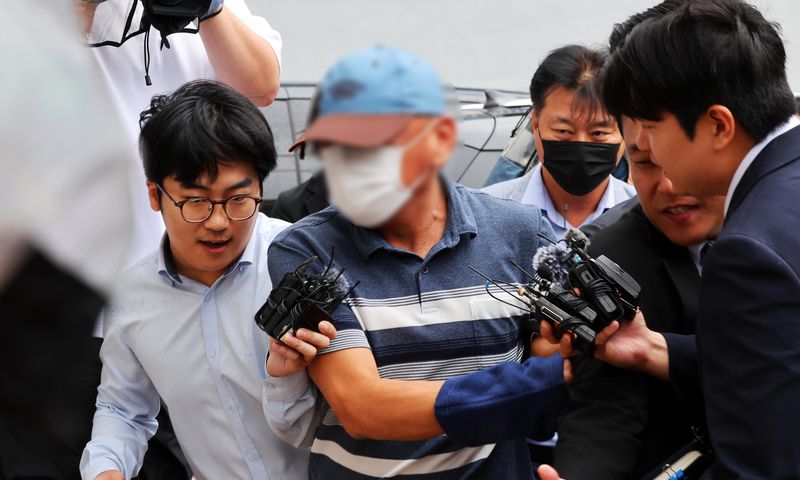
According to police and legal sources on the 8th, current law exempts from punishment family members or cohabiting relatives who destroy evidence for the benefit of the person involved. In this case, however, the father of the suspect, Jang Yoon-gi, 23, drove an SUV stained with the victim’s blood for two weeks and destroyed and burned a sex doll and a mobile phone, both of which are seen as crucial clues to the motive and distorted views of sexuality behind the crime. He still avoided criminal liability because he is a relative. Prosecutors believe the evidence is decisive in proving the rape-murder charge, which could carry only the death penalty or life imprisonment at trial. Critics have long argued that the kinship exemption is one of the causes of gaps in the justice system. A similar issue arose in the 2017 case involving Lee Young-hak, known as the “Molar Dad,” when his mother burned key evidence such as the necktie used in the crime and the victim’s clothing, yet was not punished under the same legal principle. Repeated destruction of evidence in violent crime cases, followed by legal immunity, has fueled criticism that the provision is a toxic clause that obstructs the discovery of the truth.
As criticism spread that Jang Yoon-gi’s father, a serving judicial police officer, had used legal knowledge gained through his job to exploit a blind spot and obstruct the investigation, the Ministry of Justice also began reviewing possible revisions to the system. The ministry said that, since the kinship exemption for property crimes such as theft and fraud among family members has recently lost effect following unconstitutional rulings, it plans to create an exception so that the kinship exemption cannot be abused as a loophole to interfere with justice.
Legal opinions, however, are divided. Those urging caution argue that attempts to hide evidence of a child’s crime stem from a natural human instinct rooted in family bonds, and that the state should consider the legislative purpose behind the difficulty of compelling lawful conduct by law.
“Punishing even the instinctive actions of parents trying to protect their children would be an overreach of the law,” said a senior judge in the Seoul metropolitan area. “If the father is an active police officer, there is no need to revise the kinship exemption. He can be severely punished under existing laws, such as obstruction of official duties.”
On the other hand, those calling for legal reform say they understand the desire to protect one’s child, but argue that destroying even the key evidence essential to proving a murder, as in this case, must be punished. “The kinship exemption was not created so that parents in the justice system, such as police officers or prosecutors who know the law well, could abuse their positions and systematically destroy evidence,” said a lawyer who previously served as a senior judge.
[email protected] Jung Kyung-soo Reporter