"The era of long-term value investing will open... Focus on undervalued stocks rather than theme stocks" [News Analysis from the Editorial Desk]
- Input
- 2026-07-08 18:26:19
- Updated
- 2026-07-08 18:26:19
For nearly 40 years, the KOSPI had risen far more slowly than the Korean economy, but these days it looks ready to break through the ceiling. The steeper the rally becomes, the more dizzying the fear feels.
So where is the market headed now?
Recently, one person has been drawing unusual attention from the media and market participants alike. He has spent 39 years in the securities industry, a field known for frequent job changes.
He has also remained steadfastly committed to value investing in a market where momentum and trend-following strategies are in vogue. He describes himself as timid and easily frightened. He stresses that avoiding losses matters more than making money.
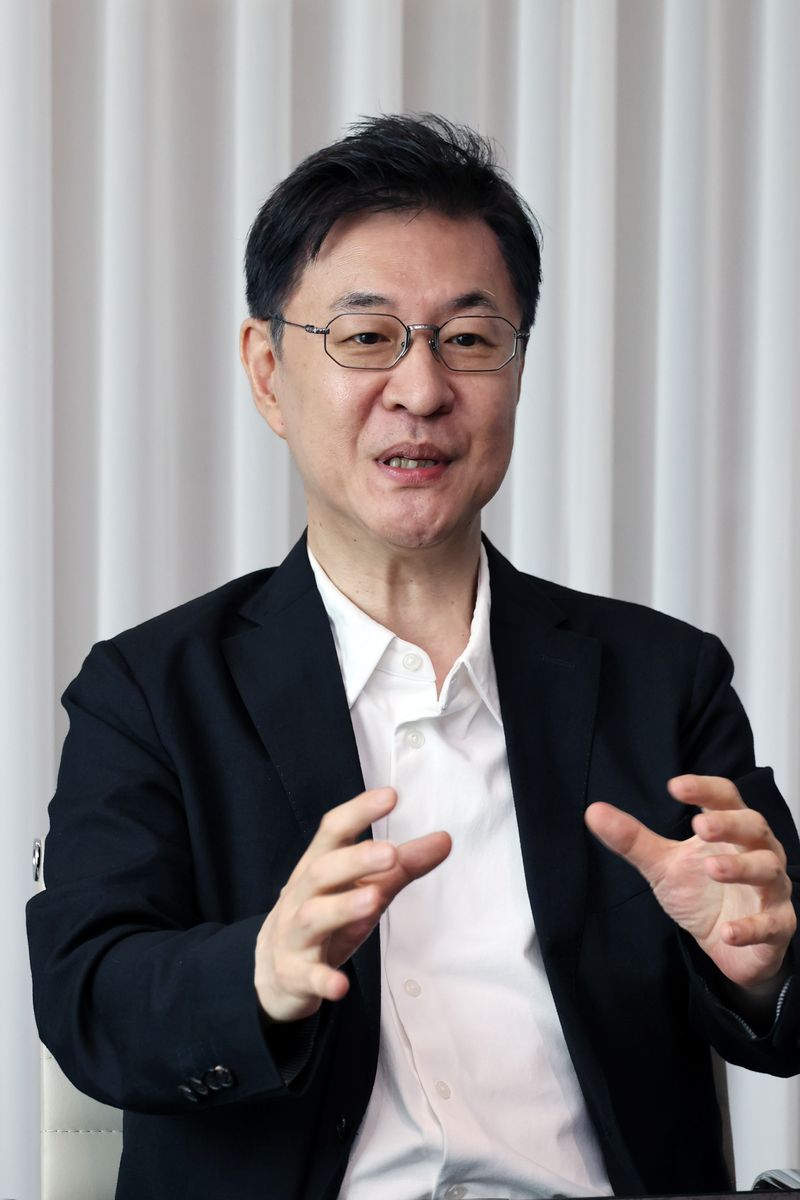
We asked Lee Chae-won, chairman of the board at Life Asset Management and often called Korea's 'Warren Buffett,' about the current state of the Korean stock market.
— As a key player in the stock market for 39 years, and especially as a value investor, how do you view the market now?
▲Leaving aside value investing, it feels fresh even as a market participant. When I joined Hanshin Securities, now Korea Investment & Securities Co., Ltd., in 1988, the KOSPI was in the 900 to 1,000 range. Last April 7, the index hit around 2,300, which was its low for the year, so it had risen only a little more than twofold over that period. That was far below Korea's economic growth. That is why the recent reversal is even more striking. In just 14 months, it surged 3.9 times. The reasons are the long-standing undervaluation, the government's policies to revitalize the capital market, and improved earnings at companies such as semiconductor firms. As a value investor, I still see the KOSPI as undervalued, since it is trading at around 8 times earnings. But the pace and scale of the rise have been too steep, so some cooling-off is needed. Also, the current KOSPI level can only be justified if strong corporate earnings continue and the Korea Discount is fully eliminated.
— It seems the Korean stock market is escaping the stigma of the Korea Discount.
▲The Korean market, which had been extremely undervalued, finally found a turning point after the presidential election last year, with political leadership restored, aggressive stimulus measures and policies to advance the capital market. In particular, revisions to the Commercial Act addressed weak governance and inadequate investor protection, which are central to the Korea Discount, making it possible at last to assign intrinsic value to Korean stocks. Until then, proportional shareholder rights had not been protected. A shareholder with 1% should be protected by 1%, and one with 10% by 10%. But controlling shareholders with 20% to 30% stakes had been taking advantage of ordinary shareholders holding 70% to 80% through mergers, spin-offs or tunneling. Now, with directors' duty of loyalty expanded to shareholders, those problems have been removed. The revision of Article 382-3 of the Commercial Act is the key to resolving the Korea Discount.
— What is needed to fully eliminate the Korea Discount?
▲Reform of Dividend Income Tax and inheritance tax is necessary. For major shareholders, the top dividend tax rate, including local taxes, was 49.5%, while the capital gains tax on stock sales was 27.5%. If certain conditions were met, separate taxation was possible, lowering the rate to 33%. Even so, stock sales were more advantageous for major shareholders. That is one reason they tend to neglect dividends. I wish the two tax rates could be aligned. I think the essence of the Korea Discount was not properly understood. From the perspective of inheritance tax, major shareholders are uncomfortable when stock prices rise because it makes family business succession more difficult. Even without lowering the inheritance tax rate, institutional reform alone could make succession smoother. Germany forgives inheritance tax if a business is maintained for seven years under certain conditions, such as employment continuity. Japan also has a system that defers inheritance tax. However, because inherited wealth requires social consensus, I think reform will take time.
— Warren Buffett said financial markets are increasingly driven by speculation and that "there has never been a time when people were so caught up in a gambling mood." Do you think his warning applies to Korea as well?
▲Yes, it does. I am especially worried about domestic leveraged exchange-traded funds tied to individual companies and margin trading. Policies are needed to foster a long-term investment culture and reduce market volatility.
— Some say the surge and volatility in semiconductor stocks suggest that AI investment may have already peaked.
▲There is no disagreement that the semiconductor supercycle will continue for a considerable period. However, given that stock prices reflect expectations in advance, there is a strong chance the market peak will be recorded within this year. Semiconductor profits have suddenly soared this year. The real issue is how long that can be sustained. Semiconductor cycles generally last two to three years, so the peak could come next year or the year after. Since stock prices usually lead earnings by about 18 months, there is a possibility of a peak this year. Some market participants think this time is different, but the securities market has not changed in 200 years. As long as human nature, meaning greed and fear, exists, it will not change. Of course, we must remain endlessly humble before stock prices. No one can predict them with precision.
— Can the concentration in Samsung Electronics and SK hynix ease?
▲As always, market concentration will gradually ease. Once everyone who wants to buy has bought and prices have risen as much as they can, the rally will spread to other sectors. Samsung Electronics was at 60,000 won when we started buying last year. It was not a period of strong earnings, and many people were pessimistic. But we did not see it that way. We judged it to be undervalued. Investing in Samsung Electronics at that time was a textbook example of value investing.
— How was your 39-year investment philosophy formed? I heard you have experienced both success and failure.
▲I have been timid and fearful since childhood. It was more important not to lose money than to make a lot of it. That naturally led me to become a value investor focused on avoiding losses. The turning point came when I suffered major fund losses during the 1997 Asian financial crisis. Rather than benchmarking against the KOSPI, I shifted to a management style that prioritizes absolute returns while protecting principal as much as possible. In December 1998, I launched Korea's first dedicated value-investing fund, Dongwon Value Lee Chae-won No. 1. Even value investors go through difficult times. From 2014 to 2020, low interest rates favored growth stocks. It became a good environment for businesses built on new technologies. At the time, companies were raising funds at near-zero interest rates. Naturally, stock prices rose sharply, but from a value investor's standpoint, I could not buy them. I suffered mentally because returns were poor then. Still, I was able to endure because the previous three-year return had been 1,400%. But as that difficult period dragged on, I left the firm I had grown attached to. Younger colleagues came to me then and suggested that we restore our honor and build a true value-investing fund together, so we founded Life Asset Management. Our flagship fund, Life Korea Corporate ESG Improvement, launched at the end of July 2021, had a cumulative return of 465% as of the end of last month. That far outpaced the KOSPI's gain of 162% over the same period. Assets under management have also grown rapidly, surpassing 5 trillion won.
— Do you have your own method for selecting stocks? How do you decide when to buy and sell?
▲I invest in companies that are undervalued relative to their intrinsic value because of market irrationality. Through quantitative analysis, I look for companies with low price-to-book ratios or PERs, then visit the firms and conduct qualitative analysis. That qualitative review takes into account corporate governance, the quality of management and the business model. When a stock appears so undervalued that it makes my heart race, I buy immediately. Then I sell when it reaches a fair price. Even if earnings remain unchanged but the stock price rises sharply, I sell. This kind of stock management is possible for ordinary people too. Simply put, if you feel the price of a stock you hold has become overheated, sell it. The right approach is to buy stocks when they are quiet and sell them when they soar, make headlines and become a hot topic.
— People talk about stocks everywhere, at work and in restaurants. What advice would you give to such investors?
▲With the revision of the Commercial Act, all shareholders are now protected, so I believe the era of full-scale long-term value investing is opening. Traditional value indicators such as PER and P/B Ratio are important now. It is better to focus on undervalued stocks rather than theme stocks.
— I thought you would recommend subscribing to your fund. And do you still invest your own money in the funds you manage?
▲That is only natural. There are ways for ordinary people to beat professional investors. If you are strong in a particular field, for example, doctors or pharmacists may understand the biotech sector better than professional investors. If they invest with spare money rather than through margin trading, that is even better. Otherwise, investing through a fund is the right choice. I have been putting my own money into funds since 2006. That is the only way responsible management is possible. In Korea, it is still not as common as in the United States for managers to invest their own assets in the funds they run. Life Asset Management has about $200 million in foreign assets. Whenever they invest, they ask whether the manager is also investing his own money alongside theirs.
— Asset management has become an important issue for the retirement generation. What advice would you give them?
▲There is no magic formula for asset management. As a basic principle, real estate, stocks and cash-like assets such as bonds should be balanced in equal thirds. You also need to adjust the allocation from time to time toward the asset class with the higher expected return. Right now, real estate yields about 5% based on rental income, and interest rates are around 3% to 4%. Stocks are at about 12%, which is the inverse of the PER. So an appropriate allocation would be 40% stocks, 30% real estate and 30% deposits or bonds.