"Cured by Honey Just Before Dialysis at 67"... I Trusted It Because It Was a Doctor YouTuber, But It Was AI, and Enforcement Has Been 'Zero Cases'
- Input
- 2026-07-09 04:00:00
- Updated
- 2026-07-09 04:00:00
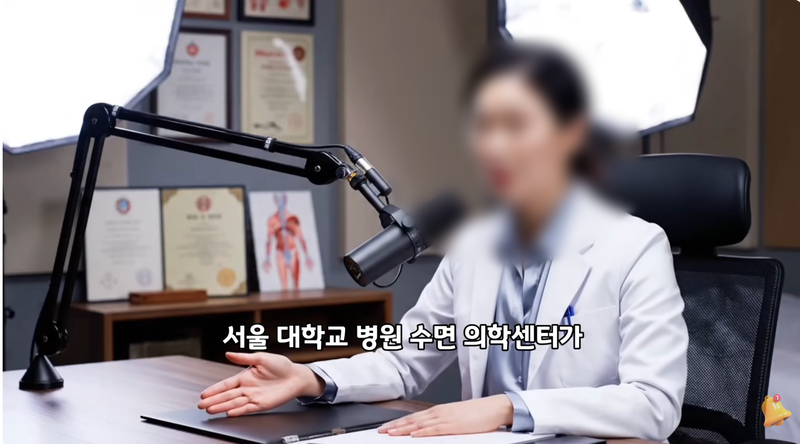
[Financial News] Health content on YouTube that uses fake doctors created with artificial intelligence to deliver medical information is spreading rapidly, but the government appears to be doing little to crack down on it. Cases of impersonating doctors or using the name of a university hospital to gain trust have continued to emerge, yet there were no detections or administrative penalties at all this year.
False and exaggerated health content using doctors has seen no enforcement
On the 7th, JoongAng Ilbo reported, based on materials submitted by Lee Joo-young of the Reform Party from the Ministry of Food and Drug Safety, that there were zero cases of detection, administrative action, or blocking of unfair advertising related to false and exaggerated health content using AI doctors from January to May this year.
Although the government said in January that it would block AI-based false and exaggerated advertising by introducing an AI-generated content labeling system and punitive damages, the lawmaker's office said there has been no actual enforcement. In response, the ministry explained that it had not confirmed any advertisements using AI doctors.
Recently, health content that impersonates medical experts using AI has been spreading quickly online.
One YouTube channel with about 36,000 subscribers promotes itself by saying, "If there are too many health videos on YouTube and you do not know what to trust, watch this channel," and "Every piece of content here is directly reviewed by A university hospital."
The channel has posted numerous health videos with sensational titles such as "7 reasons a doctor with 25 years of experience drinks vinegar every day" and "Escaping dialysis at 67 with honey in just three months," and some of the videos have drawn hundreds of thousands of views.
However, the university hospital said to JoongAng Ilbo that it has "no connection whatsoever with the channel."
A hospital official said, "The doctor appearing in the videos is not a real medical professional but a virtual character created by AI," adding, "The hospital has also never verified or reviewed the content."
Ad revenue and commission business... If no specific product is sold, regulation is difficult
Another channel with about 74,000 subscribers also features an AI-generated female doctor and produces health content such as "Warning from a urology doctor" and "Three dangerous fruits that damage your kidneys after age 60."
The video descriptions include various ads and affiliate links, and the operator is said to earn advertising revenue and affiliate marketing commissions through them.
The problem is that it is not easy to sanction this kind of content under current law.
Under the Act on Labeling and Advertising of Foods, the Ministry of Food and Drug Safety can regulate only advertisements for food and health functional foods. If a video does not directly sell a specific product, it falls outside the scope of regulation.
There are also concerns that false health information could lead to real harm.
Sang Woo Oh, a professor of family medicine at Dongguk University Ilsan Hospital, said, "Many AI doctor videos contain dangerous content," adding, "The government and civic groups need to work together to build a continuous monitoring system."
[email protected] Seo Yoon-kyung Reporter