"Cut Exposure to Samsung and SK, and Buy This Stock" — Morgan Stanley, the 'Grim Reaper' of Semiconductors, Issues a Warning
- Input
- 2026-07-08 05:38:06
- Updated
- 2026-07-08 05:38:06
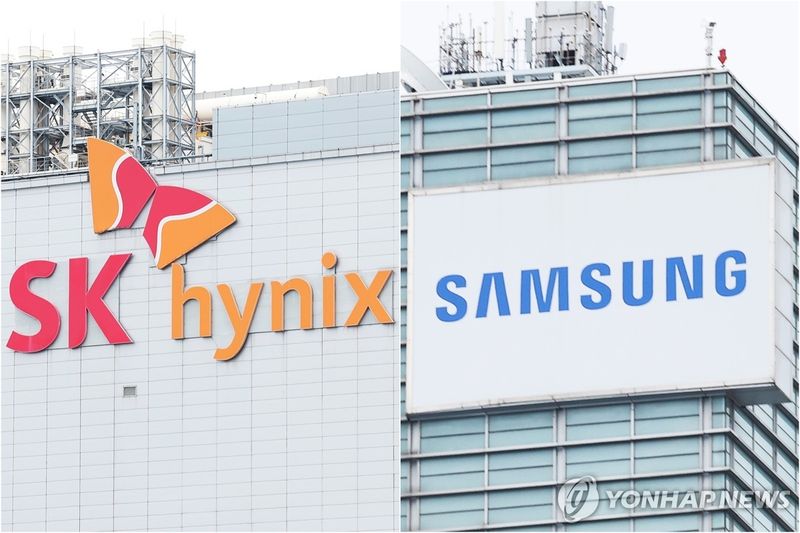
[Financial News] Morgan Stanley, the investment bank that has often sharply anticipated turning points in global financial markets, is once again sounding the alarm on the memory semiconductor sector and rattling global tech stocks. This time, it argued that the earnings growth driver for semiconductors has already peaked and said investors should shift their focus to the next stage of the AI value chain.
In a global strategy report sent to clients on the 6th, local time, Morgan Stanley said the narrow rally that had been led by semiconductors was entering its final phase. It therefore recommended that investors reduce exposure in the short term to global memory chip names such as Samsung Electronics, SK hynix, and Micron, and rotate into big tech hyperscalers.
The clearest sign of a market top, according to Morgan Stanley, is the slowdown in earnings estimate upgrades. It said the easing of upward revisions, which had been a powerful driver of share-price gains, is itself a kind of warning signal. The report interpreted the recent selloff in global semiconductor stocks as an early sign that market leadership is shifting to other sectors.
Still, Morgan Stanley said the broader rally across the AI value chain is not over. Instead, it sees a rotation among AI beneficiaries, with buying interest moving from one group of winners to another.
In that process, it expects the gap left by semiconductor stocks to be filled by mega data center companies that run AI cloud businesses, such as Alphabet Inc. and Amazon. Morgan Stanley noted that semiconductors are ultimately a downstream industry dependent on hyperscalers' AI infrastructure spending. If big tech starts slowing the pace of investment, it said, expectations for semiconductor earnings will inevitably weaken. It also argued that Meta Platforms' recent announcement that it would sell surplus AI computing capacity to outside customers is the beginning of that shift.
Revisiting Morgan Stanley's harsh 'semiconductor winter' track record
Global financial markets are reacting especially sensitively to this latest Morgan Stanley report because of memories of the so-called 'semiconductor winter' that once shook stock markets around the world. In August 2021, at the peak of the semiconductor boom fueled by the COVID-19 pandemic, Morgan Stanley abruptly downgraded the sector in a report that predicted slowing PC demand and oversupply. A real semiconductor downcycle followed soon after, cementing the bank's influence over the market.
Then, in September 2024, it slashed its target price for SK hynix to less than half in a single day after raising concerns about oversupply in high-bandwidth memory, even as the stock was hitting record highs on the AI boom. The move triggered a sharp selloff that wiped out 15 trillion won in market capitalization from Korea's semiconductor sector. Morgan Stanley later acknowledged the error, restored the target price after confirming the strength of AI demand, and caused a stir of its own, but the shock to the market was significant.
A major shift in capital: Which sectors will take the place of semiconductors?
Along with its recommendation for a risk-management strategy centered on tech stocks, Morgan Stanley also pointed to global sectors that could benefit as market flows broaden. It highlighted biotech, which could gain from a lower global interest rate environment and a pickup in mergers and acquisitions, as well as consumer sectors with strong expectations for a recovery in global goods consumption and earnings improvement. Transportation and regional banks were also expected to benefit from the cyclical recovery and the widening of market leadership.
Global investors have now begun closely watching whether Morgan Stanley's latest pessimistic outlook will prove to be the start of a real long-term downturn, as in the past, or merely an overblown concern during a short-term pause. In fact, the immediate impact appears unavoidable, with Samsung Electronics and SK hynix each falling more than 6% in Asian trading shortly after the report was released.
At the same time, it is worth noting that Morgan Stanley, while warning of possible short-term stock corrections, still maintained its long-term positive view on tech stocks, citing medium- to long-term earnings prospects and the continued spread of the AI paradigm.
[email protected] Moon Young-jin Reporter