"Delisting May Be Better" ... How Government Reforms Have Changed Listed Companies' Calculations [Why Are Stocks Like This?]
- Input
- 2026-07-08 06:00:00
- Updated
- 2026-07-08 06:00:00
[Financial News] The government has sharply tightened delisting standards to quickly remove weak KOSDAQ companies from the market, but some argue the move could instead give certain firms a reason to leave the stock market. In cases where going private is more beneficial than remaining listed for management control, inheritance or gifting, and disclosure burdens, the revised system could end up serving as an "exit opportunity."
According to the investment banking industry on the 8th, the Financial Services Commission (FSC) and the Korea Exchange began enforcing a revised delisting system on the 1st, centered on the rapid and strict removal of weak companies. The goal is to raise the bar for maintaining a listing, push uncompetitive firms out of the market earlier, and strengthen investor protection and trust in the capital market.
Under the revision, the market capitalization threshold for KOSDAQ-listed companies has been raised to 20 billion won, while the threshold for companies listed on the Korea Exchange Main Board has been lifted to 30 billion won. Starting next year, those thresholds will rise further to 30 billion won and 50 billion won, respectively. In addition, penny-stock criteria, complete capital impairment on a semiannual basis, and disclosure violations have all been added to the delisting review, making oversight even stricter.
Although the government has significantly tightened delisting requirements to remove weak companies, concerns are already emerging about unintended effects. While some firms may work to raise corporate value in order to stay listed, the new environment could make going private more attractive for others than maintaining a public listing.
Eom Su-jin, a researcher at Hanwha Investment & Securities, said, "Companies with major shareholders preparing for inheritance or gifting, firms that need to defend management control, and companies that see disclosure obligations and interference from minority shareholders as a burden may actually have an incentive to prefer delisting."
Private companies face relatively fewer disclosure obligations and do not bear the costs of maintaining a listing. They are also less exposed to the risk of a hostile takeover.
Market experts said companies that have posted profits for years but have not paid dividends or canceled treasury shares, firms that are cash-rich but reluctant to return value to shareholders, and companies that repeatedly support affiliates or continuously issue Convertible Bonds (CB) have little reason to push their share prices higher. They added that when a stock falls to a new low and a major shareholder then aggressively buys up shares, that can also be a sign of possible voluntary delisting.
An official from the asset management industry said, "The direction of this policy is right," but added, "However, if companies that have little incentive to remain listed are managed under the same standard, it is difficult to rule out the possibility that more of them will choose voluntary delisting."
An official from a securities firm's Investment Bank (IB) division said, "Listed companies clearly have advantages in fundraising and corporate image, but disclosure obligations and shareholder response costs are also rising steadily," adding, "Among owner-led companies, more may begin to recalculate the costs of staying listed versus the benefits of going private."
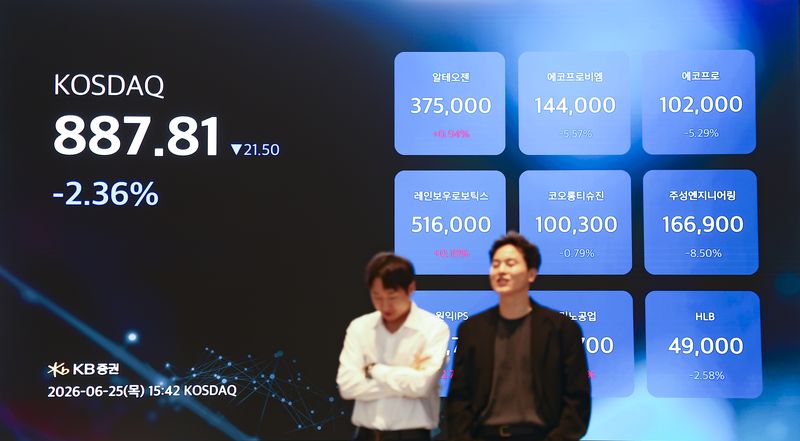
Meanwhile, after the delisting rules were tightened, investor sentiment in KOSDAQ has weakened, especially toward companies seen as having a low chance of remaining listed. Stocks facing delisting concerns have become more volatile, and companies have responded with share consolidations and affiliate mergers. Industry watchers say the concentration of funds in semiconductors and the weakening appetite for small- and mid-cap stocks are combining to make delisting risk one of the factors weighing on KOSDAQ sentiment.
A securities industry official said, "Strengthening delisting standards is an unavoidable step to improve market quality," but added, "However, if excessive concern drives down stock prices regardless of corporate value, that would go against the purpose of the system, so complementary measures are also needed to guide the market toward a soft landing."
[email protected] Choi Du-seon Reporter