[Editorial] Samsung Electronics’ record results show only ultra-gap technology can secure the future
- Input
- 2026-07-07 18:19:59
- Updated
- 2026-07-07 18:19:59
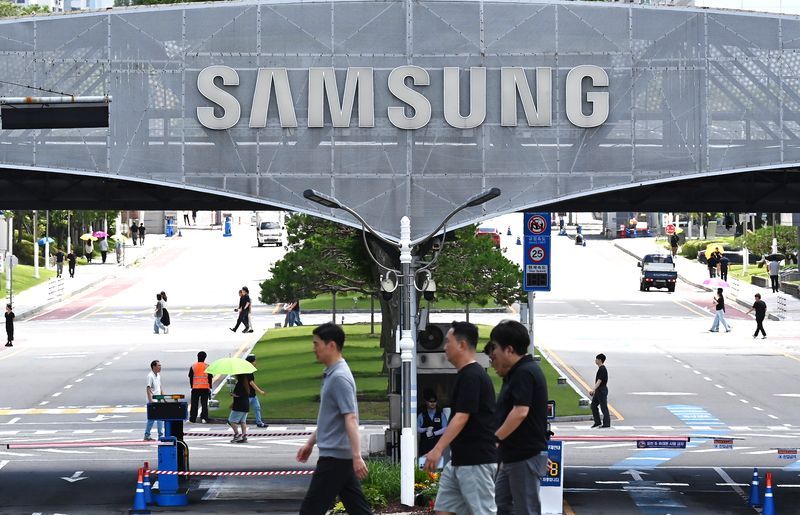
On the 7th, Samsung Electronics released its preliminary results for the second quarter of this year. On a consolidated basis, revenue came to 171 trillion won and operating profit to 8.94 trillion won. Compared with the same period last year, the figures rose 129% and 1,810%, respectively. By operating profit alone, this is the largest quarterly result ever posted by a global tech company. The previous record was NVIDIA’s $53.5 billion, or about 81.9 trillion won, in the first quarter of fiscal 2027, covering February through April. Apple posted $50.85 billion in the fourth quarter of last year.
Notably, these results exclude about 17 trillion won set aside as provisions for special bonuses in the semiconductor division. If that amount is added back, operating profit would easily exceed 100 trillion won. The latest performance is strong enough to ease much of the recent concern that the semiconductor industry has already peaked and is now heading downward. Expectations are also rising that the memory boom may last longer than previously thought.
But it is too early to relax. Competition from China and Japan is intensifying. At a recent shareholders’ meeting, Japanese memory maker KIOXIA Corporation declared its intention to reclaim the world No. 1 spot in NAND flash. Backed by world-class materials, parts and equipment capabilities, Japan is pouring national resources into reviving its semiconductor industry.
The Japanese government is also betting heavily on semiconductors, providing large subsidies to TSMC’s Kumamoto plant and to Rapidus Corporation. Micron, the world’s third-largest memory company, has invested 1.4 trillion won to expand its plant in Higashihiroshima City, Japan. The U.S. and Japanese memory industries appear to be strengthening cooperation with Korea in their sights.
China’s pursuit is even more threatening. Backed by massive government support, ChangXin Memory Technologies (CXMT) and Yangtze Memory Technologies Corp (YMTC) have moved beyond commodity DRAM and NAND flash to develop high-bandwidth memory (HBM). Some analysts say the technology gap between Korea and China has narrowed considerably. Foreign media have also reported that Apple is considering adopting memory chips from these companies for products sold in China. Both firms are pushing ahead with initial public offerings as they accelerate the expansion of their semiconductor ecosystems.
Samsung Electronics also faces serious internal challenges. Among employees in the Device eXperience Division, where bonuses are relatively smaller, frustration and conflict are boiling over. The labor union in the DX Division is continuing collective action, including plans for a rally to protest the bonus gap with the Device Solutions division. The dispute over performance-based pay is still far from over.
There is no time to waste. This is not the moment to divide up the gains, but to prepare for the future. The semiconductor cycle is harder to predict than stock prices. Only sustained research and development investment and an overwhelming technological lead can turn this boom into future growth. The answer to both outside competition and internal conflict ultimately lies in technology investment. It is time to remember Chairman Lee Kun-hee’s words: "I can’t sleep when I think about the company’s future."