[Editorial] Canada submarine setback should strengthen the competitiveness of K-defense industry
- Input
- 2026-07-07 18:19:57
- Updated
- 2026-07-07 18:19:57
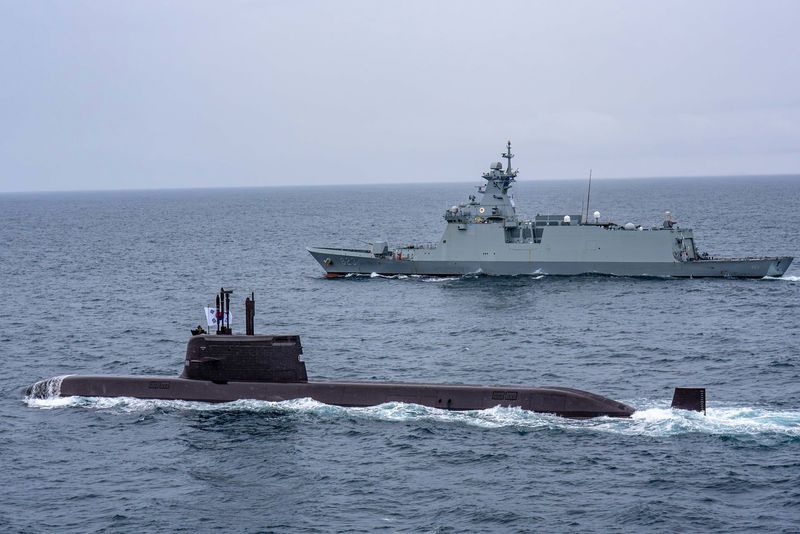
But the preferred bidder position went to Germany’s ThyssenKrupp Marine Systems (TKMS). The disappointment is deep, given how hard the company fought the German rival. Still, this outcome should be viewed not as a defeat, but as a learning process that can help further strengthen defense industry competitiveness. For a country that has set its sights on joining the world’s top four defense powers, the failed Canada bid offers many lessons. The global arms market is a conservative one, where even the combined force of corporate technology and government diplomacy may not be enough.
In that sense, the most valuable achievement in the Canada bid was technology. The submarine proposed by Hanwha Ocean had already proven its long-range sailing capability and interoperability with the Canadian Navy through the ROKS Dosan Ahn Changho, which traveled 14,000 kilometers from Jinhae District to Guam, Hawaii and then to Canada’s western base.
By contrast, the model offered by Germany was still only at the design stage, with no physical prototype. When technology, delivery schedule and price competitiveness were all taken into account, Hanwha Ocean stood shoulder to shoulder with Germany, the cradle of submarine construction. It is also highly significant that Hanwha Ocean made the final shortlist alongside Germany after beating out leading European defense firms such as Naval Group, Navantia and Saab AB. The fact that Korea’s defense technology has been publicly verified as world-class in advanced fields is a major gain.
Along with technology, diplomatic ties are a core element of defense industry competitiveness. Canada’s choice of the German company shows why. Cooperation with Germany, a member of the North Atlantic Treaty Organization (NATO) and the Atlantic alliance, as well as links to European supply chains, were cited as key reasons for selecting the preferred bidder. No matter how much better a company may be in performance and delivery, it cannot overcome the wall of alliance networks. Unlike other advanced products, defense industry deals are shaped even more strongly by this diplomatic backdrop than by technology itself.
The first purpose of President Lee Jae Myung’s trip to Europe for the NATO summit is also global defense sales. Korea has enough technology, but lacks alliance networks, as the Canada bid showed. Expanding those networks through diplomacy is therefore urgent. This visit is especially meaningful because it is an attempt to enter the NATO market, which accounts for more than half of global defense spending.
In the end, the answer to defense industry competitiveness lies in the public and private sectors moving as one team. The global defense market is a place where a bid can only be won if the two pillars of corporate technology and government diplomacy are perfectly aligned. Companies must keep widening the gap through relentless technological innovation, while the government must expand networks of trust through summit diplomacy and industrial cooperation. Using this setback in Canada as a springboard, we hope the public-private one-team system will be refined further and that Korea will ring up victories in defense deals around the world, including Europe.