Samsung Electronics' stock fell 7% in a day, but securities firms keep saying, "Don't be shaken"
- Input
- 2026-07-08 06:25:00
- Updated
- 2026-07-08 06:25:00
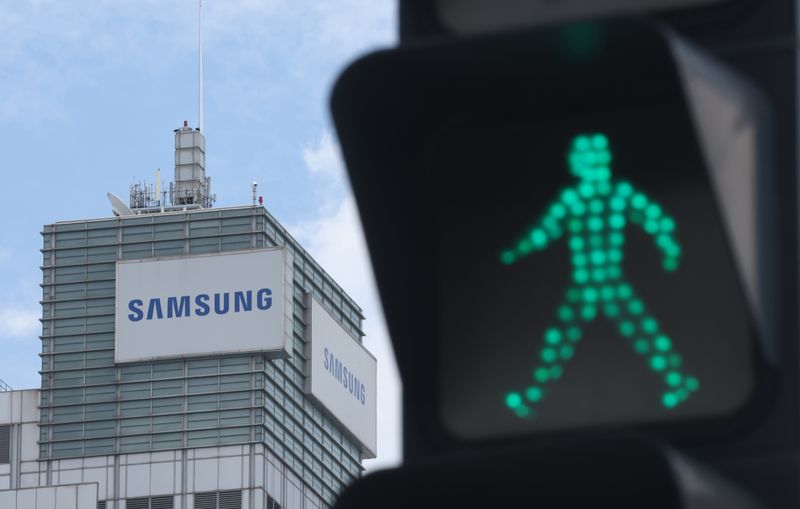
[Financial News] The company posted record-high earnings, but its stock price moved in the opposite direction. Even so, analysts are saying the sharp drop is a matter of sentiment, not fundamentals, and are urging investors not to panic.
According to the Korea Exchange on the 7th, Samsung Electronics closed at 296,000 won, down 6.92% from the previous session. During the day, it fell as low as 286,000 won, or 9.75%, widening its losses. At 10:23 a.m. that day, a sell-side sidecar was triggered on the Korea Exchange Main Board, and from 1:51:33 p.m., a circuit breaker mechanism halted trading for 20 minutes. It was the sixth circuit breaker mechanism triggered in the KOSPI this year alone.
Was the record profit the reason for the plunge?
What dragged the stock down was, paradoxically, its own record-breaking performance. Samsung Electronics announced preliminary second-quarter results that showed revenue of 171 trillion won and operating profit of 8.94 trillion won. Operating profit jumped 1,810% from a year earlier. For this quarter alone, it posted the world's No. 1 earnings, surpassing NVIDIA.
Even so, the results fell short of the 90 trillion won range that some in the market had expected. Combined with recent concerns that hyperscalers such as Meta Platforms may cut investment, the stock was hit by a wave of profit-taking. This is the so-called sell-on phenomenon. It refers to a situation in which investors sell to lock in gains even after a positive corporate event occurs, believing the expectation had already been priced in.
Shinhan Investment Corp. explained, "Just as Micron Technology, Inc. saw a selloff after its recent Earnings Surprise, investors worried that the stock had already peaked are rushing to take profits ahead of time in response to the record operating profit."
There is also an analysis that market expectations had become too high. The market had been forecasting Samsung Electronics' second-quarter operating profit at about 84 trillion won, but some even expected 100 trillion won.
Against this backdrop, Morgan Stanley drew attention by saying that "the earnings momentum in the semiconductor sector is passing its peak." On the 6th local time, Michael Wilson, the firm's Chief Investment Officer (CIO), said in a recent report, "The AI investment cycle will continue, but the upside momentum in the previously overheated semiconductor sector is slowing."
Wilson said it does not mean the AI cycle is over. He added, however, that semiconductor stocks are likely to lose some of their momentum, while rotation into consumer goods, banks, and biotech could continue.
Domestic securities firms call it "an opportunity to buy the dip"
Still, brokerages see the sharp decline as an opportunity to buy at lower prices. In particular, the latest reports released that day set target prices at roughly twice the current share price.
Kim Young-gun, a researcher at Mirae Asset Securities, said, "Let's not be swayed by the market's overreaction," adding, "Although the stock has fallen more than 20% from its recent peak and the gap between the current price and the target price of 550,000 won is wide, there is no reason to cut the target price given the solid industry conditions, the company's competitiveness, and the low valuation multiple."
Park Jun-young, a researcher at Hanwha Investment & Securities, also kept his target price at 580,000 won and said, "The general-purpose memory division also delivered a price surprise this quarter." He added, "We had initially expected DRAM prices to rise about 40% quarter on quarter, but they are estimated to have actually increased by 45% to 50%."
Park said, "The extreme volatility that appears for no clear reason in the Korean memory industry, which is steadily building perfect fundamentals, is an opportunity to buy the dip." He added, "The end of the stock price cycle has not arrived. There has never been a case where a cycle ended because of noise that was little more than rumor, rather than a shock that affected fundamentals."
Hyungkeun Ryu, a researcher at Daishin Securities, said, "Even after recognizing a large bonus provision, estimated in the high 1 trillion won range, the company still posted strong earnings of 8.94 trillion won." He added, "Excluding the bonus provision, operating profit from memory semiconductors would have reached 10.9 trillion won." He then pointed to additional upside drivers, including the possibility of resuming share buybacks, a forecast that the average selling price (ASP) of HBM in 2027 will rise 91% from a year earlier, and improved orders in the non-memory division.
[email protected] Han Young-jun Reporter