[Editorial] The warning from the collapse of Germany's Mittelstand
- Input
- 2026-07-06 18:26:09
- Updated
- 2026-07-06 18:26:09
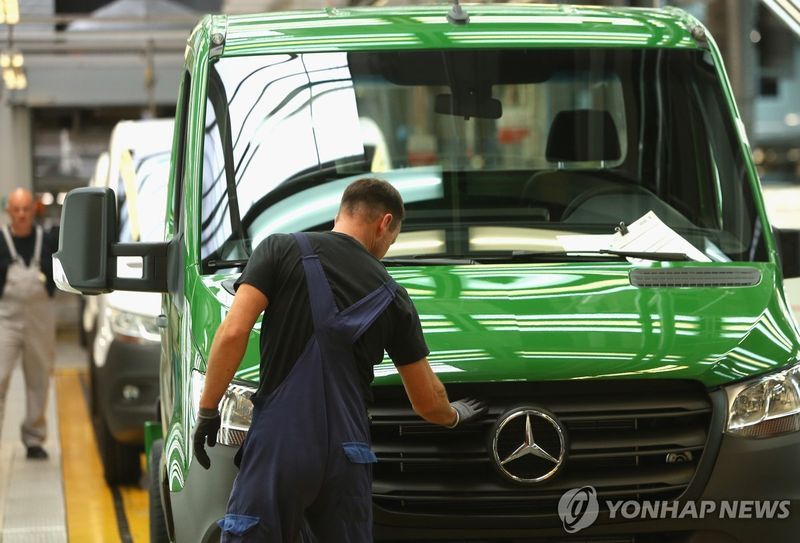
Germany, along with Japan, is one of the world's most technologically advanced countries. In particular, it has long been a global leader in machinery manufacturing, with unmatched technology and craftsmanship. It was not only a powerhouse in finished goods such as automobiles, but also in materials, equipment, and components. Now, China, which is raising its technological capabilities across all industries and taking control of global markets, is bringing down Germany's traditional strong small companies. Germany's exports of machine tools to China fell by nearly one-third in the first quarter of this year from a year earlier.
The Mittelstand, which has served as the backbone and heart of Germany's manufacturing sector, was called a "Hidden Champion" because it was highly competitive yet little known. China's policy aimed at challenging these Hidden Champions is the "10,000 Little Giants" initiative. By promoting small and mid-sized firms that emphasize specialization, precision, distinctiveness, and innovation, the policy has been effective enough to bring down Germany's Hidden Champions.
Beyond China's policy-driven offensive against Germany, other reasons behind the decline of the German Mittelstand include supply chain shocks, soaring energy costs following the phaseout of nuclear power, succession problems caused by aging executives, and weak adoption of advanced technologies such as Artificial Intelligence (AI). Like Japan, Germany appears to have revered technology as the highest value but failed to keep pace with change.
What about us, then? The difficulties facing the German Mittelstand should be seen as both a warning and an opportunity. South Korea is no exception to China's offensive. Last year, among 1,575 materials, parts, and equipment items with imports of more than $10 million, 472 items depended on China for more than 50% of supply. China's dependence in the materials, parts, and equipment sector has risen to 30%.
According to the Korea Institute for Industrial Economics and Trade, China has already overtaken South Korea in overall competitiveness in key industries such as electric vehicles, batteries, robots, and self-driving cars. In semiconductors, China's overall competitiveness has also risen to a level comparable to South Korea's.
Still, South Korea's total domestic orders for machine tools from January to April this year came to 1.1924 trillion won, up 11.2% from the same period last year, while overseas orders rose 23.3% to 798.1 billion won. In machine tools alone, Korean companies are holding up relatively well. As Germany's Mittelstand is being put up for sale under China's pressure, Samsung Electronics and other Korean firms acquired three companies last year.
We should take the struggles of German companies as a lesson. If we ignore the changing times or neglect technology development, even competitiveness built over more than a century can vanish overnight. Only by pursuing constant innovation through advanced technologies can we win and survive in an increasingly fierce global competition.