Public and Private Sectors Shine in 60 Trillion Won Canadian Submarine Bid
- Input
- 2026-07-06 18:19:58
- Updated
- 2026-07-06 18:19:58
According to the defense industry and major Canadian media outlets on the 6th local time, Canadian Prime Minister Mark Carney will announce new measures to enhance Canada's safety, resilience and prosperity in Halifax, Nova Scotia, before departing for the North Atlantic Treaty Organization (NATO) summit in Türkiye. The announcement will come at 5:10 a.m. on the 7th Korea time.
The CPSP is a massive project to replace the Canadian Navy's aging Victoria-class submarines with next-generation vessels. Including construction costs and maintenance, repair and overhaul (MRO) expenses over the next 30 to 50 years, the total project cost is expected to approach 60 trillion won.
Industry observers had initially expected Thyssenkrupp Marine Systems (TKMS) of Germany to have the edge, citing its submarine export record in Europe and interoperability among NATO members. However, South Korea brought the race to an even footing through all-out pressure from the government and the private sector under a 'K-Defense Industry one-team' approach.
The presidential office's direct diplomatic push was especially decisive. Kang Hoon-sik, Chief of Staff to the President of the Republic of Korea, visited Canada earlier this year and personally delivered a letter from the president to Prime Minister Mark Carney, strongly emphasizing the country's guarantee and willingness to cooperate.
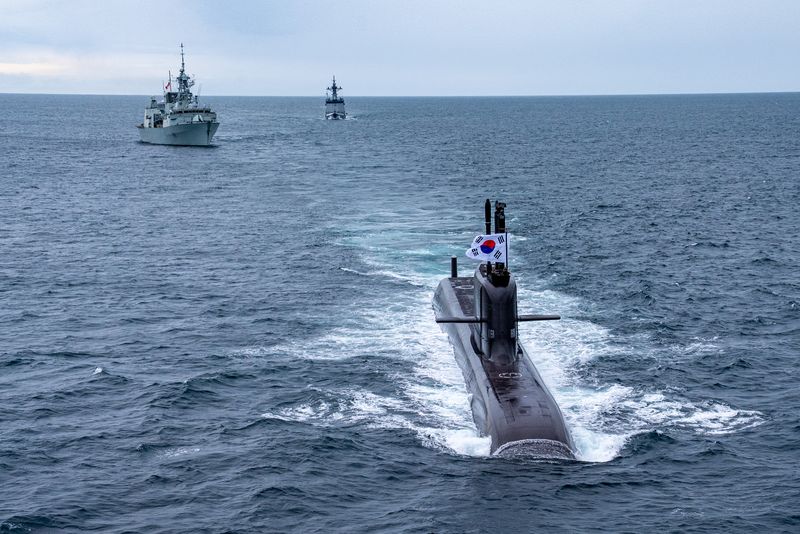
Hanwha Ocean, which joined the bid, also met Canada's needs precisely with a package strategy that went beyond simply supplying submarines. It put forward the Jangbogo-III Batch-II model, which has already been deployed by the Korean Navy and proven in service, and promised to deliver the first submarine in 2032, earlier than its rivals, easing Canadian concerns over a potential capability gap. The company also formed partnerships with more than 80 local Canadian firms and promised to create about 25,000 jobs annually and generate 120 billion Canadian dollars in economic impact, effectively tapping into Ottawa's emphasis on protecting domestic industry.
A defense industry official said, "Regardless of the outcome, the fact that South Korea went head-to-head with Germany in the first submarine delivery bid to a NATO member outside Europe is in itself proof of the technological strength of the K-Defense Industry." The official added, "This project will become a turning point that could determine the direction of exports to the Middle East, as well as North America and Europe."
Kim Dong-ho, Financial News