"Will the Samsung Electronics-SK hynix leveraged ETF be pushed out?"... After the Bank of Korea, politicians also call for delisting
- Input
- 2026-07-06 09:31:25
- Updated
- 2026-07-06 09:31:25
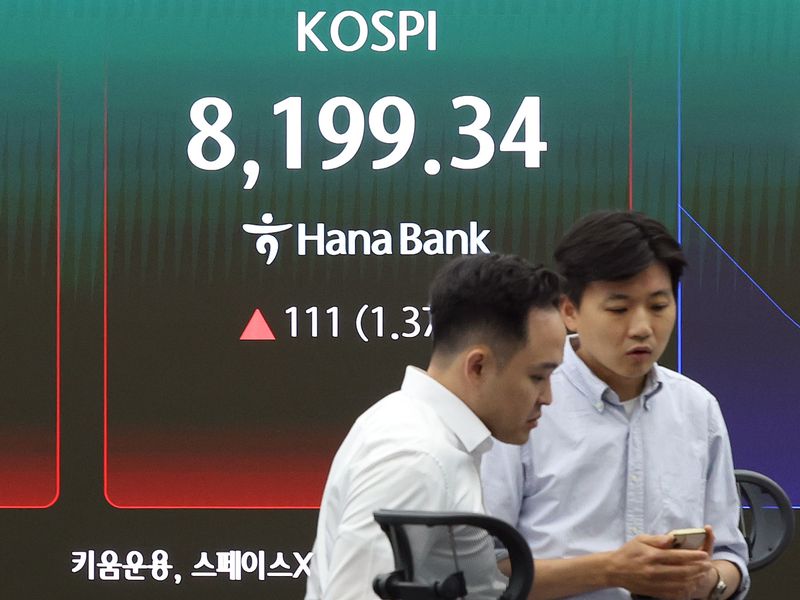
[Financial News] Calls for tighter regulation of single-stock leveraged Exchange-Traded Funds (ETF) are spreading beyond the financial authorities and into the political arena. After the Bank of Korea warned that Samsung Electronics and SK hynix leveraged ETF products could intensify market concentration and increase volatility, some politicians have gone further, arguing that delisting should also be considered.
On the 6th, the financial investment industry said that in a written response submitted recently to People Power Party lawmaker Park Sung-hoon, the Bank of Korea stated, "If investment in single-stock leveraged ETF expands in a situation where Samsung Electronics and SK hynix account for more than half of the stock market in terms of market capitalization and trading volume, market concentration could deepen."
The Bank of Korea analyzed that if funds are already concentrated in certain stocks and inflows and outflows from leveraged ETF products move in one direction, market volatility could rise. It explained that repeated daily rebalancing and cash-futures arbitrage could amplify price swings, and that retail investors could face larger losses when stock prices correct.
In fact, the combined market capitalization share of Samsung Electronics and SK hynix in the KOSPI market rose from 36.1% at the end of last year to 55.3% on June 24. Their share of trading value also climbed from 27.9% to 63.5% over the same period, showing a clear concentration of funds in the two stocks.
The Bank of Korea's stance has also shifted. In last month's Financial Stability Report, it said the market impact would likely be limited, citing positive effects such as the inflow of foreign capital and improved price discovery. This time, however, it placed greater emphasis on financial stability risks and the need for monitoring, reflecting the rising concentration in the market.
Calls for delisting have also emerged in politics. On Facebook, People Power Party lawmaker Ahn Cheol-soo said on the day, "We should consider delisting Samsung Electronics and SK hynix leveraged ETF," adding, "The KOSPI is moving like a casino."
Ahn argued that with too much money flowing into Samsung Electronics and SK hynix, the daily rebalancing and arbitrage of leveraged ETF products are increasing market volatility. He also said the expected benefits from foreign capital inflows have fallen short, and that the leveraged structure is amplifying investor losses. As an alternative, he proposed easing regulations on Active ETF products instead of allowing single-stock leveraged ETF products. He also said the chairperson of the Financial Services Commission and the head of the Financial Supervisory Service should be held accountable.
Lee Chan-jin, head of the Financial Supervisory Service, also expressed regret over the introduction of the system at a press briefing last month, saying, "Personally, I reflect on whether we should have blocked it even if we had to lie down in front of it."
An official from the asset management industry said, "The possibility of greater market volatility was something that could have been sufficiently anticipated in advance," adding, "It is regrettable from the standpoint of policy consistency to allow the product first and then tighten regulations only after the market has grown." The official continued, "Before using investor protection as a justification, risk management measures should have been fully prepared during the system design process."
Another official in the securities industry criticized the debate, saying, "This controversy is more about policy failure than about the product itself." The official added, "When approval was granted for the launch, the authorities emphasized the effect of attracting foreign capital, but once the market became unstable, they shifted to stronger regulation. That is no different from the financial authorities admitting policy failure themselves."
[email protected] Choi Du-seon Reporter