"Chinese Buyers Have Left, Taiwanese Buyers Have Arrived": AI Wealthy Become Japan's New Real Estate Powerhouses
- Input
- 2026-07-06 08:34:34
- Updated
- 2026-07-06 08:34:34
[Financial News, Tokyo = Reporter Seo Hye-jin] Nikkei Asia reported on the 6th that Taiwanese wealthy investors, whose assets have grown on the back of the artificial intelligence (AI) boom, are emerging as the new power players in Japan's real estate market, where major Chinese buyers have stepped back. As the yen weakens and cross-strait tensions between China and Taiwan intensify, Japanese property is becoming a key overseas safe haven for Taiwan's affluent class.
According to the Ministry of Land, Infrastructure, Transport and Tourism, Taiwanese buyers purchased 192 newly built apartments in Tokyo's 23 special wards in the first half of last year, up 82% from the full year of 2024. Taiwanese buyers accounted for about two-thirds of foreign purchasers of new apartments in central Tokyo. Nikkei Asia said the figure only includes Taiwanese residents outside Japan, suggesting actual demand may be even higher.
The biggest driver behind the flow of Taiwanese money into Japan is the AI semiconductor boom. As Taiwan's semiconductor industry, led by TSMC, has expanded rapidly, both stock prices and household wealth have climbed. Taiwan's benchmark TAIEX index has risen 62% this year, and the country's economy is forecast to grow by about 10%, its fastest pace in 16 years.
Lin Jiaqing, who runs a real estate brokerage in Tokyo for Taiwanese clients, said, "Some customers have made so much money that they do not know where to invest it." He also serves as vice chairman of the Japan-Taiwan Real Estate Association.
The weak yen is another factor encouraging property purchases in Japan. Over the past decade, the New Taiwan dollar has strengthened against the yen. An exchange rate that was in the 3-yen range per TWD 1 has recently moved into the 5-yen range. Lin said, "A property worth 100 million yen feels like it costs only 60% of that to Taiwanese buyers."
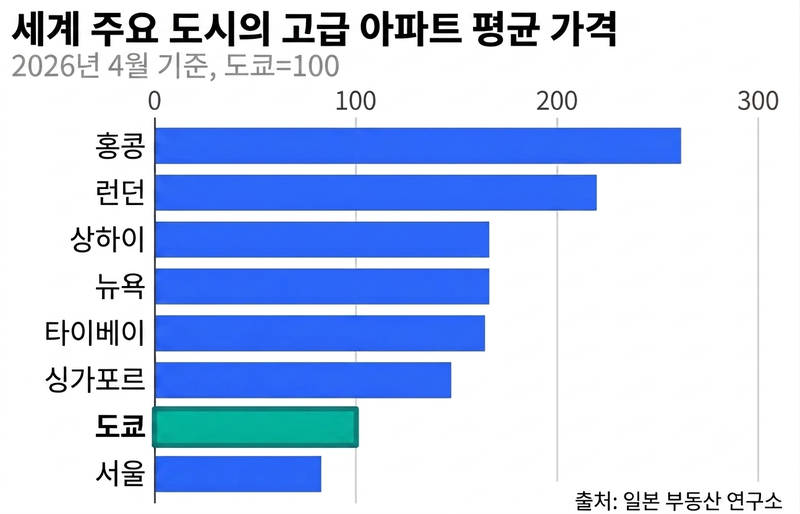
Soaring home prices in Taiwan are also making Japanese property more attractive. According to the Japan Real Estate Institute, as of April this year, luxury apartment prices in Taipei were 64% higher than in Tokyo. Luxury apartments in Tokyo are priced at less than half the level of those in London.
Tokyo's real estate industry says the old pattern, in which Chinese investors quickly snapped up the best listings, has weakened, and Taiwanese buyers are filling the gap. As demand from Chinese buyers has slowed amid China's economic downturn and capital outflow controls, wealthy Taiwanese have emerged as key customers in the luxury apartment markets of Tokyo and Osaka.
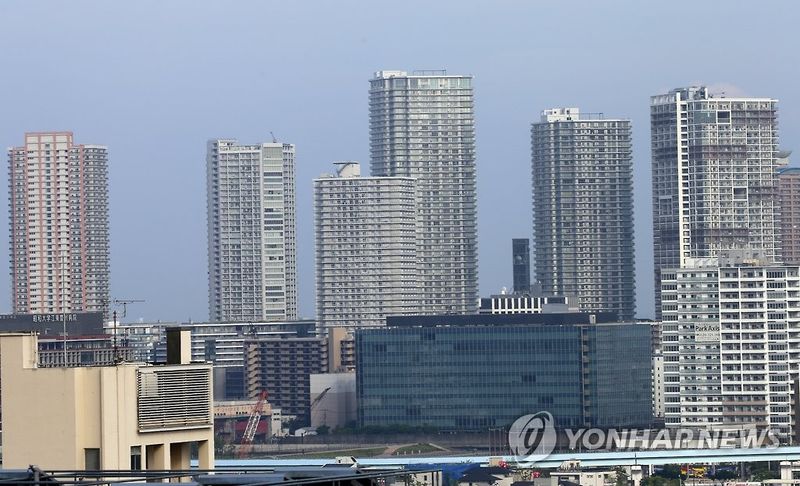
Another reason wealthy Taiwanese prefer Japan is accessibility. The Tokyo Tennozu area, about 20 minutes by monorail from Tokyo International Airport (Haneda Airport), is considered a favorite among Taiwanese investors. The flight from Songshan Airport in central Taipei to Haneda Airport takes less than four hours. Tennozu is also close to Shinagawa Station, where the Linear Chuo Shinkansen is scheduled to open in the 2030s.
Cross-strait tensions are also increasing demand for asset diversification. China regards Taiwan as part of its territory and has repeatedly stated its intention to pursue reunification. Lin said, "Every Taiwanese person keeps in mind the possibility of a similar situation with China," adding, "Those with financial means want to secure a place they can go to if tensions escalate."
Japan is not the only overseas destination attracting Taiwan's wealthy investors. According to a survey conducted by Yu Shan Bank and KPMG in September and October last year, 54% of Taiwan's high-net-worth individuals said they were considering investment in the United States. Singapore followed at 45%, while Japan and South Korea stood at 29%.
Singapore is seen as attractive for its low tax rates and English- and Chinese-speaking environment, while Japan is valued for its geographic proximity and potential for further price gains.
[email protected] Seo Hye-jin Reporter