"It costs 20,000 won per bowl": People lined up to eat it, but samgyetang has jumped 29% in five years
- Input
- 2026-07-06 07:57:58
- Updated
- 2026-07-06 07:57:58
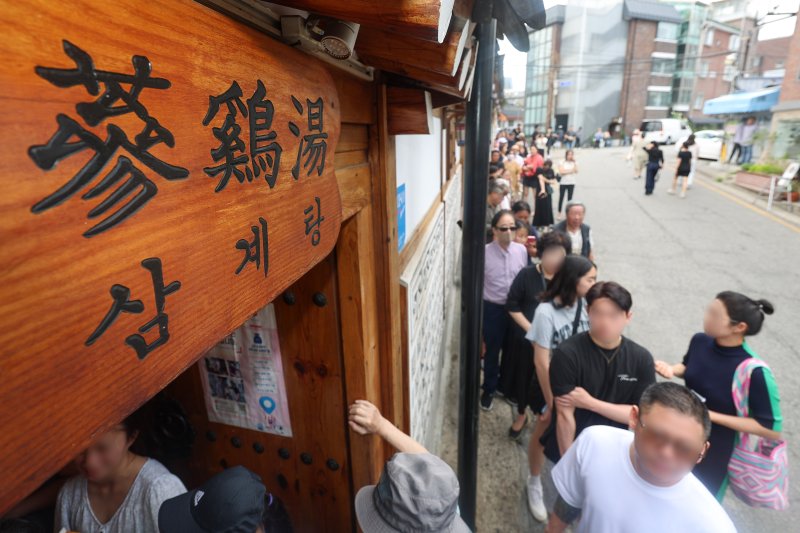
[Financial News] As Chobok, the first of the three hottest days of summer, approaches, the price of samgyetang, a signature summer health food, has risen by about 29% over the past five years.
According to Chamgagyeok, the price information portal run by the Korea Consumer Agency, the average price of samgyetang in Seoul stood at 18,154 won as of May this year. At some well-known specialty restaurants, a bowl has topped 20,000 won.
Samgyetang prices have climbed sharply in recent years. In Seoul, the average price rose from 14,077 won in May 2021 to 14,577 won in 2022 and 16,423 won in 2023, surpassing 16,000 won for the first time. Last year, it reached 17,654 won.
In particular, after first breaking the 18,000-won mark in August last year, it has remained at that level. Compared with five years ago, the price is up 4,077 won, or 29.0%.
With samgyetang prices in Seoul rising 29% over the past five years, consumers are facing a heavier burden when it comes to health foods. As of May this year, samgyetang was the second-most expensive item among major dining-out dishes in Seoul, after samgyeopsal, which costs 21,321 won for a 200-gram equivalent.
One notable point is the regional price gap. Busan, Daejeon and Jeju Special Self-Governing Province were also surveyed at around 17,000 won on average. Gwangju recorded the lowest level nationwide at 15,241 won.
The increase in restaurant samgyetang prices has been steeper than the rise in ingredient costs. According to Agricultural Products Distribution Information System (KAMIS) data from aT, the nationwide average retail price of broiler chicken in May this year was 6,518 won per kilogram, up 20.0% from 5,433 won in May 2021.
That is still below the 29.0% increase in samgyetang prices in Seoul over the same period. Analysts say the price reflects a combination of higher costs across the restaurant industry, including side ingredients and labor.
Samgyetang uses not only broiler chicken but also glutinous rice, garlic, jujubes and ginseng, while rising labor costs, rent and utility bills have also been passed on to prices across the restaurant sector.
As the price of samgyetang, a representative summer health dish, continues to rise in step with broader dining-out inflation, the industry expects more consumers to turn to ready-to-eat meals, or HMR, and meal kits instead of eating out.
[email protected] Kim Hee-sun Reporter