Khamenei funeral held without successor Mojtaba, after South Korea invitation was withdrawn
- Input
- 2026-07-06 06:01:06
- Updated
- 2026-07-06 06:01:06
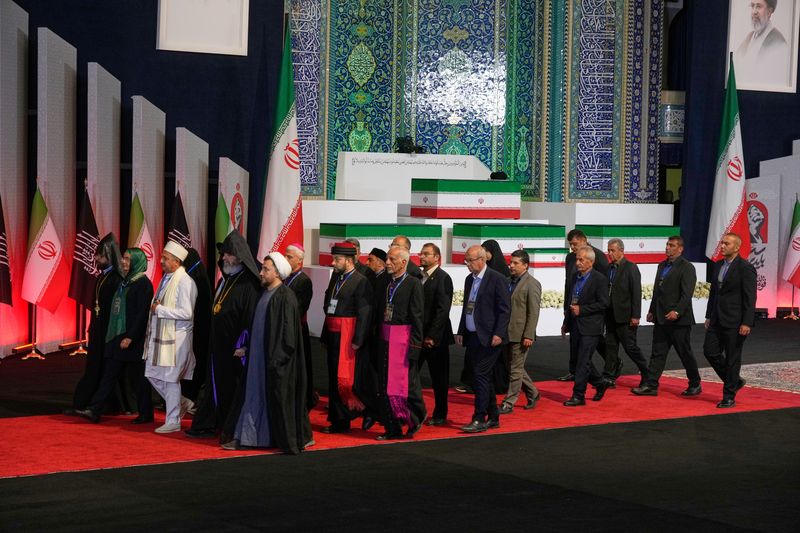
[Financial News] The funeral of Iran's supreme leader Ali Hosseini Khamenei, who died in an Israeli airstrike in late February, was held on June 5 local time with tens of thousands of mourners and senior regime officials in attendance. However, his designated successor, Mojtaba Khamenei, did not appear at the grand ceremony, deepening speculation surrounding him.
It was also reported that the Iranian government had invited South Korea to the funeral before later canceling the invitation.
The funeral was attended by key figures in Iran's leadership, including Khamenei's sons Masoud, Mostafa and Meysam, as well as President Masoud Pezeshkian and Islamic Revolutionary Guard Corps (IRGC) commander Ahmad Vahidi.
But Mojtaba, who has not been seen in public since reportedly taking over as supreme leader in early March, also skipped the funeral. That has fueled analysis that Iranian authorities are keeping him in strict seclusion out of concern over possible additional Israeli targeted killings.
Rumors have been spreading inside and outside Iran that Mojtaba was at the scene with his father, Ali Hosseini Khamenei, during the February airstrike and was seriously injured.
The official funeral process for Ali Hosseini Khamenei, who ruled the Islamic Republic from 1989 until his death in February, had been delayed and only began on June 3.
Iranian authorities have dubbed the event the "funeral of the century" and plan to hold large-scale memorial events across Iran and Iraq for the next week. Officials expect total attendance to range from 12 million to as many as 20 million.
Meanwhile, diplomatic sources said on June 5 that the South Korean government did not officially attend Khamenei's funeral in Tehran on June 4.
A Foreign Ministry official said, "We received an invitation from Iran and planned to attend through our mission, but the Iranian side later said that 'mission attendance would be difficult due to venue-related reasons.' So we did not attend."
The move is seen as Iran revising its policy to avoid receiving condolences from foreign missions stationed in Iran, while still seeking condolences from senior officials sent from their home countries.
It is also possible that the South Korean government accepted Iran's policy change, given that Iran did not send invitations to most Western countries and amid Seoul's broader considerations regarding its ties with the United States.
The funeral was attended by a large number of senior officials from countries friendly to Iran, including He Wei, vice chairman of the Standing Committee of China's National People's Congress (NPC), Russia's Dmitry Medvedev, deputy chairman of the National Security Council, and Pakistan's Prime Minister Shehbaz Sharif and Army Chief Asim Munir.
[email protected] Yoon Jae-joon Reporter