A "smart" AI assistant turns out to be a power hog? It uses up to 136 times more electricity [IT item of the day]
- Input
- 2026-07-06 07:00:00
- Updated
- 2026-07-06 07:00:00
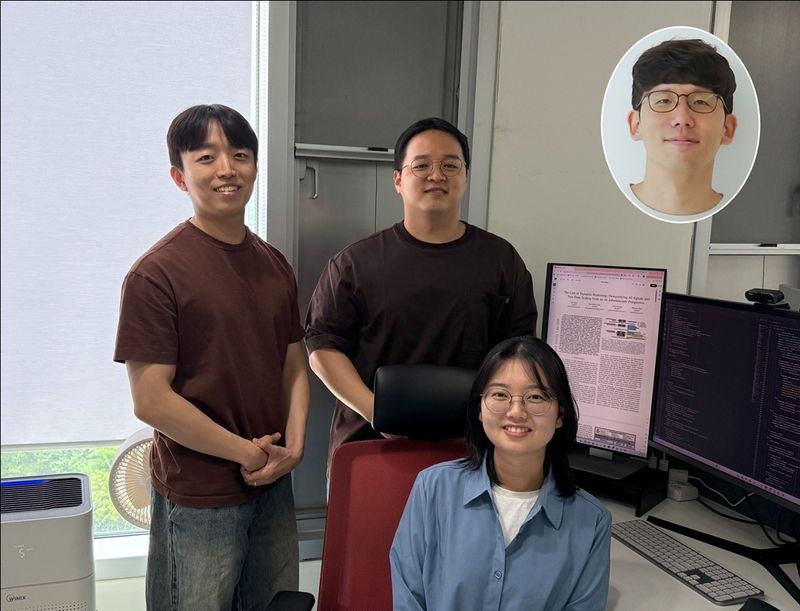
[Financial News] A study has found that AI agents consume up to 136 times more electricity to process a single question than conventional generative AI.
KAIST said on the 5th that a team led by Yoo Min-soo, a distinguished professor in the Department of Electrical Engineering, had conducted the world's first systematic analysis of the actual computing costs and energy consumption of AI agents, confirming the high power demand of next-generation AI.
In recent years, AI has rapidly evolved beyond large language models (LLMs) that simply answer questions into AI agents that can plan on their own and use a range of external tools, such as internet search, calculations, and code execution, to solve complex problems.
Until now, however, no detailed analysis had been made of how much computing power and electricity would be required if AI agents were deployed in real-world services.
The research team defined AI agents as a new type of workload that data center servers and graphics processing units (GPUs) must continuously handle, and analyzed the computing load and power consumption generated during actual execution.
The analysis showed that, unlike conventional generative AI, AI agents perform computations by repeatedly calling large language models multiple times.
As a result, response times increased by as much as 153.7 times compared with existing systems, and GPUs were found to sit idle without performing any computation for up to 54.5% of the total execution time while external tools carried out tasks. The findings suggest that as AI functions become more complex, a new form of inefficiency emerges, preventing expensive GPUs from being used effectively.
Power consumption also rose sharply. An AI agent using a large language model with 70 billion parameters, a level used in current commercial services, consumed an average of 348.41 watt-hours (Wh) to process a single question. That is up to 136.5 times higher than the simple question-and-answer method used by conventional generative AI.
The team also estimated that if AI agent requests reached 1.37 billion per day, data center power demand would climb to about 198.9 GW. That figure far exceeds the power scale of AI data centers currently being pursued around the world and is roughly half of the average electricity consumption of the entire United States.
The study was led by doctoral student Kim Ji-in of KAIST's Department of Electrical Engineering as the first author and was presented at IEEE HPCA, one of the most prestigious international conferences in the field of computer system design.
[email protected] Jang Min-kwon Reporter